Category: Unveillance

  • Tartaria

    Tartaria

    No, I won’t be having the fish tonight. Wait…

    We aren’t talking about the sauce–not in that way at least… or that other way. Anyway…

    Lots of discoveries have been made about Tartaria the last several years. It’s one of those Old World (or some would say Third Age) mysteries that we refuse to forget about. It’s one that gets me particularly angry when thinking about the knowledge that has been physically and intellectually buried, regardless of its origins.

    This article is geared toward discovering the nature and origins of Tartaria through language, rather than its physical remnants that they haven’t yet been burned to a crisp, which they instead hijacked as “founded” architecture, or masonry that has been acquired for free, as it were. There’s a word for that by the way, and that word is stolen.

    Who dun diddit?

    There are different views on what the Tartarian civilization actually is and where it came from. Many believe it is the remnants of the millennial reign of Jesus and His kingdom. There are some legitimate and logical reasons to believe it, such as the energetic bells that have been removed and melted down and buried. Then there are plenty of reasons to believe that cannot be the case, such as the list of things that simply haven’t happened in Revelation, irreconcilable timelines, and nephilim signatures in the architecture.

    One thing that no one debates is that the mud flood happened. Well some do

    The first few floors of countless buildings that are buried under street level in cities worldwide proves it beyond doubt. The debate is when it happened, and by whom it was triggered.

    My take on it

    I’ll open by stating that I believe the mud flood is the result of the biblical flood as recorded in Genesis in the Bible, the same worldwide flood that is told in the origin story of virtually every group and race of people throughout the earth, albeit with different details and names.

    One example is how Noah in Genesis is Utnapishtim in the Akkadian Epic of Gilgamesh. His original Sumerian name was Ziusudra. I will always go by Noah and the Genesis account, since the Bible is true Word of God.

    To me, it makes the most sense that the biblical flood is the cause of the mud flood. Every city across the world has the same architectural style, truly mind-boggling works of art, all buried in the same way in practically every major city worldwide.

    The landscape of these cities is always a gradual slope, where the buildings are buried up to the first or second floor, sometimes deeper. This necessitates a massive amount of dirt and sediment to have settled at an increasingly slowing rate, which could only be feasible after a massive flood while the flood waters were receding.

    In my opinion, the view that the mud flood happened in the 19th century coincides with the post-millennial theory, both of which I believe are related psyops from the adversary. They reinforce each other, while adding confusion to where we are on God’s timeline, something that is of crucial importance in these end times, especially when it comes to the Great Tribulation aspect.

    No it’s not a salvation issue of course, but one with a preterist belief may approach many things in life differently, specifically the post-millennial one.

    I’ll have the linguini. Wait…

    I’ll have what she’s having! The below quote is from a pdf on Tartaria I found.

    These photographs are said to be of Vanja K., a Tartarian who appeared at several World Fairs towards the end of the 19th century. Vanja was reported to have medical knowledge beyond contemporary understanding. She was also photographed in her ‘flying-costume’ which she said she wore when flying in her ‘rocket-vessel’.

    What I meant was, it’s time to serve up–er, dig up–the linguistic remains of Tartaria and its related words. I promise I’ll stop with the food puns at some point, after it has run its course–the second or third course perhaps!

    The etymology

    We’ll start with a basic etymology of Tartaria and related words. Searching etymonline, unsurprisingly there’s no entry for Tartaria, however it has a few related words.

    Tartary

    “land of the Tartars,” late 14c., from Old French tartarie and directly from Medieval Latin Tartaria, from Tartarus (see Tartar).

    Tartar

    late 14c., “inhabitant of Tartary (late 13c. as a surname), via Medieval Latin Tartarus, etc., from Persian Tatar, first used 13c. in reference to the hordes of Genghis Khan (title of Temüjin, ca. 1160-1227), said to be ultimately from Tata, a name of the Mongols for themselves.

    The form of the word in the Western European languages was influenced from the start by association with Latin Tartarus “hell”…

    tartar (n.)

    “bitartrate of potash, sediment of potassium tartarate” (a deposit left during fermentation), late 14c., from Old French tartre and directly from Medieval Latin tartarum, from late Greek tartaron “tartar encrusting the sides of wine casks,” a word perhaps of Semitic origin, but if so the exact source has not been identified; Arabic is unlikely because of the early date of the word in Latin. The explanation of the name in Paracelsus probably is fanciful.

    The purified substance is cream of tartar. Used generally in 17c. of encrustations from liquid contact; the specific meaning “encrustation on teeth” (calcium phosphate) is recorded by 1806.

    Unknown numb gnomes

    This has absolutely nothing to do with the subject matter, except maybe the bird.

    Any time I see “unknown origin”, “not identified”, or similar, my bullshit radar starts screaming. I see this a lot when researching words outside the mainstream narrative or relating to biblical themes and ideas.

    I’m sure in some cases it’s absolutely true, but sometimes I find related words or other words that are undeniably related, yet not included in the etymology or just left as “unknown”, while other words list mere speculations as their official etymology. To me, that’s dubious at best. At worst it’s hypocrisy, coverup, or both.

    I say hypocrisy because if I offer my opinion or speculation, even if I have something solid to work from, I would get denied.

    I know this because I’ve been in that exact position while chatting with AI, and it’s always the same pushback. The “unknown origin” or vague speculation is just accepted as fact by the AI, but then no matter how much evidence I throw at it to back up my theory, it’s just automatic pushback. So if you know how consensus works in the real world, it would translate into getting absolutely nowhere at an academic level if it even remotely brushes up against the no-no square 1 of acceptability.

    Greek trails

    Let’s start with the most recent trails found in history and work backward from there, as I’m wont to do with these sorts of archaeolexicographic unveillances. I’m also fond of making up words, so you’ll have to deal with that too. Just for fun, and to start off this Greek πρωινό2 right, here’s another scoop:

    hypercarcinoplasmologue (n.)

    a word so absurdly long as to give the impression it has a cancerous tumor growing from its side

    Tartarus (n.)

    in Homer and older Greek mythology, the sunless abyss below Hades in which Zeus imprisoned the rebel Titans, c. 1500, from Latinized form of Greek Tartaros, a name of uncertain etymology; “prob. a word of imitative origin, suggestive of something frightful” [Klein]. Later in Greek cosmology a place of punishment for the souls of the wicked and almost synonymous with Hades.

    See what I mean? It’s a name of “uncertain etymology” and “probably a word of imitative origin”, which is utter speculation. Imitating what… the gnashing of teeth, perhaps? In that case I’d say it’s possible, but obviously that’s not what Klein meant.

    tortoise (n.)

    “four-footed reptile with the trunk naturally encased in a ‘shell’ of bony plates,” 1550s, tortoyse

    This is perhaps from Late Latin tartaruchus “of the underworld” (see Tartarus).

    The entries for tartar and tortoise are included because they give a hint at the history of the word–something hard and solid. The entries mentioning Hades and hell also give a big clue.

    Tantalus

    First, the etymonline entry for Tantalus, which of course is a name of “uncertain origin”:

    Tantalus

    Greek Tantalos, ancient mythical king of Phrygia, a name of uncertain origin, perhaps literally “the Bearer” or “the Sufferer,”…

    As much as wikipedia sucks for digging up actual truth, it’s still useful enough. Let’s see what it says for related words and topics.

    Tantalus (Ancient Greek: Τάνταλος, romanized: Tántalos), also called Atys, was a Greek mythological figure, most famous for his punishment in Tartarus: for either revealing many secrets of the gods…

    This punishment, although the best-known today, was a more unusual detail in surviving early Greek sources, where variants including a stone suspended above his head are more commonly recorded.

    Now it’s getting interesting. Once one is aware of the nephilim of Genesis and how they came to be, one starts to realize that the Greek mythology about giants and titans isn’t just a collection of mere fabrications, but it has some truth behind it. Let’s see what the Book of Enoch says in relation to the punishment of Tantalus.

    1 Enoch 10

    And again the Lord said to Raphael, “Bind Azazel hand and foot, and cast him into the darkness: and make an opening in the desert, which is in Dudael, and cast him therein. And place upon him rough and jagged rocks, and cover him with darkness, and let him abide there for ever, and cover his face that he may not see light. And on the day of the great judgement he shall be cast into the fire.

    It sounds similar enough to take notice and keep in mind, but for now let’s dig up a little more rubble on Tantalus. The wiki page goes on to say he may have been an actual historical figure, possibly the ruler of an Anatolian city named Tantalís, Tantalus, or Sipylus.

    He is also sometimes referred to as the King of Phrygia, though in the more western edge of Anatolia where Lydia emerged, rather than the typical location of Phrygia.

    Hebrew traces
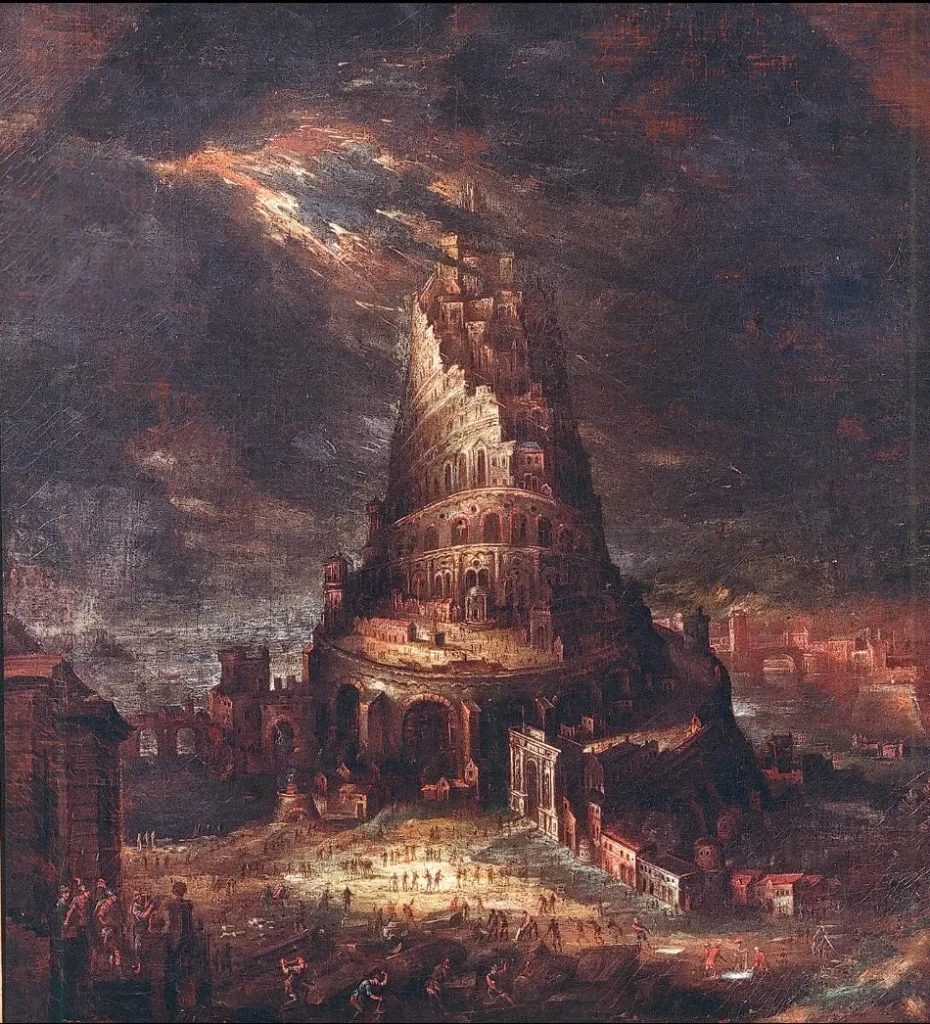
    Tower of Babel painting
    Chabad wonders if they can get it right this time with AI… yikes

    There really aren’t any words in the Bible that are close to Tartar or its variants on the surface level, but there are some words that are close in meaning, the events of which are early enough in the biblical timeline that this entire civilization could very well indeed have been antediluvian.

    Genesis 10

    25 And unto Eber were born two sons: the name of one was Peleg; for in his days was the earth divided; and his brother’s name was Joktan.

    H6389 פֶּלֶג Peleg, the same as H6388

    1. Peleg = “division”
      1. son of Eber and brother of Joktan

    H6388 פֶּלֶג peleg, from H6385

    1. channel, canal
    2. river, stream

    H6385 פָּלַג pâlag

    1. to divide, split
      1. (Niphal) to be split, be divided
      2. (Piel)
        1. to split, cleave
        2. to divide

    Genesis 11

    So the Lord scattered them abroad from thence upon the face of all the earth: and they left off to build the city.

    Therefore is the name of it called Babel; because the Lord did there confound the language of all the earth: and from thence did the Lord scatter them abroad upon the face of all the earth.

    H6327 פּוּץ pûwts

    1. to scatter, be dispersed, be scattered
      1. (Qal) to be dispersed, be scattered
      2. (Niphal)
        1. to be scattered
        2. to be spread abroad
      3. (Hiphil) to scatter
      4. (Hithpael) scatter
    2. (Qal) to flow, overflow
    3. to break
      1. (Polel) to shatter
      2. (Pilpel) to dash to pieces

    There doesn’t seem to be a clear connection yet between the Hebrew words in Genesis and the Tartar-related words, but themes of punishment from God are present in all these.

    Esther
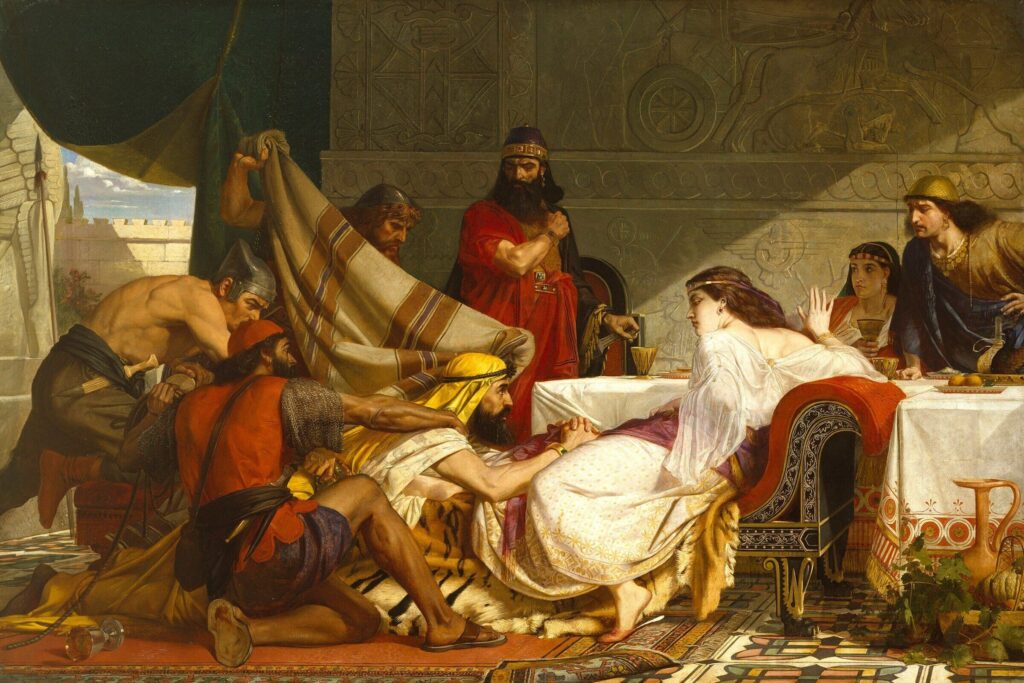
    Fishtar
    A preface, and sidenote about the source of the above image

    I had already believed, figured, and discerned that the Book of Esther was false and conjured up for several reasons. I was absolutely not looking for this article on Esther when I found the image.

    I say this to make clear that my beliefs and opinions on everything written here about Esther and related topics have been my views since before I had begun to write this article. I simply think it’s appropriate (and rather humorous) that I stumbled upon the article, especially after praying for wisdom and discernment through the Holy Spirit for all that I’m doing here.

    From the July-August 2024 Let the Stones Speak Magazine Issue

    “The book of Esther … is a free composition, not a historical document. Its fictional character can be illustrated by many examples …. [A]rtificialities are clear …. There are many exaggerations … sarcastic implausibilities … and huge ironies.”

    In the opinion of Protestantism’s founding father, Martin Luther:

    “I am so great an enemy to the second book of the Maccabees, and to Esther, that I wish they had not come to us at all” (Table Talk, published 1566; emphasis added throughout).

    I agree. I, too, am (mostly) an enemy to the book, but unlike Martin Luther, I’m actually glad in some ways that the book exists. The downsides to its existence indeed drastically outweigh the benefits, but the benefits are like polished gemstones–rubies in this case.

    It shows the contrast between how the Old Testament was written before Babylonian exile and afterward, and leaves subtle clues to the agenda slithering along in the background. It’s quite glaring. The writing patterns and word choices also act as a signature of synagogue of satan.

    Let’s see a bit more from the article before moving on:

    From a Jewish perspective, the book of Esther could hardly be afforded more importance. One of Judaism’s highest-esteemed rabbis and philosophers, the 12th-century Maimonides, esteemed the book of Esther as second to the Torah itself. The events of this book were accorded as historical by the first-century Jewish historian Josephus (as recounted in Antiquities of the Jews 11.6)—the book numbering among those others “which contain the records of all the past times, which are justly believed to be divine” (Against Apion 1.8).

    Yikes… Of course they held that belief. That’s truly some disgusting blasphemy, if you ask me. They’ve elevated their Babylonian Talmud to the same divine status as well, so it’s not surprising.

    False feaster aches

    And since you asked me, it’s all for their beloved Purim.

    Amos 5

    21 I hate, I despise your feast days, and I will not smell in your solemn assemblies.

    Something I stumbled upon completely by serendipity when discussing Hanukkah with a friend, which ended up leading me straight back to this dig, were a few oddities in the Book of Esther.

    The events in the book took place from about 483-473 BC during the reign of Ahasuerus, or Xerxes. Before getting into them, let’s see who Esther is, aside from what the book says about her. Let’s see who she is, linguistically, where it can be harder to bury the truth in some cases:

    H635 אֶסְתֵּר ʼEçtêr

    1. Esther = “star”
      1. the queen of Persia, heroine of the book of Esther – daughter of Abihail, cousin and adopted daughter of Mordecai, of the tribe of Benjamin, made queen by king Ahasuerus to replace divorced queen, Vashti.

    After seeing Esther means star, I noticed her name looked awfully familiar–something I had been writing about lately.

    H6253 עַשְׁתֹּרֶת ʻAshtôreth

    1. Ashtoreth = “star”
      1. the principal female deity of the Phoenicians worshipped in war and fertility
        1. also ‘Ishtar’ of Assyria and ‘Astarte’ by the Greeks and Romans

    This specific name only appears in three verses of the Bible: 1 Kings 11:5 and 11:33 when Solomon was worshiping Ashtoreth, then in 2 Kings 23:13 when king Josiah had been destroying many idolatrous false god worship sites, notably Ashtoreth.

    All roads lead to roam
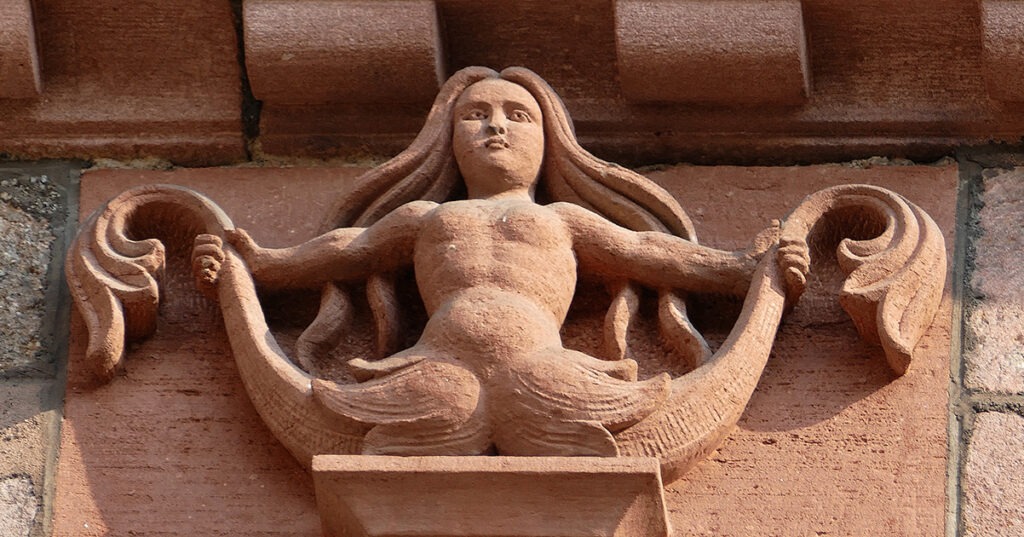
    It always leads back to shekhinah, the whore of Babylon

    Here’s another massive red herring that the entire story isn’t historical, or at least the key aspects of it: Esther, the alleged decree of genocide, and Purim.

    Ashtoreth, Asteroth, Ashtart, Astarte, Atargatis, Derceto, Dione, Ishtar, Aphrodite, Isis, Shekhinah, and the mermaid on your Starbucks coffee–they’re all the same whore of Babylon.

    In Fasti, written by Ovid, the legend goes that Dione/Derceto/Derceti was plunged into the Euphrates, and then the Pisces pair helped her escape, but she turned into a mermaid, or siren. I believe it, primarily because of Enoch and Isaiah 13.

    1 Enoch 19

    And the women of the angels who went astray will become sirens.

    Isaiah 13

    21 But wild beasts of the desert shall lie there; and their houses shall be full of doleful creatures; and owls shall dwell there, and satyrs shall dance there.

    All the English translations either say owls or ostriches for daughters (H1323 בַּת bath) in 13:21, but it’s generally known to mean sirens, as seen in Enoch 19 and on intertextual.bible.
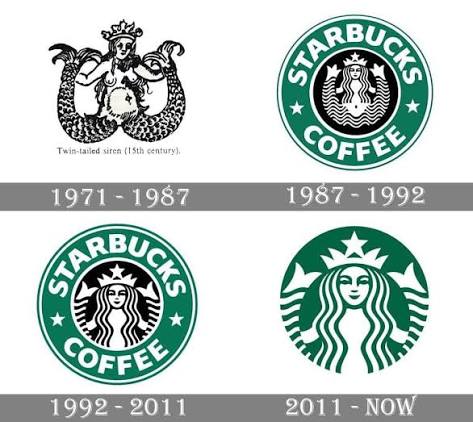
    Lovely, innit?.. The whore is everywhere…

    2 Kings 23

    And he put down the idolatrous priests, whom the kings of Judah had ordained to burn incense in the high places in the cities of Judah, and in the places round about Jerusalem; them also that burned incense unto Baal, to the sun, and to the moon, and to the planets, and to all the host of heaven.

    10 And he defiled Topheth, which is in the valley of the children of Hinnom, that no man might make his son or his daughter to pass through the fire to Molech.

    13 And the high places that were before Jerusalem, which were on the right hand of the mount of corruption, which Solomon the king of Israel had builded for Ashtoreth the abomination of the Zidonians, and for Chemosh the abomination of the Moabites, and for Milcom the abomination of the children of Ammon, did the king defile.

    Muzzle Tough
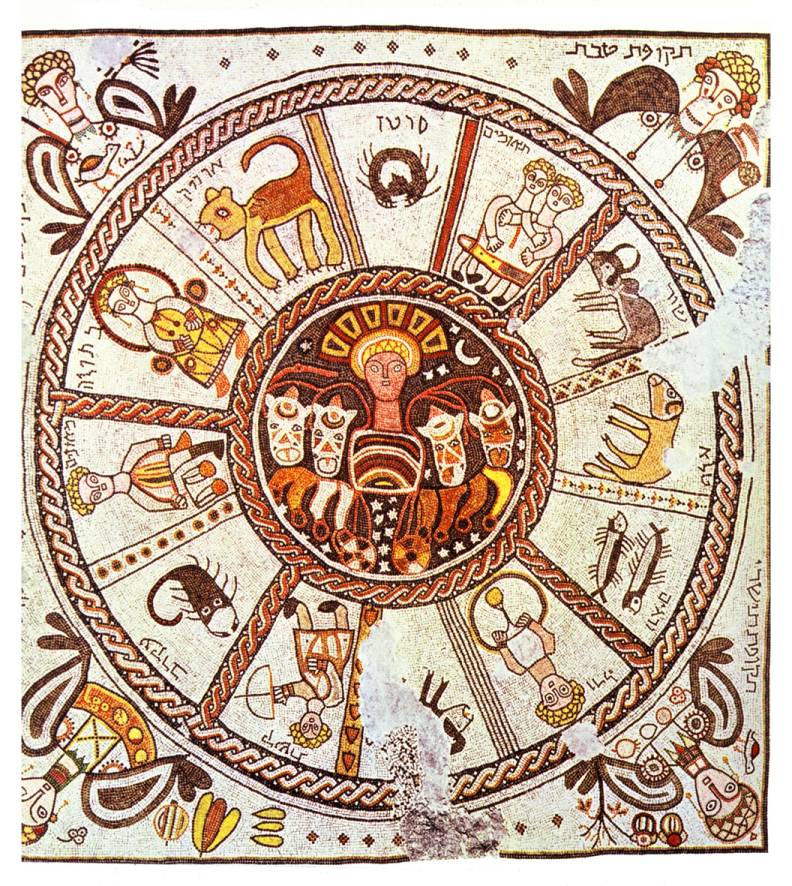
    I’m pretty sure God said no to astrology…

    I included 23:5 and 10 above for a reminder of ‘planets’ and Topheth. It’s a bit of a side track, but interesting nonetheless.

    H4208 מַזָּלָה mazzâlâh, compare H4216

    1. constellations
      1. signs of zodiac (maybe)
    2. planet

    H4216 מַזָּרָה mazzârâh

    1. Mazzaroth
      1. the 12 signs of the Zodiac and their 36 associated constellations

    Gesenius’ Hebrew-Chaldee Lexicon entry for mazzalah says rabbis called the individual signs or planets mazal (מַזָּל). No wonder it sounded so similar to mazal tov! From Chabad:

    Mazal tov (“good luck”) is the colloquial Jewish expression of congratulations…but what does this familiar Jewish expression really mean?

    The Talmud clearly associates the concept of mazal not with random luck but with a kind of astrologically-based predetermination, as in “The blessings of health, children, and livelihood do not depend on merit; rather, they depend on fate (mazal).”⁶

    Indeed, the Jerusalem Talmud⁷ recounts a fascinating custom practiced by the Amalekites that highlights the power of mazal. “They would place soldiers at the frontline on their birthday in the belief that a soldier would not fall easily on his birthday.” From this the Talmud derives that a person’s mazal is dominant on their birthday.

    Isaiah 47

    13 Thou art wearied in the multitude of thy counsels. Let now the astrologers, the stargazers, the monthly prognosticators, stand up, and save thee from these things that shall come upon thee.

    14 Behold, they shall be as stubble; the fire shall burn them; they shall not deliver themselves from the power of the flame: there shall not be a coal to warm at, nor fire to sit before it.

    Blaspheme much?
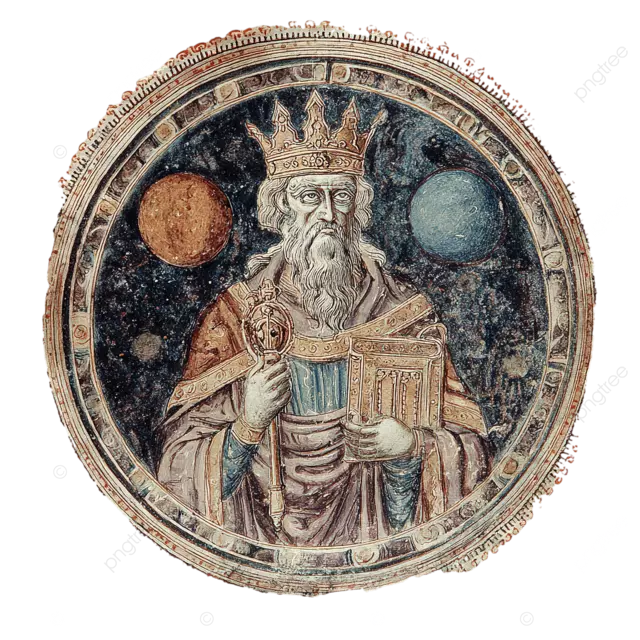
    It’s actually kind of mind-blowing how highly The Preacher held himself in esteem, quite literally putting himself next to God in heaven. If the author wasn’t Solomon, my next guess would be Adonikam, but I have no real reason to believe it wasn’t, especially with his occult immersion later on in life.

    Proverbs 8

    14 Counsel is mine, and sound wisdom: I am understanding; I have strength.

    15 By me kings reign, and princes decree justice.

    16 By me princes rule, and nobles, even all the judges of the earth.

    20 I lead in the way of righteousness, in the midst of the paths of judgment:

    22 The Lord possessed me in the beginning of his way, before his works of old.

    23 I was set up from everlasting, from the beginning, or ever the earth was.

    24 When there were no depths, I was brought forth; when there were no fountains abounding with water.

    25 Before the mountains were settled, before the hills was I brought forth:

    26 While as yet he had not made the earth, nor the fields, nor the highest part of the dust of the world.

    27 When he prepared the heavens, I was there: when he set a compass upon the face of the depth:

    28 When he established the clouds above: when he strengthened the fountains of the deep:

    29 When he gave to the sea his decree, that the waters should not pass his commandment: when he appointed the foundations of the earth:

    30 Then I was by him, as one brought up with him: and I was daily his delight, rejoicing always before him;

    31 Rejoicing in the habitable part of his earth; and my delights were with the sons of men.

    32 Now therefore hearken unto me, O ye children: for blessed are they that keep my ways.

    Yikes. Truly astounding narcissism. Now let’s see what God says about things like that.

    Isaiah 47

    10 For thou hast trusted in thy wickedness: thou hast said, None seeth me. Thy wisdom and thy knowledge, it hath perverted thee; and thou hast said in thine heart, I am, and none else beside me.

    13 Thou art wearied in the multitude of thy counsels. Let now the astrologers, the stargazers, the monthly prognosticators, stand up, and save thee from these things that shall come upon thee.

    14 Behold, they shall be as stubble; the fire shall burn them; they shall not deliver themselves from the power of the flame: there shall not be a coal to warm at, nor fire to sit before it.

    15 Thus shall they be unto thee with whom thou hast laboured, even thy merchants, from thy youth: they shall wander every one to his quarter; none shall save thee.

    There is a season…

    Back to the false feasts and times, a new word for appointed time started to be used in Nehemiah, for a total of four times. Two are in Esther, and the last one is in Ecclesiastes. I just find it strange.

    Esther 9

    31 To confirm these days of Purim in their times appointed, according as Mordecai the Jew and Esther the queen had enjoined them, and as they had decreed for themselves and for their seed, the matters of the fastings and their cry.

    H2165 זְמָן zᵉmân

    1. a set time, time
    2. appointed time, occasion, or season

    This is a later word, which seems unnecessary when there’s a perfectly good word to use for time, H6256 עֵת ʻêth. The Gesenius’ Hebrew-Chaldee Lexicon entry also makes an intriguing observation about Ecclesiastes, one which I had just made last week when writing the article about The Beast. Gesenius also doesn’t think Solomon wrote it!
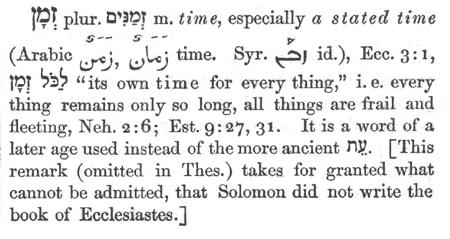
    Gesenius entry for H2165

    Ecclesiastes 3

    To every thing there is a season, and a time to every purpose under the heaven:
    Why, Byrds, why?

    Of all things from the Bible to write about, they wrote a song about something from Ecclesiastes. I get it–the verses kind of read like song lyrics, but it’s still odd. There’s another word The Preacher used in Ecclesiastes that stood out to me, and it’s in the same verse: purpose. Here’s another one using it and several other of his buzzwords.

    Ecclesiastes 12

    And moreover, because the preacher was wise, he still taught the people knowledge; yea, he gave good heed, and sought out, and set in order many proverbs.

    10 The preacher sought to find out acceptable words: and that which was written was upright, even words of truth.

    H2656 חֵפֶץ chêphets, from H2654

    1. delight, pleasure
      1. delight
      2. desire, longing
      3. the good pleasure
      4. that in which one takes delight
      5. concretely, a valuable thing
      6. a matter (as something in mind):—acceptable

    There’s nothing wrong with the word itself, and it is used elsewhere in the Old Testament, with its first mention in 1 Samuel, but it’s used a lot in Proverbs and Ecclesiastes, then a a handful more times in surrounding chapters. It just stands out to me, especially in Ecclesiastes 3:1.

    Its related word, which is almost the same, has a slightly more nuanced definition, where it can be of men or God.

    H2654 חָפֵץ châphêts

    1. to delight in, take pleasure in, desire, be pleased with
      1. (Qal)
        1. of men
          1. to take pleasure in, delight in
          2. to delight, desire, be pleased to do
        2. of God
          1. to delight in, have pleasure in
          2. to be pleased to do
    2. to move, bend down
      1. (Qal) to bend down

    Its first mention is in Genesis, but it’s used in Esther, so it’s definitely noteworthy here. It’s also used in the Solomon range of books we’ve been discussing. It’s unclear to me exactly why they used H2656, but if I were to guess–without checking each verse’s use–it’s be explicit that it’s their desire, not God’s.

    Purim
    No, it’s him! HE smells fishy, not me!

    Sometimes it’s hard not to get sidetracked when going down these rabbit holes. There’s always something that unexpectedly pops out of the dirt, or rock in this case–maybe even leads straight to the abyss. So let’s go back to Esther 9:31 and take a look at Purim.

    H6332 פּוּר Pûwr, from H6331

    1. Pur or Purim = “lot” or (broken) “piece”
      1. lot
        1. a special feast among the post-exilic Jews, to celebrate their deliverance from Haman’s destruction through queen Esther’s heroic actions

    That’s a hyper-specific definition for a word! Aren’t there other perfectly good words for lot or piece? Indeed there are.

    Esther 3

    In the first month, that is, the month Nisan, in the twelfth year of king Ahasuerus, they cast Pur, that is, the lot, before Haman from day to day, and from month to month, to the twelfth month, that is, the month Adar.

    The typical word for lot is in the same verse as Pur, which is curious. Why use the new Persian word for it? This appointed time is the only use for the word. They made a feast unto themselves. Here’s the normal word for lot:

    H1486 גּוֹרָל gôwrâl

    1. lot
      1. lot – pebbles used for systematically making decisions
    2. portion
      1. lot, portion (thing assigned by casting lots)
      2. recompense, retribution

    What I find very interesting, though a bit unrelated to this specific topic–yet also connected–is that Lot from Genesis means something entirely different.

    H3876 לוֹט Lôwṭ, from H3875

    1. Lot = “covering”
      1. son of Haran and Abraham’s nephew who settled in Sodom and was delivered from its destruction by God

    H3875 לוֹט lôwṭ, from H3874

    • covering, envelope, veil

    H3874 לוּט lûwṭ

    1. to wrap closely or tightly, enwrap, envelop
      1. (Qal) to wrap tightly
      2. (Hiphil) to envelop, wrap

    Its specific use as veil from H3875 only appears in one verse in the Bible, which is a prophecy of Isaiah about the end times when Jesus destroys the veil over everyone’s eyes, wipe away all tears, bring wrath and judgment, then the first resurrection.

    Isaiah 25

    And he will destroy in this mountain the face of the covering cast over all people, and the vail that is spread over all nations.

    Back to Purim

    So anyway, checking the source of the word for pur/lot is where things get really interesting, and a bit obfuscated.

    H6331 פּוּר pûwr

    • (Hiphil) to break, crush

    Digging deeper into Hebrew


    Footnotes

    1. I apologize in advance! Here’s a better one. ↩︎
    2. breakfast ↩︎
  • Yogh

    Yogh

    The letter yogh (uppercase: Ȝ; lowercase: ȝ) has a fascinating history, and it seems to be everywhere and in many languages, yet today it’s almost as if it doesn’t exist. Maybe it’s best to start from today and go backward in history.

    The letter yogh was used in Middle English and Older Scots to represent several phonemes, such as y, j, and g. It is from Insular G (ᵹ), the form of g in the medieval Insular script.

    It started to become confused with Ezh (Ʒ, ʒ), or “tailed z” when early to middle Scots began to use z in place of yogh, since it wasn’t in their fonts. Now some Scots names have a z, which is still pronounced as a y.

    It still represents a wide range of pronunciation, such as the o in body or in code, the voiceless velar fricative (x) range of k in kind, or the ch in loch, as well as the previously mentioned voiced velar fricative (ɣ) consonantal range of y, j, and g.

    A rough-coated, dough-faced, thoughtful ploughman strode through the streets of Scarborough, after falling into a slough, he coughed and hiccoughed.

    This absurd sentence shows just how many different ways there are to pronounce the word cluster ough, which used to be represented by just one letter. Here are the nine ways it is pronounced today, which is equally absurd.

    1. /ʌf/“uff” (rhymes with stuff) rough, tough, enough
    2. /oʊ/ or /əʊ/“oh” (rhymes with no) though, although, dough
    3. /ɔː/“aw” (rhymes with saw) thought, bought, brought, fought
    4. /uː/“oo” (rhymes with too) through, throughout
    5. /aʊ/“ow” (rhymes with how) bough, plough (spelled plow in US), drought
    6. /ɒf/“off” (rhymes with cough) cough, trough
    7. /ə/“uh” (a weak schwa sound) thorough, borough (Note: mainly in UK English)
    8. /ʌp/“up” (rhymes with cup) hiccough (traditionally pronounced like “hiccup”)
    9. /ɒk/“ock” (rhymes with lock) lough (an Irish/Scottish word for lake)

    The official history of yogh leads back through g, c, Greek gamma (γ), and then Hebrew gimel (ג), but we’re going a different route–the nebulous path of voiceless velar fricative (x), voiced pharyngeal fricative (ʕ), and the voiced palatal approximant (y/j). It’s a path where the letters of the Greek alphabet became uncoupled from their Hebrew source equivalents.

    Omicron

    Omicron is the 15th letter of the Greek alphabet and has the short o sound. The name means  ὂ μικρόν (ò mikrón), literally ‘small o’. Its parent letter is Hebrew ayin, and its Greek numeral value is 70.

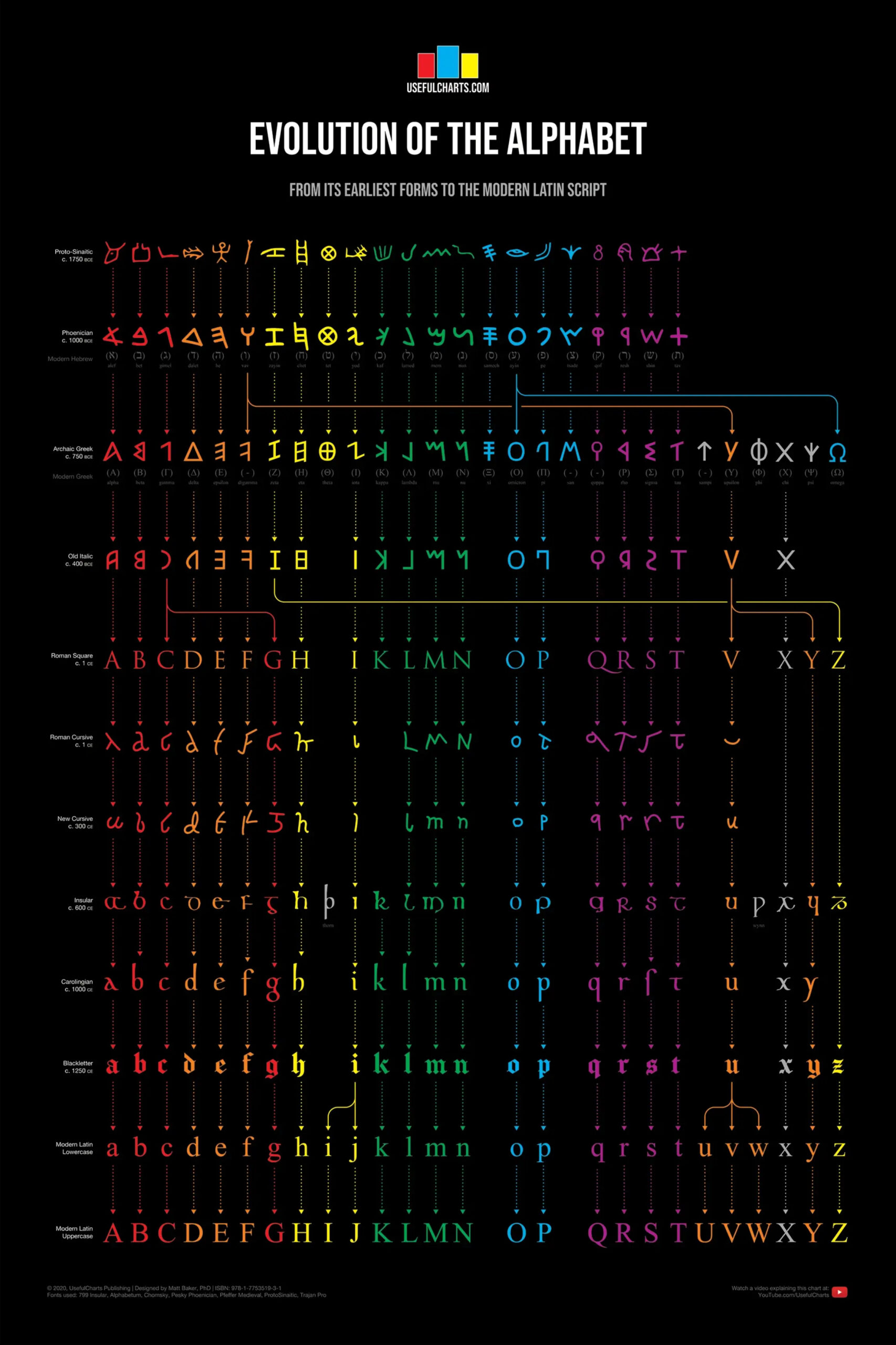
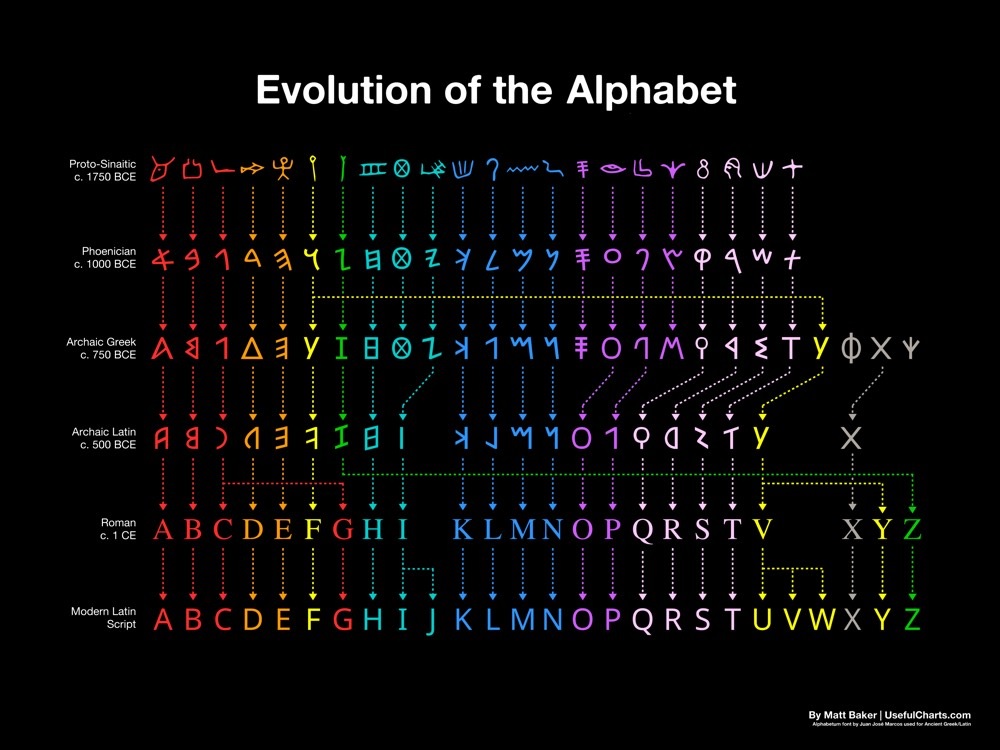
    Its position relative to the Hebrew alphabet hasn’t changed as much as some letters have, but regardless, now would be a good time to have an alphabet evolution chart for reference. Even this letter’s shape has stayed relatively stable throughout the millennia, with its beginnings as the hieroglyph for eye (𓁹), which is what ayin means. If I were to speculate, once a letter attains a shape of a basic circle, there’s really no improving or shortening it.

    Notably, omega (Ω, ω), meaning ‘great o’ and having the long o sound, resembles a clockwise-turned yogh–in lowercase anyway, while the opposite is true in early Cyrillic (Ѡ), where instead its uppercase omega more resembles the turned yogh. Curiously, also lowercase epsilon (ε) and xi (ξ) both look quite like a flipped yogh.

    This chart is a simple and easy way to see how each letter has changed position over time as it evolved through each language’s subsequent adoption of it. Most letters have had an easy and straight-forward evolution, but the sound cluster involving yogh and its wide range of phonemes is a real cluster, indeed.

    Evolution of the Alphabet chart
    Useful chart from usefulcharts.com

    Ayin

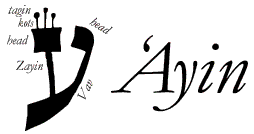
    Image courtesy of Hebrew for Christians showing the tagin (crowns)

    Going further back in time, we have the 16th letter of the Hebrew alephbet, ayin, which as mentioned above means ‘eye’. Like omicron, it also has a numeral value of 70, and is one of seven letters to receive tagin (crowns) when written in a sefer Torah. In Strong’s:

    H5869 עַיִן ʻayin:

    1. eye
      1. of physical eye
      2. as showing mental qualities
      3. of mental and spiritual faculties (fig.)
    2. spring, fountain
    Absurdly-long full Gesenius’ Hebrew-Chaldee Lexicon entry
    You can’t say I didn’t warn ya!

    It represents a voiced pharyngeal fricative (/ʕ/), which sounds like augh, but more rounded and with the throat somewhat constricted, making an almost guttural kh sound as in Hebrew or German. The wiki link has an audio clip to give its precise sound.

    Curiously, the modern Hebrew script, called Ktav Ashuri or Square script, taken from Aramaic during the Babylonian exile of the Israelites, is the only one to deviate from the standard o shape of ayin into its evolution as today’s o.

    It has also lost its nuance of pronunciation, becoming simpler, reduced to a glottal stop (ʔ) if not silent like aleph (א), both of which are among the few explicit vowels.

    This is where yogh starts to pierce through the veil and show its spectral face. You can see how ayin ע and yogh ȝ at this point are fairly similar: they each have three lines coming from their curved bases on the right side.

    The only real difference is that ayin’s two upper lines are vertical, and the entire letter has less curvature, which makes sense with the square design of Ktav Ashuri. Ironically, ayin in Hebrew cursive looks just like Greek gamma (γ), the voiced velar fricative symbol (ɣ), and the close/high-mid back unrounded vowel (ɤ).

    cursive Hebrew ayin
    cursive Hebrew ayin

    Other languages and scripts

    One language and accompanying script to fully embrace the yogh shape is Arabic. Its ayin (or ayn, or ain) in isolated form (ع) looks like a fully-formed yogh, just in reverse. It has retained its voiced pharyngeal or epiglottal sound, and it is also the 16th letter, though only in abjadi order, otherwise it’s the 18th. Other languages and scripts with a similar letter and shape are as follows:

    • Arabic ain (initial form): عـ
    • Arabic ghayn initial: غـ — isolated: غ
    • Armenian hi/yi: Յ
    • Armenian t’so/c’o: Ց
    • Syriac: ܥ
    • Nabataean: 𐢗
    • Mandaic: ࡘ
    • Manichaean: 𐫙
    • Palmyrene: 𐡰
    • Southeast Asian nga initial: ڠـ — isolated: ڠ
    • Wolof ngōn initial: ݝـ — isolated: ݝ
    • Tamil nga initial: ࢳـ — isolated: ࢳ
    • Sogdian: 𐼘
    • Elymaic: 𐿯
    • Chorasmian: 𐿀

    Another anomaly is in the Samaritan script. The Samaritans never left their home via capture nor were they scattered for any other reason, thus their alephbet largely preserved the paleo-Hebrew script’s letter shapes, much more than modern Hebrew Ktav Ashuri script anyway.

    The anomaly is that, despite retaining much of the paleo-Hebrew alphabet, their ayin equivalent ʿīn (ࠏ) looks more like Greek omicron, while their yūt (ࠉ), having no Hebrew equivalent, and their ṣå̄ʾdīy (ࠑ), the equivalent to Hebrew tsadi (צ), both look more like yogh than anything else in their script, just turned 90° counter-clockwise. I would have to assume they had contact with the Greeks while Judah, Benjamin, and the Levites and small assortment of other tribes were in their 70 year Babylonian exile.

    The friendly ghost

    That is all fairly interesting–and then there’s the Indian Brahmi script and its variants. Many of its letters are from the same Phoenician alephbet, albeit many of them have changed rather drastically, relative to the others we’ve looked at already.

    Brahmi consonants – another script with unequivocal paleo-Hebrew origins

    You can see many of the Brahmi consonants resemble paleo-Hebrew, and notably, the j and jh, both of which have that yogh approximant range, look like a flipped yogh and square ayin, respectively.

    One example each from the Brahmi vowel a variation, ja (𑀚), jha (𑀛), and gha (𑀖) clearly have the classic yogh (or ayin) shape plus their evolution through Brahmi.

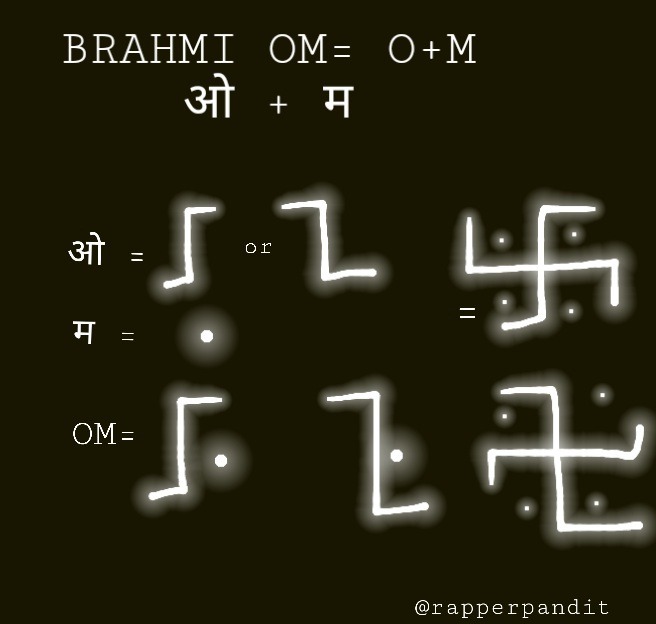
    It continues to get even more interesting. Early, or Ashokan Brahmi had more rigid geometric shapes. Its independent vowel o (𑀑), when paired with a dot above it representing m, begets an interesting shape that’s sure to trigger some.

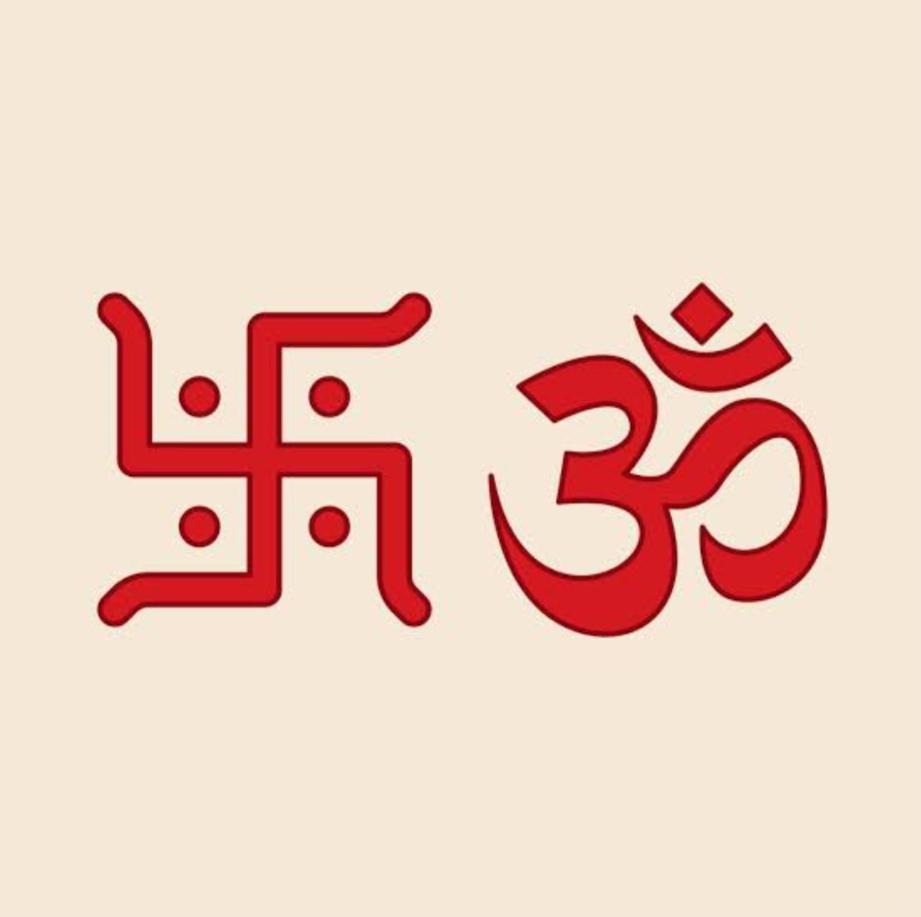
    Trigger alert! No, this isn’t a Nazi swastika. It’s an ancient Brahmi symbol representing om.

    Swasti-kwhat??

    The two following symbols, the swastika (one form of it anyway) and the aum, are arguably two of the most recognized symbols in the world, other than the cross, of course (and probably Mario… mamma mia!). The word swastika is from Sanskrit, derived from root swasti, composed of su, meaning ‘good, well’ and asti, meaning ‘is; it is; there is’. Swasti means ‘health, luck, success, prosperity’. The common suffix ka has multiple meanings.

    The symbol is technically a gammádion, meaning ‘little gamma’, an ancient Greek cross or swastika symbol, which is formed by combining four uppercase gammas (Γ). It’s also known as a fylfot or gammata.

    Trigger alert! 🚨

    Aum

    The other symbol aum () is a cursive ligature of Devanagari ओम् and is composed of four parts:

    • Vowel: अ (a)
    • Vowel diacritic: ो (o)
    • Consonant: म (m)
    • Virama stroke: ् (indicates absence of an implied final vowel)

    By now, it should be clear the ghost of yogh is peeking through the veil again here, seen in the vowel अ portion of aum. Interestingly, they also have a similar vowel range with the au-, yogh, and augh sounds.

    Brahmi’s letter for mem or m (𑀫) leaves no doubt as to be attached to the ȝ from the back, retaining the aforementioned dot for m. The m (ܡ) in the Syriac script looks the same, just turned counter-clockwise and having sharp, square corners. Then of course there’s modern Hebrew with its similar mem (מ ,ם) shapes sans top curve.

    Yogh-related words

    Runes

    The Eihwaz (also Eiwaz or Eihaz) rune (ᛇ) looks familiar, doesn’t it? The name is reconstructed Proto-Germanic, from a word for the yew tree, the evergreen Taxus baccata. Needless to say, yew sounds practically the same as yogh. The proto reconstruction:

    • *īhaz (*ē²haz, from Proto-Indo-European *eikos)
    • ēoh (also īh) in Old English
    • *īwaz (*ē²waz, from PIE *eiwos)
    • īw
    • yew

    The Elder Futhark e rune Ehwaz (ᛖ), means ‘horse’; in Old Irish ech. In Anglo-Saxon futhorc it became eh, which was technically eoh, but the o was removed to avoid confusion between it and the above ēoh (ᛇ).

    Many words spring forth from the PIE root *yeug-, meaning ‘to join’. At least one word that likely came to mind within minutes of starting this article is yoga, the ubiquitous Sanskrit word meaning ‘union, yoking’ (with a spirit or entity).

    goat yoga 😂🐐
    Don’t do this, but aww look at the goat! The goat may look cute, but you look dumb. Also, see sidenote.
    Sidenote about yoga and yoking

    The etymology says it’s about yoking with “the Supreme Spirit”, but that’s false. The only thing you’ll be yoking with while doing yoga are demons.

    I’m fully aware that may sound weird, but I say it from experience–in fact two separate experiences with a demon, both after having done yoga for a few days in a row. I simply cannot overstate that the only times I have EVER had an encounter with a demon were these two times… only after practicing yoga.

    The first one was immediately after the yoga session while resting. My eyes were closed, then suddenly a demonic face rushed right at me, instantly freaking me out. The other encounter was years later, which came in a dream the night I had done yoga for the third day in a row. I’ll preface this by saying I have some bizarre dreams, and no matter what crazy things happen in them, they never scare me, not even slightly.

    But this simple and short dream, which was just a quiet and still scene of the decorated fireplace during Christmas of a house I previously lived, immediately vanished to black. Then I heard and felt the insectoid growling or buzzing of the demon right next to me, though I couldn’t see it–or anything else. It was literally pumping fear into me, getting more and more intense until I could finally wake up. I’ve never had anything inject fear into me.

    This is the only yoga you should be doing.

    Like a Ouija Board, or a sin like lust, it opens a door to that realm. Stretching alone is obviously perfectly fine. The difference is the specific poses, likely derived in a scientific manner over millennia (or given by some demon), done basically in a ritualistic manner, while repeating mantras.

    If you wanna have a relationship and conversation with God, get to know Jesus!

    A few other words that come from *yeug- are join, conjugal, junction, juxtapose, syzygy, zeugma, and zygote. Yolk does not, however. It comes from Middle English yelwe, from Old English geolu and geolwe, meaning ‘yellow’, ultimately from PIE root *ghel- ‘to shine’, the same source for ‘gold’.

    Back to Greek

    Before getting into some of the oddities surrounding Greek and its relationship to yogh, we should look at the strange letter switching between Greek and Hebrew throughout history. A shorter alphabet evolutionary chart will help save your scroll wheel a few miles worth of tread.

    Older version, but still useful

    Behold the nail

    The first letter to be scrambled is waw, or as some like to call it, vav, has the w sound and means nail or hook. Its name invites another variable into the equation: when did it shift from waw to vav, and why? Also, did the sound shift precede the letter shift, or vice versa? For now we’ll just focus on the 6th letter position:

    • Hieroglyph: 𓏲
    • Phoenecian: 𐤅
    • Modern Hebrew: ו
    • Ancient Greek: digamma or wau/waw (Ϝ, ϝ)
    • Greek: zeta z (Ζ, ζ)

    Wait, what happened? Certainly the w sound hadn’t become obsolete. So how did the 6th letter with a w sound soften right past vav into the f shape? The only letter even close to an F at that point in history would’ve been yod/yodh (𐤉), meaning hand.

    Even more bizarre is the Arabic equivalent to yod is (𐩺), and in Ge’ez it’s (የ). Arabic yod is the exact same shape as Proto-Sinaitic, and Ge’ez is just barely different.

    Even its Unicode character doesn’t look how it should (see below).

    Phoenician yodh

    A doublet of waw was also borrowed as a consonant for [w] (Ϝ, digamma).

    It makes sense on one level: stack two gammas (Γ) to get digamma, but when they borrowed the Phoenician alephbet, yod already existed as the letter above. Would that not be confusing, while they were still writing right to left?

    Just for fun, let’s compare two wiki pages, Waw and F:

    Waw

    Waw (wāw “hook”) is the sixth letter of the Semitic abjads…

    F

    The origin of ⟨F⟩ is the Semitic letter waw, which represented the sound /w/. It probably originally depicted either a hook or a club. It may have been based on a comparable Egyptian hieroglyph such as that which represented the word mace…

    Oh I see, it probably depicted a hook, probably, since it’s too difficult as a wiki editor to check a nearby wiki page or do a quick search, but a club? Now that’s a new one. And sorry but no, the well-established hieroglyph for waw (𓏲) certainly does not look like a mace.

    Digamma dilemma

    Apparently digamma went through many changes, more than any other Greek letter as far as I’ve seen so far:

    What I would like to know, is why are there 100-200 Unicode characters reserved for the long-extinct and as yet undeciphered Minoan Linear A hieroglyphic script and the Mycenaean Greek Linear B script–the earliest Greek scripts–while the apparent development of the much more recent Byzantine digamma with its seven mutations has not a single Unicode character?

    For example, is the Unicode character for the utterly useless wheelless chariot (𐃍) really necessary, while digamma has none for those intermediate phases? It’s a chariot, and it doesn’t even have wheels. The only difference between it and wheeled chariot (𐃌) is the tiny wheel near the front. Meanwhile, the letter that got pushed around and tortured is just completely ignored. Something doesn’t smell right.

    Anyway, looking further on the F wiki page:

    In the Etruscan alphabet, ⟨F⟩ probably represented /w/, as in Greek, and the Etruscans formed the digraph ⟨FH⟩ to represent /f/. (At the time these letters were borrowed, there was no Greek letter that represented /f/: the Greek letter phi ⟨Φ⟩ then represented an aspirated voiceless bilabial plosive /ph/, although in Modern Greek it has come to represent /f/.)

    So it was apparently easier and more logical to shift the w sound of waw, not just to a closed /v/ sound of vav, but beyond it and into the area just on the edge of plosive to form the /f/ sound, rather than just take phi with its plosive /ph/ and force a bit of air out to get the /f/ sound?

    Not only that, but the Etruscans had to form the FH digraph just to represent /f/ of the waw, which had the /w/ sound. It’s just not adding up for me. It doesn’t sound logical or natural. It sounds unnecessarily convoluted–or necessarily, depending on the perspective.

    Beholed the hand

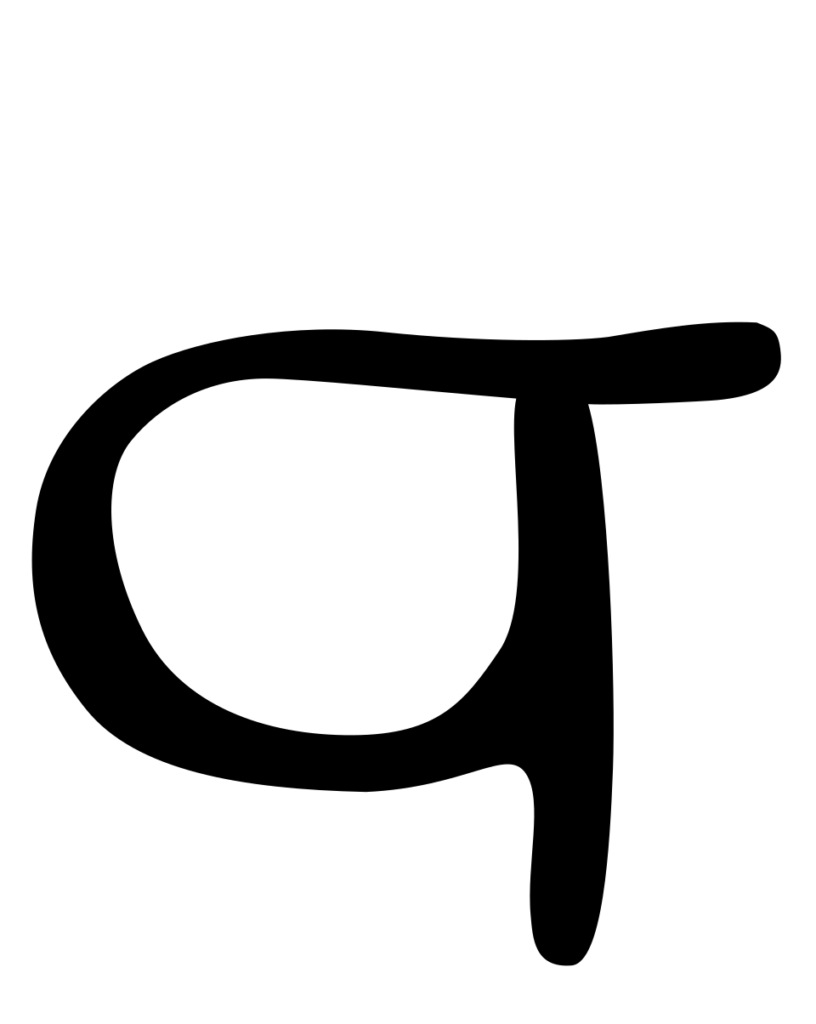
    The letter formerly known as vav, formerly known as waw, digamma has retained its numeral value of 6, though the letter for its numeral use underwent another change and became (ϛ). Then it acquired yet another name change during the Byzantine era: episēmon, from epi- ‘on’ plus sēma ‘sign’, meaning mark or symbol. At some subsequent time its name changed yet again, to stigma, a ligature of sigma (στ). Lowercase sigma in word-final position is (ς).

    stigma (n.)

    1590s (earlier stigme, c. 1400), “mark made on skin by burning with a hot iron,” from Latin stigma (plural stigmata), from Greek stigma (genitive stigmatos) “mark of a pointed instrument, puncture, tattoo-mark, brand,” which is related to stizein “to mark, tattoo” (from PIE root *steig- “to stick; pointed”

    The figurative meaning “mark of disgrace or infamy which attaches to a person on account of evil conduct” is in English is from 1610s. Stigmas “marks resembling the wounds on the body of Christ, appearing supernaturally on the bodies of the devout” is from 1630s; earlier stigmate (late 14c.), from Latin stigmata, itself used in English in this sense by 1630s.

    Confused yet?

    So how in the world did digamma with the /f/, which of course was originally waw with /w/, turn into a ligature for sigma and tau? What a silly question… as if it’s not obvious! It’s easy!

    Once digamma evolved into its final form,

    it was conflated with the στ ligature[citation needed]

    So now a distinction has to be made between the letter (Ϝ, ϝ) and its numeric symbol (ϛ), so it gets replaced by the ligature for sigma and tau. Easy peasy!

    στ

    I mean if wikipedia says so, it must be true! Don’t worry about the pesky details like this:

    …owing to the accidental similarities of their shapes[citation needed].

    Let’s read on, so we can see the next part of the explanation, shall we? No pretense of having a citation on this part, cuz citations are for losers!

    The association between the numeral 6 and the letter sequence στ became so strong that today, in Greece, the letter sequence ΣΤʹ or στʹ is often used in lieu of ϛ itself to write the number 6.

    That’s just the darndest thing. Through this entire utter nightmare whirlwind of phoneme shifting, name changing, and shape changing, clocking in at well over a dozen combined, the only thing to remain stable and unchanged has been the 6.

    That’s just so fascinating, isn’t it? It’s almost like the 6 is nailed onto the pile of sand now known as stigma, rather than the letter being the nail–er excuse me–the hook, or maybe it’s a club, probably?[citation needed]

    Well, it’s a good thing we don’t need that useless (ϛ) anymore and have stigma (στ) to replace it with. Wait, what’s this? Oh…

    χ̅ξ̅ϛ - six hundred threescore and six
    Greek numeral χ̅ξ̅ϛ, or 666

    χ̅ξ̅ϛ

    Revelation 13

    18 Here is wisdom. Let him that hath understanding count the number of the beast: for it is the number of a man; and his number is Six hundred threescore and six.

    Quick detour

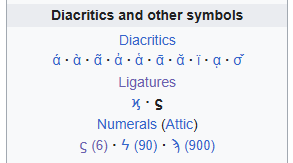
    It may just be my browser (I doubt it), but whenever I click on the only thing in this entire section of Diacritics and other symbols, the most peculiar thing happens–not nothing!

    Let me clarify. When I click on this incredibly specific unlinked part of the text, rather than absolutely nothing happening, as is the normal thing one would expect from any other unlinked text anywhere else, but instead the page just immediately reloads.

    It kind of spooked me the first time, since I had no idea what had just happened, as I was obviously not expecting it to happen. Try it to confirm for yourself. It’s likely no big deal, and could just be a buggy way that unlinked items that should be linked behave, but it’s the first time I’ve come across it.

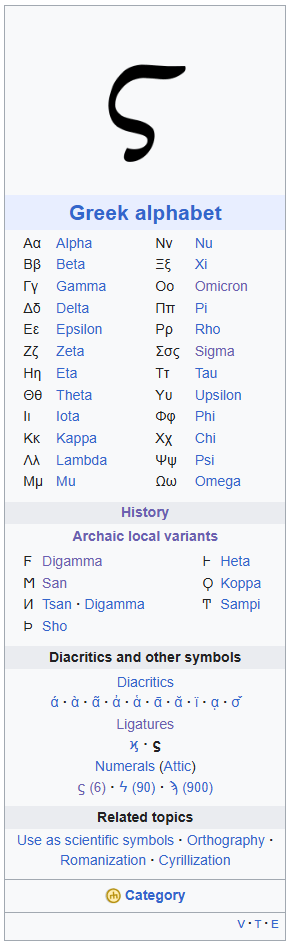
    Why is ϛ the only thing to not have a link?
    The full Greek alphabet box

    Regardless, you’ve got my attention

    Also note that the Sigma and Greek ligatures pages both link the (ς), so it’s not incredibly weird, but weird enough that I’ve been led to intensely focus on this, as well as the number in Rev 13:18.

    So I can’t tell if someone is playing games, or if these pages were written by different people and this one just happens to have a “glitch” only one that one single letter and nowhere else on the page. I’ve only checked a handful of other random spots, but that’s not even a priority now.

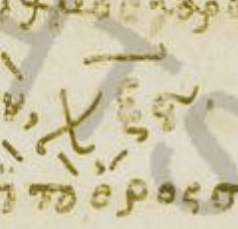
    After really scrutinizing the actual Greek numeral in Revelation, I’m starting to wonder if it’s even a 6 at all. Some may think that suggestion is impossible. Is it?

    Greek numerals

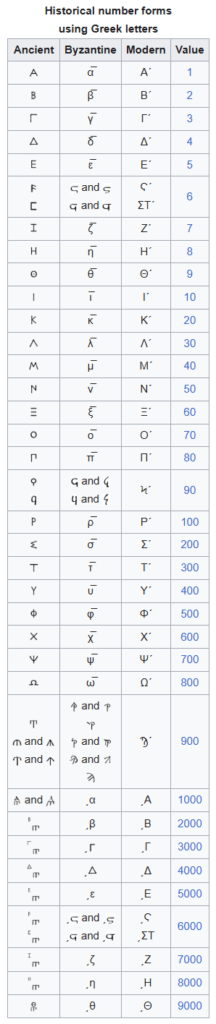
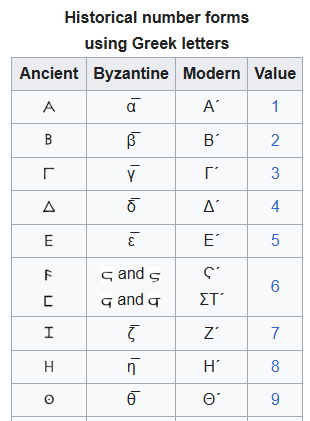
    Below is the Greek numerals chart. The first image is only 1-9 for slightly easier and larger viewing here, and the second one is the full chart, though it’s a bit of an eye strain.

    Greek numerals full chart

    The first numeral, regardless which chi (χ̅ or Χʹ) is used, must be 600. There’s no other option. Likewise with the second numeral xi (ξ̅), there’s only one option. After comparing the final numeral with every possibility, I’m starting to think the stigma/sigma/digamma (ϛ, ς, Ϛ) fiasco may be a red herring, and that the last digit may be a 7! Why? It seems to be hiding in plain sight.

    Neither of those three letters have a reversed hook on the end of its rounded top, only zeta (ζ) does. Keep in mind that waw got switched around, zeta took its place in the alphabet order, but waw/digamma kept its numeral, and now this?

    In modern typefaces, lowercase stigma is similar in appearance to final sigma (ς), but the top loop tends to be larger, and extends further to the right.

    There’s no mention of the line reversal of the top loop, just the size of the loop. If you look at it honestly and without bias, the loop reversal is almost half the size of the entire numeral. The only other visual possibilities are a couple of the cursive koppas, but their numeral is 90, and the cursive digammas, which are also 6 like their regular counterpart.

    Six hundred threescore and…?

    Let’s just start with a list of every possible verse.

    1 Kings 10

    14 Now the weight of gold that came to Solomon in one year was six hundred threescore and six talents of gold,

    2 Chronicles 9

    13 Now the weight of gold that came to Solomon in one year was six hundred and threescore and six talents of gold;

    Ezra 2

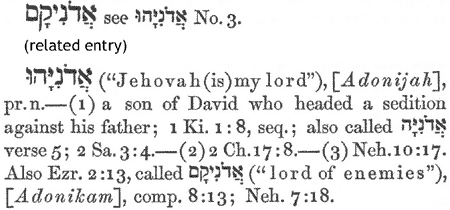
    13 The children of Adonikam, six hundred sixty and six.

    Nehemiah 7

    18 The children of Adonikam, six hundred threescore and seven.

    G706: ἀριθμός arithmós

    1. a fixed and definite number
    2. an indefinite number, a multitude

    Every verse that uses the word for count in Revelation 13:18, excluding itself, points to the context that it’s counting a specific group of people. If I’m wrong and it is indeed 666, it points to Solomon or Adonikam (or the spirit of the man in whatever form it ends up taking) as far as I’ve been able to discern so far. If I’m right, it appears to be pointing at Adonikam. See my post on The Beast for detailed info on the number and its connections to Solomon.

    H140: אֲדֹנִיקָם ʼĂdônîyqâm

    1. Adonikam = “my lord arose”
      1. the head of an Israelite clan who returned from exile

  • The Great Rift

    The Great Rift

    Intergalactating cosmilk river, or literally riven?

    It would first be prudent to rigorously explore with much vigor the mainstream narrative on what the Great Rift, or Dark River, is, so we can get to the bottom of this thing, or beyond the event horizon, as it were. Is it the Milky Way galaxy spiraling off into oblivion at the speed of dark?

    Nope! Whew.. that was an exhausting quest on the bleeding edge of astrophysics–truly the frontier. Time really is speeding up lately, isn’t it? That entire investigation felt like it only took a few minutes. Oh well, moving on. I’ll be expecting the lab results any day now.

    Bow in the cloud

    Genesis 9

    13 I do set my bow in the cloud, and it shall be for a token of a covenant between me and the earth.

    It’s safe to say that the “bow in the cloud” is universally accepted as the rainbow. It makes sense. It didn’t rain before the flood, but it did mist, however that worked. The atmosphere seems to have had some regular cycle of atmospheric mist to water all the flora and fauna. Wouldn’t people have been able to see a rainbow at least some of the time, if not always?

    I suppose that depends what elevation the mist reached. What has never changed is the firmament, which is the necessary piece to cause the light refraction to make a rainbow visible. Regardless of the potential visibility of a rainbow during antediluvian times, what if the covenant God made with the earth was something else?

    Oh wait, this isn’t what Genesis 9:13 meant…

    Bowmen and archery

    Let’s see what the word for bow is in Genesis. Now it’s time for that rigorous linguistic archaeology that I mentioned earlier–well more or less mentioned.

    H7198: קֶשֶׁת qesheth

    • bow
      1. bow (for hunting, battle)
      2. bowmen, archers
      3. bow (fig. of might)
      4. rainbow

    It is overwhelmingly translated as “bow”, and never specifically as “rainbow”. Ever notice that? Everyone just says rainbow as if it’s just an obvious, accepted fact, because what else could it be, right? It makes sense, yet it’s not technically even in the Bible.

    Dictionary uses of H7198 bow

    Let’s go as far back in history as possible for an origin of this word.

    H7185: קָשָׁה qâshâh

    • (Qal) to be hard, be severe, be fierce, be harsh
    • (Niphal) to be ill-treated
    • (Piel) to have severe labour (of women)
    • (Hiphil) to make difficult, make difficulty

    There are several more definitions, but they’re all similar. Well that explains the punishment aspect of flooding the entire earth, but it says nothing about the visual aspect. Let’s check the other word it grew from and any related words in an etymological dictionary.

    • H6983: קוֹשׁ qôwsh – (Qal) to lay bait or lure, lay a snare, lure
    • H7199: קַשָּׁת qashshâth – bowman, archer

    Iris, water flow, light, and color

    Everything else has to do with either archers, bowmen, Sagittarius, one mention of rainbow, convexity, and then cornea, which is קַרְנִית (qarnit). So in every case, there’s a sense of bending. What about Greek? There are two verses that translate to rainbow in English. Then there’s a verse in Ezekiel that makes it difficult to say that it might not be a rainbow, but who really knows until we see God with our own eyes?

    Ezekiel 1

    28 As the appearance of the bow that is in the cloud in the day of rain, so was the appearance of the brightness round about. This was the appearance of the likeness of the glory of the Lord. And when I saw it, I fell upon my face, and I heard a voice of one that spake.

    Revelation 4

    And he that sat was to look upon like a jasper and a sardine stone: and there was a rainbow round about the throne, in sight like unto an emerald.

    Revelation 10

    10 And I saw another mighty angel come down from heaven, clothed with a cloud: and a rainbow was upon his head, and his face was as it were the sun, and his feet as pillars of fire:

    I wouldn’t think of an emerald when seeing a rainbow. A rainbow is the full spectrum of color, not overwhelmingly green. However, the aurora better fits that description. Let’s check the Greek word that gets translated as rainbow and its related words.

    G2463: ἶρις îris – from G2046

    • rainbow
    • iris

    G2046: ἐρέω eréō – to utter, speak, say, from:

    • G2036: ἔπω épō, ep’-o – to speak, say
    • G5316: φαίνω phaínō – bring into light, cause to shine, shed light
    • G5346: φημί phēmí – make known one’s thoughts, declare, say
    • G5457: φῶς phōs – light, star, fire, lamp
    • G4482: ῥέω rhéō – to flow; ῥεύω; rheúō – flow, run as water
    • G4483:ῥέω rhĕō – to pour forth, to utter

    That’s basically where the trail ends in Strong’s, but it’s interesting, and we may be getting somewhere with the words related to flowing water. There was already a well-established word for star in Genesis 1, so we can safely rule that out. It’s time to switch to the standard etymology.

    rainbow

    “arc of prismatic colors formed by the refraction of light rays by drops of rain or vapor,” Middle English rein-bowe, from Old English renboga; (rain + bow)

    That’s basically a dead end.

    iris

    late 14c. as the name of a flowering plant (Iris germanica); early 15c. in reference to the eye membrane, from Latin iris (plural irides) “iris of the eye; iris plant; rainbow,” from Greek iris (genitive iridos) “a rainbow;” also “iris plant” and “iris of the eye,” a word of uncertain origin, traditionally derived from PIE root *wei- “to bend, turn, twist.”

    Unsurprisingly, it’s a word of uncertain origin, which is typical when it comes to these things.

    Iris was the name of the minister and messenger of the Olympian gods (especially of Hera), visibly represented by the rainbow (which was regarded as the descent of a celestial messenger). From the oldest parts of the Iliad the word is used of both the messenger and the rainbow.

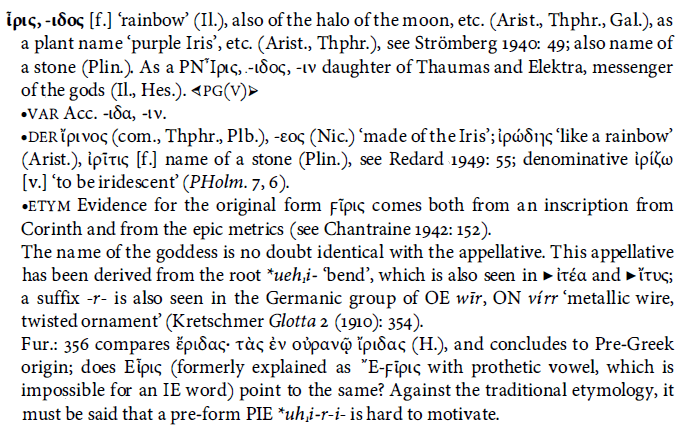
    We’ve hit another dead end. Coming back to iris in the etymological dictionary, we get a couple new options, and since I can’t really type Greek beyond the basic alphabet, a screenshot will suffice.

    G2463: ἶρις, -ιδος

    Wait, isn’t this about the Great Rift?

    It may seem like I’m really trying to find something other than “rainbow”, but I feel like rainbows existed before the flood. I could definitely be wrong though. There are a few interesting things about the Great Rift that are too hard to just ignore though, so let’s get into it.

    If I’ve learned something over the years, it’s that we’ve been lied to about absolutely everything. When it comes to the God, Jesus, creation, and the Bible, the lie factor is triple that. So when there’s an anomaly in the sky that is called the Great Rift, and it indeed looks like a massive tear in the sky, on top of knowing the flood happened, while also knowing that the biblical view of the earth is the truth, rather than the spinning ball they’ve rammed down our throats since we could barely walk, I tend to not believe the narrative. Also, just look at it, and then think about the iris connotations and definitions of this word group.

    All credit goes to the respective photographers – I’ll get the sources at some point

    The bow and bend words make sense, but does that not look like an eye? And why was there a related word for water flowing?

    Genesis 7

    11 In the six hundredth year of Noah’s life, in the second month, the seventeenth day of the month, the same day were all the fountains of the great deep broken up, and the windows of heaven were opened.

    And that is why I don’t buy the lactating black hole in space story. The windows of heaven must’ve opened from somewhere, and what better place than where there’s a literal giant rift in the sky?

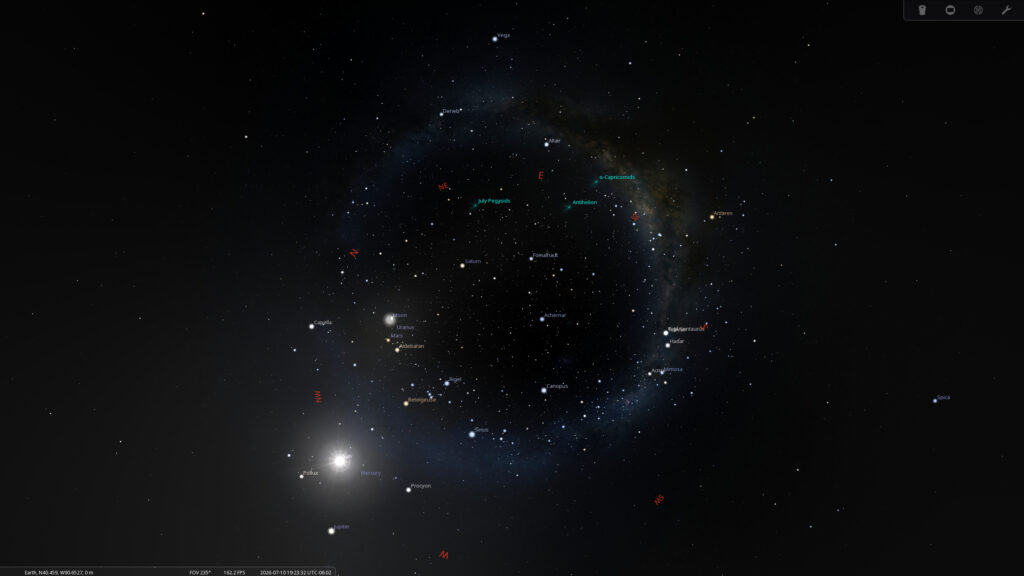
    Something else that’s interesting, something I hadn’t noticed til recently, is that the Dark River isn’t just a tear stretching across a portion of the sky. It goes all the way around the firmament 360°.

    The Great Ring, er Great Rift

    A timelapse video can’t capture the entire thing, but between them and this view, the iris and cornea words are starting to take on multiple meanings.

    That’s extremely colorful, certainly more iridescent than a normal rainbow. Even without the timelapse, imagine seeing that before cities saturated the sky with light, drowning out a large portion of the visible stars. it’s already beautiful, but pair it with the aurora and it’s breathtaking.

Index