Tag: 666

  • Yogh

    Yogh

    The letter yogh (uppercase: Ȝ; lowercase: ȝ) has a fascinating history, and it seems to be everywhere and in many languages, yet today it’s almost as if it doesn’t exist. Maybe it’s best to start from today and go backward in history.

    The letter yogh was used in Middle English and Older Scots to represent several phonemes, such as y, j, and g. It is from Insular G (ᵹ), the form of g in the medieval Insular script.

    It started to become confused with Ezh (Ʒ, ʒ), or “tailed z” when early to middle Scots began to use z in place of yogh, since it wasn’t in their fonts. Now some Scots names have a z, which is still pronounced as a y.

    It still represents a wide range of pronunciation, such as the o in body or in code, the voiceless velar fricative (x) range of k in kind, or the ch in loch, as well as the previously mentioned voiced velar fricative (ɣ) consonantal range of y, j, and g.

    A rough-coated, dough-faced, thoughtful ploughman strode through the streets of Scarborough, after falling into a slough, he coughed and hiccoughed.

    This absurd sentence shows just how many different ways there are to pronounce the word cluster ough, which used to be represented by just one letter. Here are the nine ways it is pronounced today, which is equally absurd.

    1. /ʌf/“uff” (rhymes with stuff) rough, tough, enough
    2. /oʊ/ or /əʊ/“oh” (rhymes with no) though, although, dough
    3. /ɔː/“aw” (rhymes with saw) thought, bought, brought, fought
    4. /uː/“oo” (rhymes with too) through, throughout
    5. /aʊ/“ow” (rhymes with how) bough, plough (spelled plow in US), drought
    6. /ɒf/“off” (rhymes with cough) cough, trough
    7. /ə/“uh” (a weak schwa sound) thorough, borough (Note: mainly in UK English)
    8. /ʌp/“up” (rhymes with cup) hiccough (traditionally pronounced like “hiccup”)
    9. /ɒk/“ock” (rhymes with lock) lough (an Irish/Scottish word for lake)

    The official history of yogh leads back through g, c, Greek gamma (γ), and then Hebrew gimel (ג), but we’re going a different route–the nebulous path of voiceless velar fricative (x), voiced pharyngeal fricative (ʕ), and the voiced palatal approximant (y/j). It’s a path where the letters of the Greek alphabet became uncoupled from their Hebrew source equivalents.

    Omicron

    Omicron is the 15th letter of the Greek alphabet and has the short o sound. The name means  ὂ μικρόν (ò mikrón), literally ‘small o’. Its parent letter is Hebrew ayin, and its Greek numeral value is 70.

    Its position relative to the Hebrew alphabet hasn’t changed as much as some letters have, but regardless, now would be a good time to have an alphabet evolution chart for reference. Even this letter’s shape has stayed relatively stable throughout the millennia, with its beginnings as the hieroglyph for eye (𓁹), which is what ayin means. If I were to speculate, once a letter attains a shape of a basic circle, there’s really no improving or shortening it.

    Notably, omega (Ω, ω), meaning ‘great o’ and having the long o sound, resembles a clockwise-turned yogh–in lowercase anyway, while the opposite is true in early Cyrillic (Ѡ), where instead its uppercase omega more resembles the turned yogh. Curiously, also lowercase epsilon (ε) and xi (ξ) both look quite like a flipped yogh.

    This chart is a simple and easy way to see how each letter has changed position over time as it evolved through each language’s subsequent adoption of it. Most letters have had an easy and straight-forward evolution, but the sound cluster involving yogh and its wide range of phonemes is a real cluster, indeed.
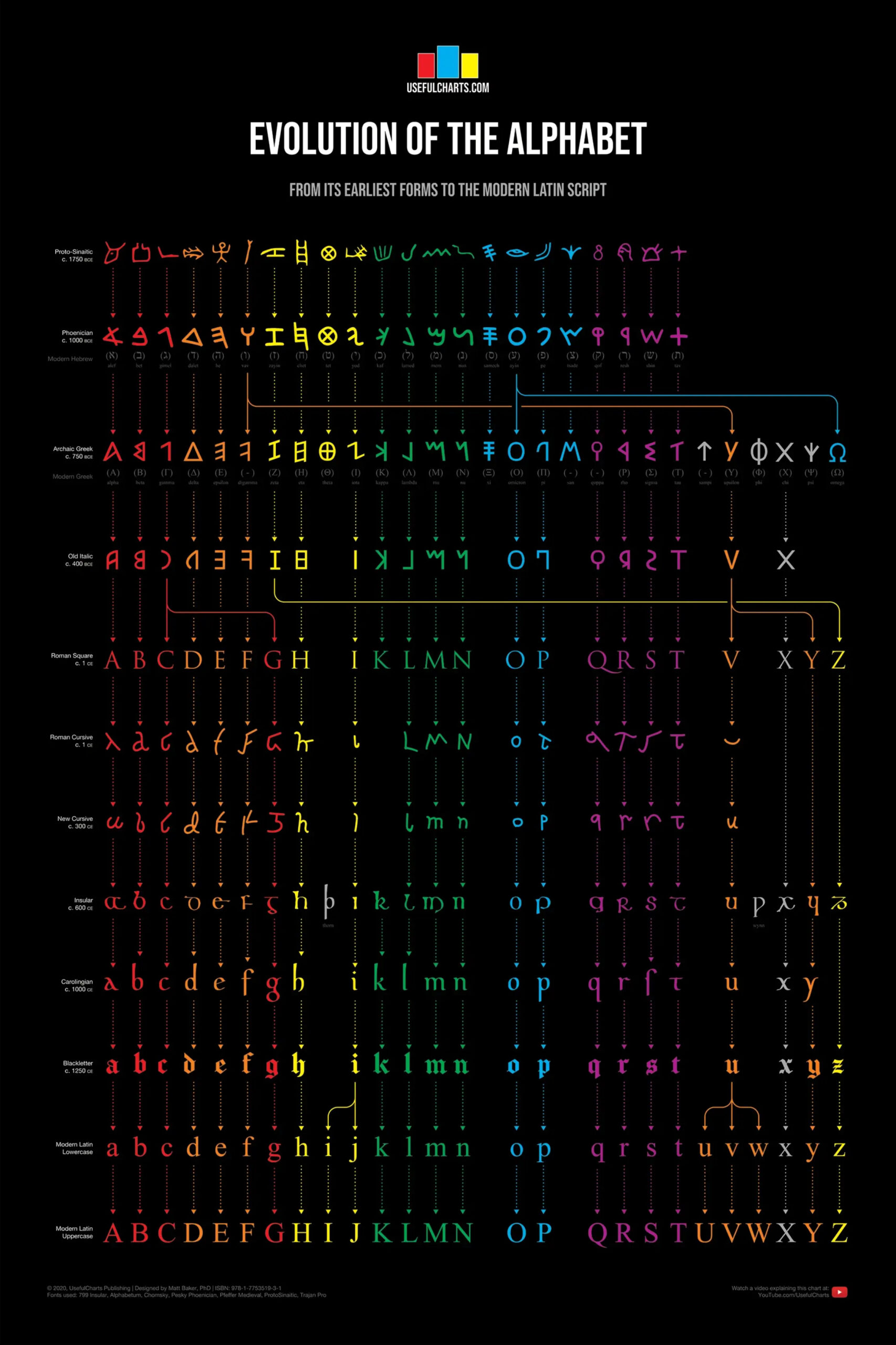
    Evolution of the Alphabet chart
    Useful chart from usefulcharts.com

    Ayin

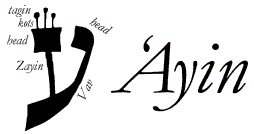
    Image courtesy of Hebrew for Christians showing the tagin (crowns)

    Going further back in time, we have the 16th letter of the Hebrew alephbet, ayin, which as mentioned above means ‘eye’. Like omicron, it also has a numeral value of 70, and is one of seven letters to receive tagin (crowns) when written in a sefer Torah. In Strong’s:

    H5869 עַיִן ʻayin:

    1. eye
      1. of physical eye
      2. as showing mental qualities
      3. of mental and spiritual faculties (fig.)
    2. spring, fountain
    Absurdly-long full Gesenius’ Hebrew-Chaldee Lexicon entry

    You can’t say I didn’t warn ya!

    It represents a voiced pharyngeal fricative (/ʕ/), which sounds like augh, but more rounded and with the throat somewhat constricted, making an almost guttural kh sound as in Hebrew or German. The wiki link has an audio clip to give its precise sound.

    Curiously, the modern Hebrew script, called Ktav Ashuri or Square script, taken from Aramaic during the Babylonian exile of the Israelites, is the only one to deviate from the standard o shape of ayin into its evolution as today’s o.

    It has also lost its nuance of pronunciation, becoming simpler, reduced to a glottal stop (ʔ) if not silent like aleph (א), both of which are among the few explicit vowels.

    This is where yogh starts to pierce through the veil and show its spectral face. You can see how ayin ע and yogh ȝ at this point are fairly similar: they each have three lines coming from their curved bases on the right side.

    The only real difference is that ayin’s two upper lines are vertical, and the entire letter has less curvature, which makes sense with the square design of Ktav Ashuri. Ironically, ayin in Hebrew cursive looks just like Greek gamma (γ), the voiced velar fricative symbol (ɣ), and the close/high-mid back unrounded vowel (ɤ).

    cursive Hebrew ayin
    cursive Hebrew ayin

    Other languages and scripts

    One language and accompanying script to fully embrace the yogh shape is Arabic. Its ayin (or ayn, or ain) in isolated form (ع) looks like a fully-formed yogh, just in reverse. It has retained its voiced pharyngeal or epiglottal sound, and it is also the 16th letter, though only in abjadi order, otherwise it’s the 18th. Other languages and scripts with a similar letter and shape are as follows:

    • Arabic ain (initial form): عـ
    • Arabic ghayn initial: غـ — isolated: غ
    • Armenian hi/yi: Յ
    • Armenian t’so/c’o: Ց
    • Syriac: ܥ
    • Nabataean: 𐢗
    • Mandaic: ࡘ
    • Manichaean: 𐫙
    • Palmyrene: 𐡰
    • Southeast Asian nga initial: ڠـ — isolated: ڠ
    • Wolof ngōn initial: ݝـ — isolated: ݝ
    • Tamil nga initial: ࢳـ — isolated: ࢳ
    • Sogdian: 𐼘
    • Elymaic: 𐿯
    • Chorasmian: 𐿀

    Another anomaly is in the Samaritan script. The Samaritans never left their home via capture nor were they scattered for any other reason, thus their alephbet largely preserved the paleo-Hebrew script’s letter shapes, much more than modern Hebrew Ktav Ashuri script anyway.

    The anomaly is that, despite retaining much of the paleo-Hebrew alphabet, their ayin equivalent ʿīn (ࠏ) looks more like Greek omicron, while their yūt (ࠉ), having no Hebrew equivalent, and their ṣå̄ʾdīy (ࠑ), the equivalent to Hebrew tsadi (צ), both look more like yogh than anything else in their script, just turned 90° counter-clockwise. I would have to assume they had contact with the Greeks while Judah, Benjamin, and the Levites and small assortment of other tribes were in their 70 year Babylonian exile.

    The friendly ghost

    That is all fairly interesting–and then there’s the Indian Brahmi script and its variants. Many of its letters are from the same Phoenician alephbet, albeit many of them have changed rather drastically, relative to the others we’ve looked at already.

    Brahmi consonants – another script with unequivocal paleo-Hebrew origins

    You can see many of the Brahmi consonants resemble paleo-Hebrew, and notably, the j and jh, both of which have that yogh approximant range, look like a flipped yogh and square ayin, respectively.

    One example each from the Brahmi vowel a variation, ja (𑀚), jha (𑀛), and gha (𑀖) clearly have the classic yogh (or ayin) shape plus their evolution through Brahmi.

    It continues to get even more interesting. Early, or Ashokan Brahmi had more rigid geometric shapes. Its independent vowel o (𑀑), when paired with a dot above it representing m, begets an interesting shape that’s sure to trigger some.
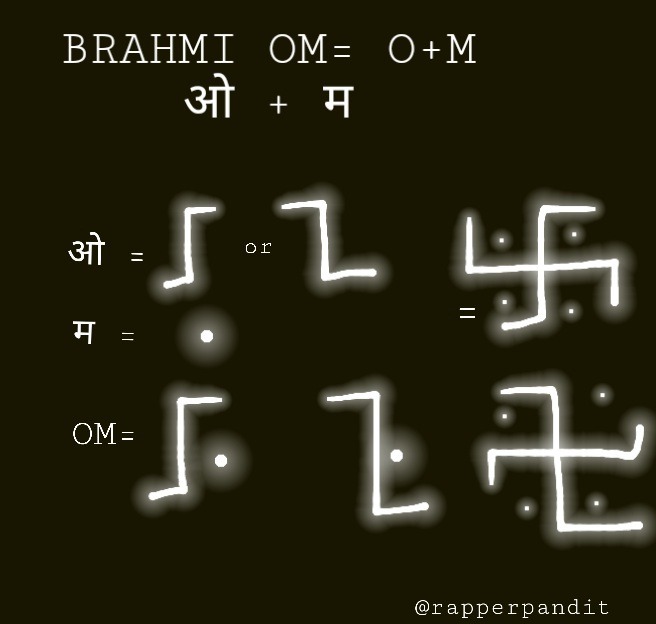
    Trigger alert! No, this isn’t a Nazi swastika. It’s an ancient Brahmi symbol representing om.

    Swasti-kwhat??

    The two following symbols, the swastika (one form of it anyway) and the aum, are arguably two of the most recognized symbols in the world, other than the cross, of course (and probably Mario… mamma mia!). The word swastika is from Sanskrit, derived from root swasti, composed of su, meaning ‘good, well’ and asti, meaning ‘is; it is; there is’. Swasti means ‘health, luck, success, prosperity’. The common suffix ka has multiple meanings.

    The symbol is technically a gammádion, meaning ‘little gamma’, an ancient Greek cross or swastika symbol, which is formed by combining four uppercase gammas (Γ). It’s also known as a fylfot or gammata.
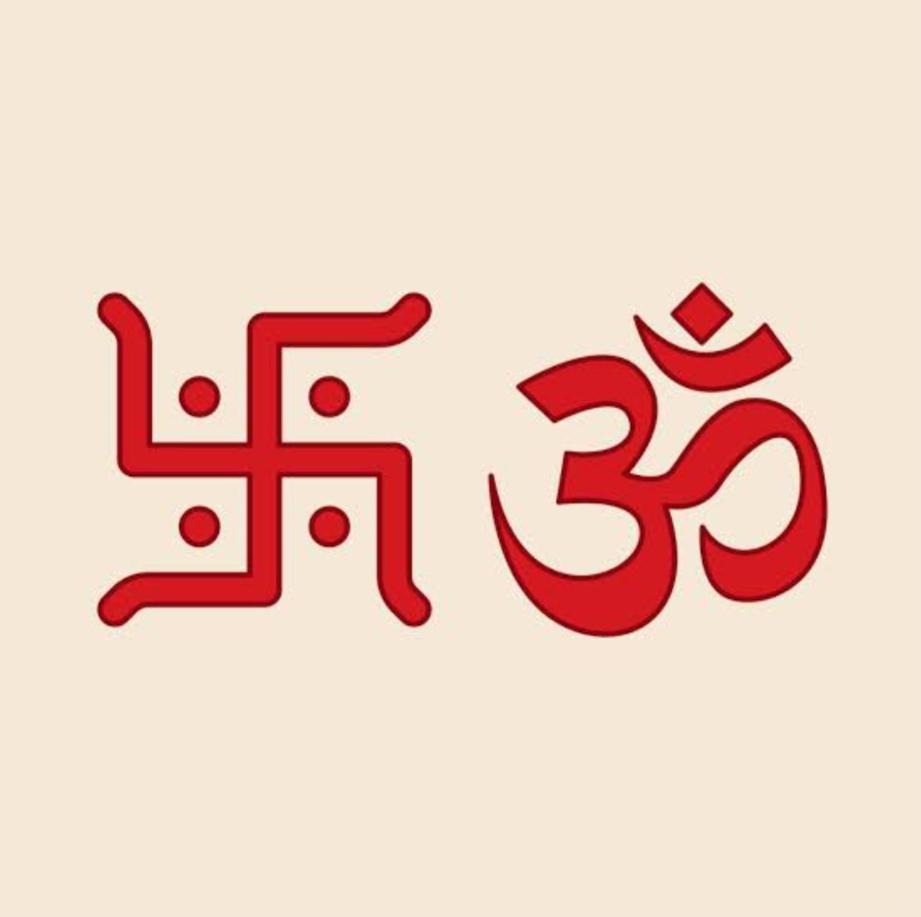
    Trigger alert! 🚨

    Aum

    The other symbol aum () is a cursive ligature of Devanagari ओम् and is composed of four parts:

    • Vowel: अ (a)
    • Vowel diacritic: ो (o)
    • Consonant: म (m)
    • Virama stroke: ् (indicates absence of an implied final vowel)

    By now, it should be clear the ghost of yogh is peeking through the veil again here, seen in the vowel अ portion of aum. Interestingly, they also have a similar vowel range with the au-, yogh, and augh sounds.

    Brahmi’s letter for mem or m (𑀫) leaves no doubt as to be attached to the ȝ from the back, retaining the aforementioned dot for m. The m (ܡ) in the Syriac script looks the same, just turned counter-clockwise and having sharp, square corners. Then of course there’s modern Hebrew with its similar mem (מ ,ם) shapes sans top curve.

    Yogh-related words

    Runes

    The Eihwaz (also Eiwaz or Eihaz) rune (ᛇ) looks familiar, doesn’t it? The name is reconstructed Proto-Germanic, from a word for the yew tree, the evergreen Taxus baccata. Needless to say, yew sounds practically the same as yogh. The proto reconstruction:

    • *īhaz (*ē²haz, from Proto-Indo-European *eikos)
    • ēoh (also īh) in Old English
    • *īwaz (*ē²waz, from PIE *eiwos)
    • īw
    • yew

    The Elder Futhark e rune Ehwaz (ᛖ), means ‘horse’; in Old Irish ech. In Anglo-Saxon futhorc it became eh, which was technically eoh, but the o was removed to avoid confusion between it and the above ēoh (ᛇ).

    Many words spring forth from the PIE root *yeug-, meaning ‘to join’. At least one word that likely came to mind within minutes of starting this article is yoga, the ubiquitous Sanskrit word meaning ‘union, yoking’ (with a spirit or entity).

    goat yoga 😂🐐
    Don’t do this, but aww look at the goat! The goat may look cute, but you look dumb. Also, see sidenote.
    Sidenote about yoga and yoking

    The etymology says it’s about yoking with “the Supreme Spirit”, but that’s false. The only thing you’ll be yoking with while doing yoga are demons.

    I’m fully aware that may sound weird, but I say it from experience–in fact two separate experiences with a demon, both after having done yoga for a few days in a row. I simply cannot overstate that the only times I have EVER had an encounter with a demon were these two times… only after practicing yoga.

    The first one was immediately after the yoga session while resting. My eyes were closed, then suddenly a demonic face rushed right at me, instantly freaking me out. The other encounter was years later, which came in a dream the night I had done yoga for the third day in a row. I’ll preface this by saying I have some bizarre dreams, and no matter what crazy things happen in them, they never scare me, not even slightly.

    But this simple and short dream, which was just a quiet and still scene of the decorated fireplace during Christmas of a house I previously lived, immediately vanished to black. Then I heard and felt the insectoid growling or buzzing of the demon right next to me, though I couldn’t see it–or anything else. It was literally pumping fear into me, getting more and more intense until I could finally wake up. I’ve never had anything inject fear into me.
    This is the only yoga you should be doing.

    Like a Ouija Board, or a sin like lust, it opens a door to that realm. Stretching alone is obviously perfectly fine. The difference is the specific poses, likely derived in a scientific manner over millennia (or given by some demon), done basically in a ritualistic manner, while repeating mantras.

    If you wanna have a relationship and conversation with God, get to know Jesus!

    A few other words that come from *yeug- are join, conjugal, junction, juxtapose, syzygy, zeugma, and zygote. Yolk does not, however. It comes from Middle English yelwe, from Old English geolu and geolwe, meaning ‘yellow’, ultimately from PIE root *ghel- ‘to shine’, the same source for ‘gold’.

    Back to Greek

    Before getting into some of the oddities surrounding Greek and its relationship to yogh, we should look at the strange letter switching between Greek and Hebrew throughout history. A shorter alphabet evolutionary chart will help save your scroll wheel a few miles worth of tread.
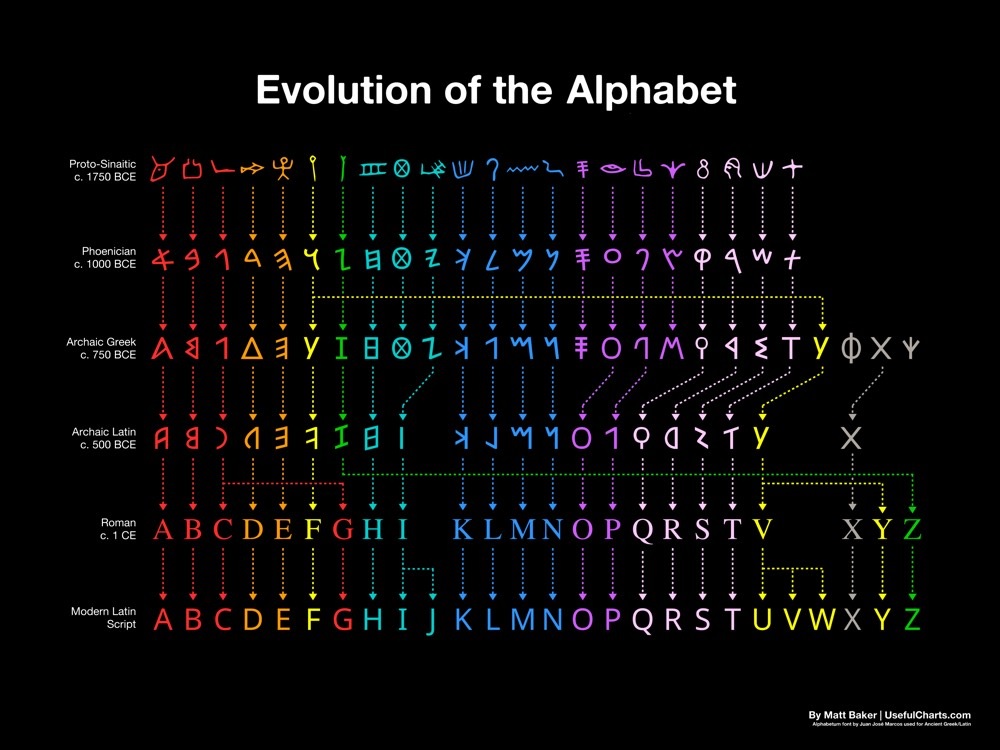
    Older version, but still useful

    Behold the nail

    The first letter to be scrambled is waw, or as some like to call it, vav, has the w sound and means nail or hook. Its name invites another variable into the equation: when did it shift from waw to vav, and why? Also, did the sound shift precede the letter shift, or vice versa? For now we’ll just focus on the 6th letter position:

    • Hieroglyph: 𓏲
    • Phoenecian: 𐤅
    • Modern Hebrew: ו
    • Ancient Greek: digamma or wau/waw (Ϝ, ϝ)
    • Greek: zeta z (Ζ, ζ)

    Wait, what happened? Certainly the w sound hadn’t become obsolete. So how did the 6th letter with a w sound soften right past vav into the f shape? The only letter even close to an F at that point in history would’ve been yod/yodh (𐤉), meaning hand.

    Even more bizarre is the Arabic equivalent to yod is (𐩺), and in Ge’ez it’s (የ). Arabic yod is the exact same shape as Proto-Sinaitic, and Ge’ez is just barely different.

    Even its Unicode character doesn’t look how it should (see below).

    Phoenician yodh

    A doublet of waw was also borrowed as a consonant for [w] (Ϝ, digamma).

    It makes sense on one level: stack two gammas (Γ) to get digamma, but when they borrowed the Phoenician alephbet, yod already existed as the letter above. Would that not be confusing, while they were still writing right to left?

    Just for fun, let’s compare two wiki pages, Waw and F:

    Waw

    Waw (wāw “hook”) is the sixth letter of the Semitic abjads…

    F

    The origin of ⟨F⟩ is the Semitic letter waw, which represented the sound /w/. It probably originally depicted either a hook or a club. It may have been based on a comparable Egyptian hieroglyph such as that which represented the word mace…

    Oh I see, it probably depicted a hook, probably, since it’s too difficult as a wiki editor to check a nearby wiki page or do a quick search, but a club? Now that’s a new one. And sorry but no, the well-established hieroglyph for waw (𓏲) certainly does not look like a mace.

    Digamma dilemma

    Apparently digamma went through many changes, more than any other Greek letter as far as I’ve seen so far:

    What I would like to know, is why are there 100-200 Unicode characters reserved for the long-extinct and as yet undeciphered Minoan Linear A hieroglyphic script and the Mycenaean Greek Linear B script–the earliest Greek scripts–while the apparent development of the much more recent Byzantine digamma with its seven mutations has not a single Unicode character?

    For example, is the Unicode character for the utterly useless wheelless chariot (𐃍) really necessary, while digamma has none for those intermediate phases? It’s a chariot, and it doesn’t even have wheels. The only difference between it and wheeled chariot (𐃌) is the tiny wheel near the front. Meanwhile, the letter that got pushed around and tortured is just completely ignored. Something doesn’t smell right.

    Anyway, looking further on the F wiki page:

    In the Etruscan alphabet, ⟨F⟩ probably represented /w/, as in Greek, and the Etruscans formed the digraph ⟨FH⟩ to represent /f/. (At the time these letters were borrowed, there was no Greek letter that represented /f/: the Greek letter phi ⟨Φ⟩ then represented an aspirated voiceless bilabial plosive /ph/, although in Modern Greek it has come to represent /f/.)

    So it was apparently easier and more logical to shift the w sound of waw, not just to a closed /v/ sound of vav, but beyond it and into the area just on the edge of plosive to form the /f/ sound, rather than just take phi with its plosive /ph/ and force a bit of air out to get the /f/ sound?

    Not only that, but the Etruscans had to form the FH digraph just to represent /f/ of the waw, which had the /w/ sound. It’s just not adding up for me. It doesn’t sound logical or natural. It sounds unnecessarily convoluted–or necessarily, depending on the perspective.

    Beholed the hand

    The letter formerly known as vav, formerly known as waw, digamma has retained its numeral value of 6, though the letter for its numeral use underwent another change and became (ϛ). Then it acquired yet another name change during the Byzantine era: episēmon, from epi- ‘on’ plus sēma ‘sign’, meaning mark or symbol. At some subsequent time its name changed yet again, to stigma, a ligature of sigma (στ). Lowercase sigma in word-final position is (ς).

    stigma (n.)

    1590s (earlier stigme, c. 1400), “mark made on skin by burning with a hot iron,” from Latin stigma (plural stigmata), from Greek stigma (genitive stigmatos) “mark of a pointed instrument, puncture, tattoo-mark, brand,” which is related to stizein “to mark, tattoo” (from PIE root *steig- “to stick; pointed”

    The figurative meaning “mark of disgrace or infamy which attaches to a person on account of evil conduct” is in English is from 1610s. Stigmas “marks resembling the wounds on the body of Christ, appearing supernaturally on the bodies of the devout” is from 1630s; earlier stigmate (late 14c.), from Latin stigmata, itself used in English in this sense by 1630s.
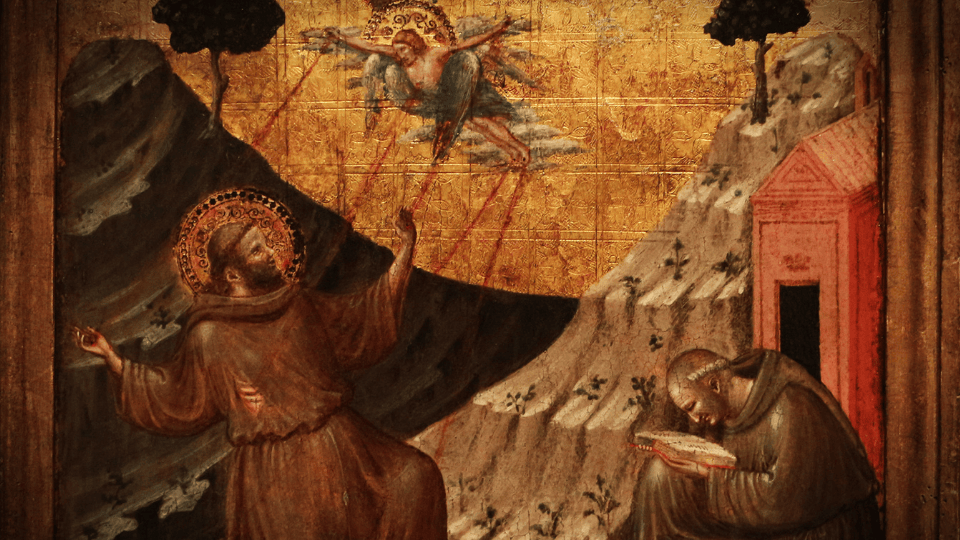
    Confused yet?

    So how in the world did digamma with the /f/, which of course was originally waw with /w/, turn into a ligature for sigma and tau? What a silly question… as if it’s not obvious! It’s easy!

    Once digamma evolved into its final form,

    it was conflated with the στ ligature[citation needed]

    So now a distinction has to be made between the letter (Ϝ, ϝ) and its numeric symbol (ϛ), so it gets replaced by the ligature for sigma and tau. Easy peasy!
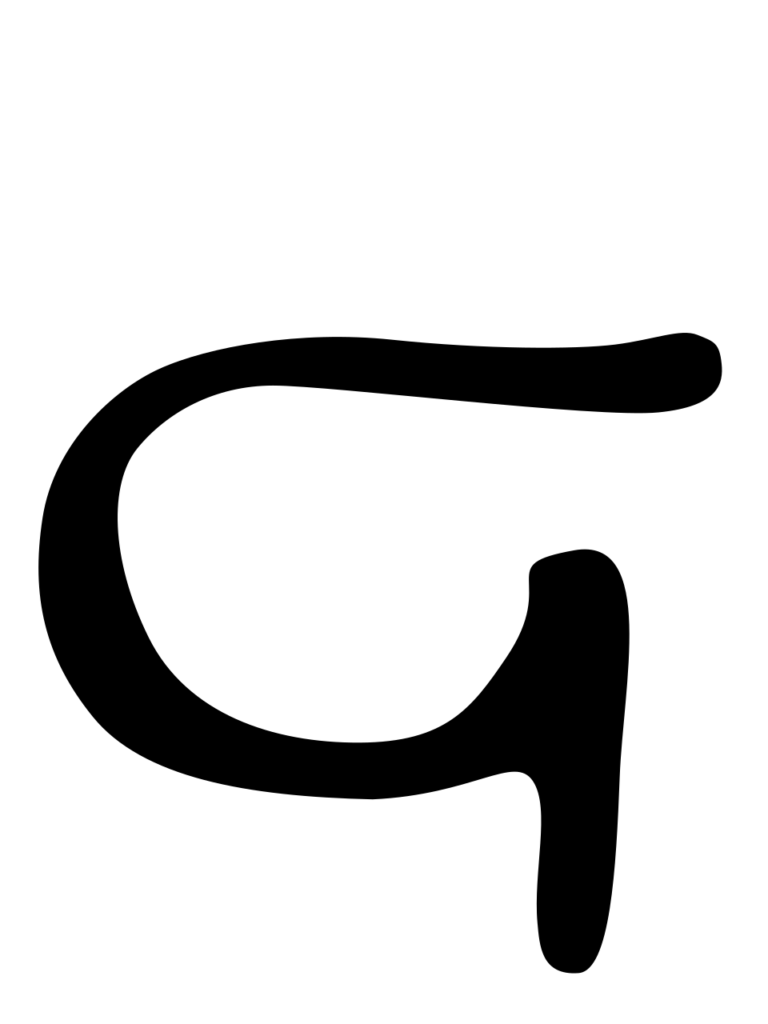
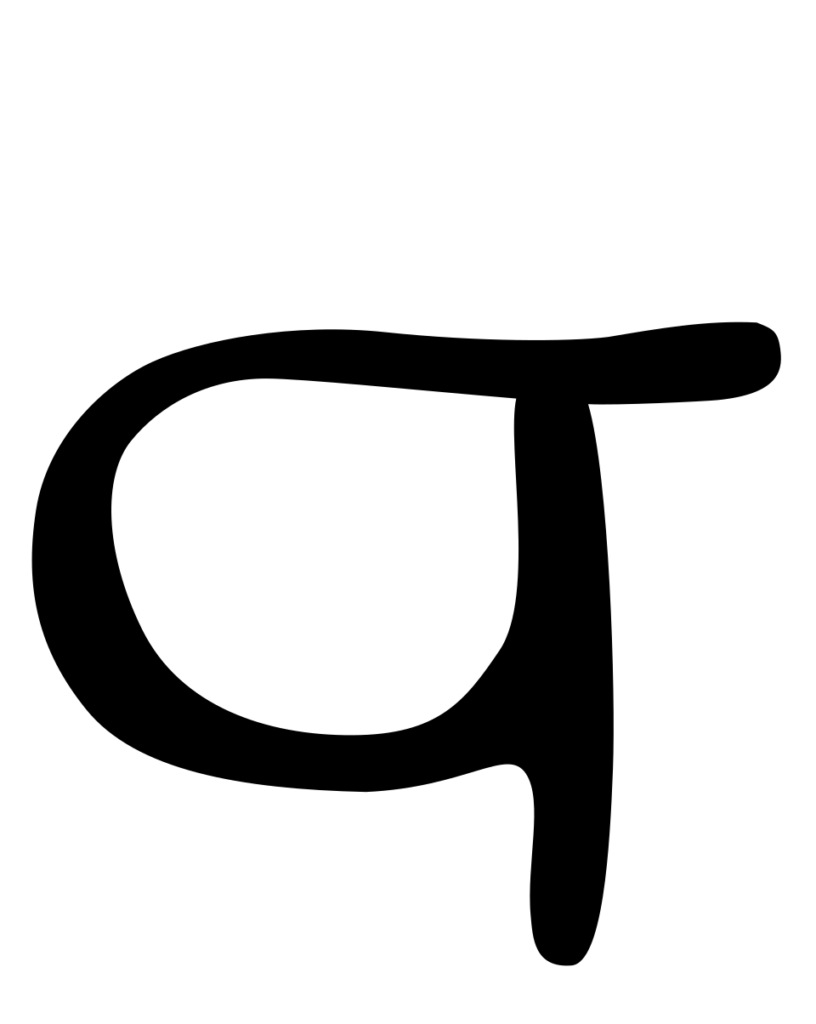
    στ

    I mean if wikipedia says so, it must be true! Don’t worry about the pesky details like this:

    …owing to the accidental similarities of their shapes[citation needed].

    Let’s read on, so we can see the next part of the explanation, shall we? No pretense of having a citation on this part, cuz citations are for losers!

    The association between the numeral 6 and the letter sequence στ became so strong that today, in Greece, the letter sequence ΣΤʹ or στʹ is often used in lieu of ϛ itself to write the number 6.

    That’s just the darndest thing. Through this entire utter nightmare whirlwind of phoneme shifting, name changing, and shape changing, clocking in at well over a dozen combined, the only thing to remain stable and unchanged has been the 6.

    That’s just so fascinating, isn’t it? It’s almost like the 6 is nailed onto the pile of sand now known as stigma, rather than the letter being the nail–er excuse me–the hook, or maybe it’s a club, probably?[citation needed]

    Well, it’s a good thing we don’t need that useless (ϛ) anymore and have stigma (στ) to replace it with. Wait, what’s this? Oh…
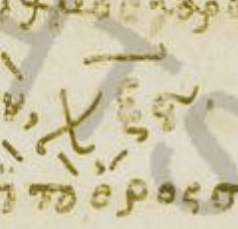
    χ̅ξ̅ϛ - six hundred threescore and six
    Greek numeral χ̅ξ̅ϛ, or 666

    χ̅ξ̅ϛ

    Revelation 13

    18 Here is wisdom. Let him that hath understanding count the number of the beast: for it is the number of a man; and his number is Six hundred threescore and six.

    Quick detour

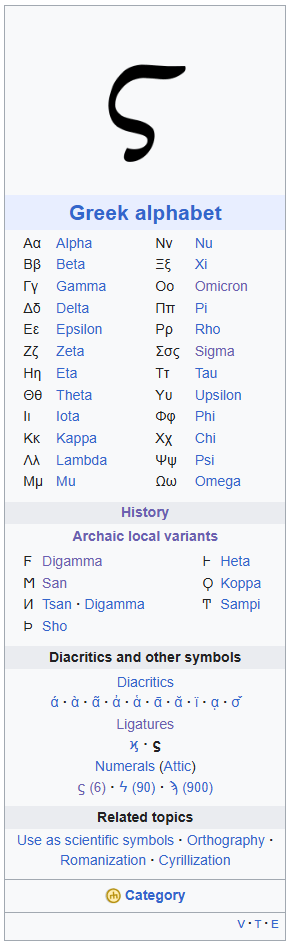
    It may just be my browser (I doubt it), but whenever I click on the only thing in this entire section of Diacritics and other symbols, the most peculiar thing happens–not nothing!

    Let me clarify. When I click on this incredibly specific unlinked part of the text, rather than absolutely nothing happening, as is the normal thing one would expect from any other unlinked text anywhere else, but instead the page just immediately reloads.

    It kind of spooked me the first time, since I had no idea what had just happened, as I was obviously not expecting it to happen. Try it to confirm for yourself. It’s likely no big deal, and could just be a buggy way that unlinked items that should be linked behave, but it’s the first time I’ve come across it.
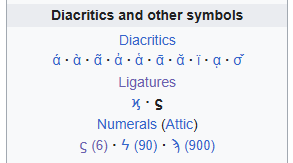
    Why is ϛ the only thing to not have a link?
    The full Greek alphabet box

    Regardless, you’ve got my attention

    Also note that the Sigma and Greek ligatures pages both link the (ς), so it’s not incredibly weird, but weird enough that I’ve been led to intensely focus on this, as well as the number in Rev 13:18.

    So I can’t tell if someone is playing games, or if these pages were written by different people and this one just happens to have a “glitch” only one that one single letter and nowhere else on the page. I’ve only checked a handful of other random spots, but that’s not even a priority now.

    After really scrutinizing the actual Greek numeral in Revelation, I’m starting to wonder if it’s even a 6 at all. Some may think that suggestion is impossible. Is it?

    Greek numerals

    Below is the Greek numerals chart. The first image is only 1-9 for slightly easier and larger viewing here, and the second one is the full chart, though it’s a bit of an eye strain.
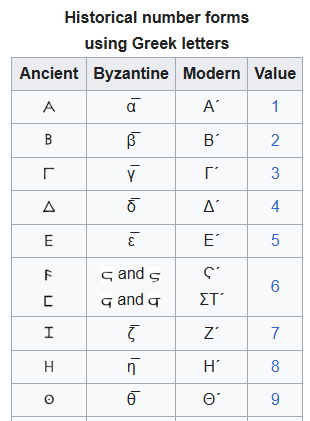
    Greek numerals full chart
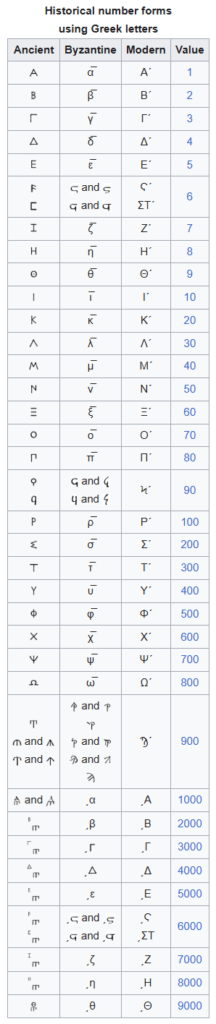
    The first numeral, regardless which chi (χ̅ or Χʹ) is used, must be 600. There’s no other option. Likewise with the second numeral xi (ξ̅), there’s only one option. After comparing the final numeral with every possibility, I’m starting to think the stigma/sigma/digamma (ϛ, ς, Ϛ) fiasco may be a red herring, and that the last digit may be a 7! Why? It seems to be hiding in plain sight.

    Neither of those three letters have a reversed hook on the end of its rounded top, only zeta (ζ) does. Keep in mind that waw got switched around, zeta took its place in the alphabet order, but waw/digamma kept its numeral, and now this?

    In modern typefaces, lowercase stigma is similar in appearance to final sigma (ς), but the top loop tends to be larger, and extends further to the right.

    There’s no mention of the line reversal of the top loop, just the size of the loop. If you look at it honestly and without bias, the loop reversal is almost half the size of the entire numeral. The only other visual possibilities are a couple of the cursive koppas, but their numeral is 90, and the cursive digammas, which are also 6 like their regular counterpart.

    Six hundred threescore and…?

    Let’s just start with a list of every possible verse.

    1 Kings 10

    14 Now the weight of gold that came to Solomon in one year was six hundred threescore and six talents of gold,

    2 Chronicles 9

    13 Now the weight of gold that came to Solomon in one year was six hundred and threescore and six talents of gold;

    Ezra 2

    13 The children of Adonikam, six hundred sixty and six.

    Nehemiah 7

    18 The children of Adonikam, six hundred threescore and seven.

    G706: ἀριθμός arithmós

    1. a fixed and definite number
    2. an indefinite number, a multitude

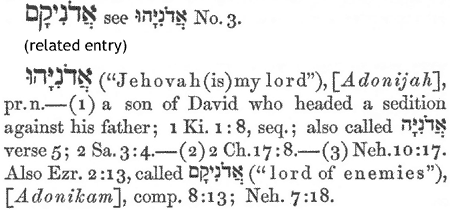
    Every verse that uses the word for count in Revelation 13:18, excluding itself, points to the context that it’s counting a specific group of people. If I’m wrong and it is indeed 666, it points to Solomon or Adonikam (or the spirit of the man in whatever form it ends up taking) as far as I’ve been able to discern so far. If I’m right, it appears to be pointing at Adonikam. See my post on The Beast for detailed info on the number and its connections to Solomon.

    H140: אֲדֹנִיקָם ʼĂdônîyqâm

    1. Adonikam = “my lord arose”
      1. the head of an Israelite clan who returned from exile
  • The Beast

    The Beast

    His identity, his worship, and his mark

    Precious Gemstones

    I’ll start out by saying I don’t claim to know any of the three for certain. I’ve just been exploring the Bible while being led by the Holy Spirit through prayer, uncovering gems that are too hard to ignore.

    A lot of these discoveries are found by looking at Strong’s words, but it’s just one thing I look at. I mainly just follow crumbs and nudges, finding what I find. The Bible never ceases to amaze me, or more accurately, it leaves me in a state of ékstasis, which I stumbled upon by looking up G1611, for the year the KJV was published after its seven years of translation and compiling. It’s a perfect word to be tied to 1611, which never fails to be true, even upon finding connections to words and verses in context. I should note that all of my study and research is only with the KJV.

    G1611: ἔκστασις ékstasis

    • any casting down of a thing from its proper place or state, displacement
    • a throwing of the mind out of its normal state, alienation of mind, whether such as makes a lunatic or that of a man who by some sudden emotion is transported as it were out of himself, so that in this rapt condition, although he is awake, his mind is drawn off from all surrounding objects and wholly fixed on things divine that he sees nothing but the forms and images lying within, and thinks that he perceives with his bodily eyes and ears realities shown him by God.
    • amazement, the state of one who, either owing to the importance or the novelty of an event, is thrown into a state of blended fear and wonderment

    It’s one of the few words with an interesting, thorough definition, and a very well-deserved one at that. Mostly the third one applies: a jaw-drop moment when some amazing gem jumps out of a verse.

    The second definition I have only had the experience of once, when I had a very intense and loving inundation and baptism with the Holy Spirit. A “rapt condition” is apt–akin to an ocean being poured into a thimble and pouring out like a flood. The thought of a personal sort of rapturous experience went through my mind at some point during the hour I was in it. Words don’t do it justice.

    Holy One of God

    Before getting into the beast, it only feels right to go through the Holy Spirit finds first. All glory to Jesus and His precious gift!

    G40: ἅγιος hágios

    • Holy One, most holy, a saint; from G53 + H2282

    G53: ἁγνός hagnós

    • exciting reverence, venerable, sacred
    • pure
    • immaculate
    • clean

    H2282: חַג chag

    • festival, feast

    Acts 3

    14 But ye denied the Holy One and the Just, and desired a murderer to be granted unto you;

    Mark 1

    24 Saying, Let us alone; what have we to do with thee, thou Jesus of Nazareth? art thou come to destroy us? I know thee who thou art, the Holy One of God.

    Luke 4

    34 Saying, Let us alone; what have we to do with thee, thou Jesus of Nazareth? art thou come to destroy us? I know thee who thou art; the Holy One of God.

    The verse triplet, one of which is in an entirely different situation and time, still paints the picture of Jesus in the wilderness rebuking demons, which is interesting. The numbers and verses seem to put itself together nicely, which is fitting with what we’re exploring.

    314
    124
    434

    G314: ἀναγινώσκω anaginṓskō

    • to distinguish between, recognize, know accurately, acknowledge
    • to read

    G444: ἄνθρωπος ánthrōpos

    • a human
    • to distinguish between man and animals and plants, God and Jesus, and angels
    • noted as weak in the flesh and prone to sin
    • with reference to the two-fold nature of man: the corrupt and the reborn Christian conformed to the nature of God
    • people

    It explains itself perfectly: a man or woman who is reborn and saved through the faith and grace of Jesus is granted the gift of the Holy Spirit, who is then able to discern the truth. The triune nature of God is displayed with the 1, 2, 3. Amazing!

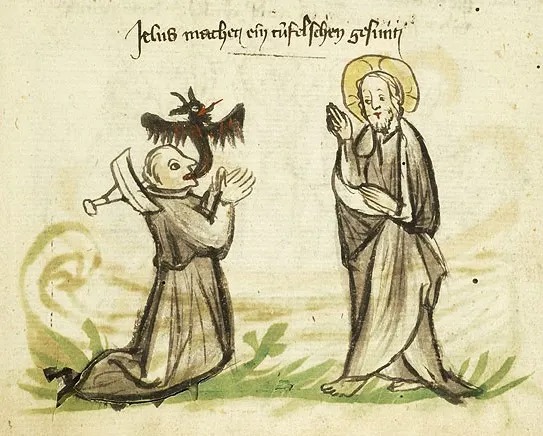
    Jesus casting out a demon – New Testament Illustrations German (Upper Rhine), c. 1425-1435 New York, Pierpont Morgan Library MS M 720, fol. 3r
    Disclaimer (if “trinity” bothers you)

    I have nothing to do with the Catholic church, but there’s no denying the triune nature of God. Catholicism is one of the main topics of this article, so if you are Catholic, hopefully this will help!

    Ecclesiastes

    Ecclesiastes is a strange book. Like Proverbs, the first verse says it’s written by Solomon, but in this case, more precisely it is the “words of the Preacher”–that’s with a capital P–and there’s just something off about the book. What immediately jumped out at me was its odd use of certain words and phrases, some of which are only in this one book. The first one is preacher, which is what Ecclesiastes means and opens with, and the rest shown in order they are found in the book, wasting no time to use them.

    Preacher

    • 11 mentions in entire Bible
    • 7 mentions in Ecclesiastes of “preacher”; 3 are “Preacher”
    • 4 in the New Testament

    Vanity/vanities

    • 99 mentions in entire Bible
    • 33 mentions of “vanity” in Ecclesiastes; 4 are “vanities”
    • 0 mentions in Proverbs and Song of Solomon

    Sun

    • 160 mentions in entire Bible
    • 35 mentions; 29 are “under the sun”
    • 0 mentions in Proverbs and Song of Solomon

    Wisdom (case-sensitive)

    • 11 mentions of “Wisdom” in 9 chapters in the Bible
    • 7 mentions elsewhere, all beginning the verse
    • 4 mentions in Ecclesiastes, 1 in the middle of the verse

    God

    • 4444 mentions in entire Bible
    • 41 mentions in Ecclesiastes

    So these are clearly anomalies, and there are no accidents in the Bible. Indeed, both vanity and sun are used more than God, and indeed God appears last of these five. Here are some verses to set the tone and add context.

    H6953: קֹהֶלֶת qôheleth; from H6950

    • collector (of sentences)
    • preacher, public speaker, speaker in an assembly
    • Qoheleth

    H6950: קָהַל qâhal

    • to assemble, gather for religious or political reasons
    • to summon an assembly for war, judgment, or religious purposes

    Vanity of vanities

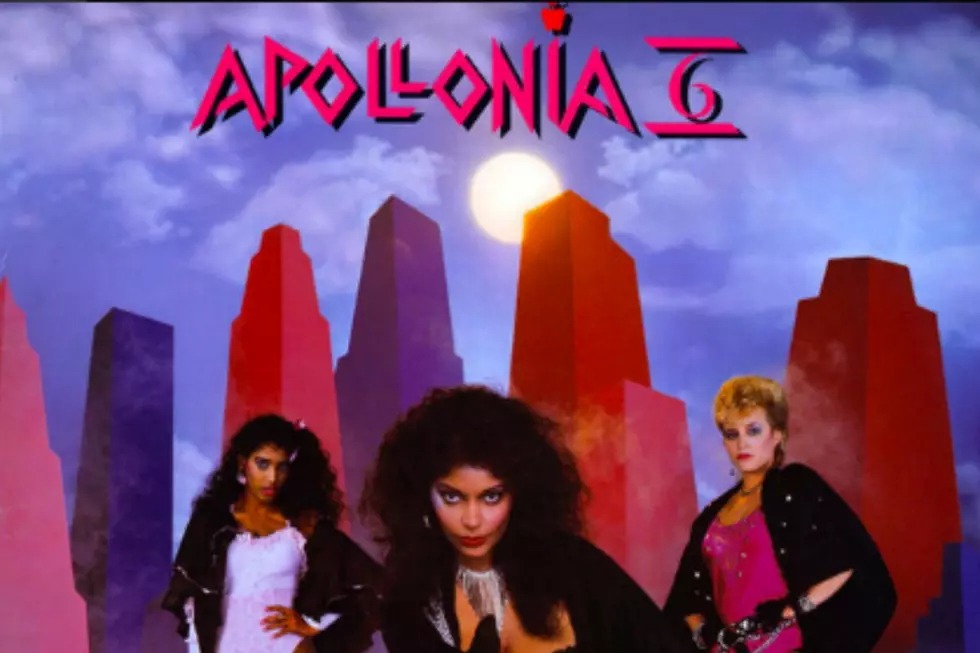
    Uhh.. this was an unexpected connection: Vanity Mourned by Apollonia: ‘End of an Era for Me’

    Detour!

    Before moving on to what I already had written below, I have to address something unusual, almost as if I was meant to find this. After being nearly finished writing this, I was looking for an image related to vanity. The photo I found of Prince on the Rolling Stone cover with Apollonia Kotero (left) and Denise ‘Vanity’ Matthews, who had died in 2016, could not be more glaring.

    It’s unreal, to be honest… Apollonia, the singer of girl group Apollonia 6 (what else would it be?), was the star of Prince’s film Purple Rain, released in none other than… 1984.

    The group only released one album, Self-Titled Album, and what year was it released? Of course it was 1984. Apollonia joined the group, originally named Vanity 6, after Vanity left in 1983. Vanity 6 only released one album as well, which was also self-titled. One of the tracks is named “3 × 2 = 6”, but at this point, is that any surprise at all?

    Vanity was also in the film “The Last Dragon”, because of course she was. Also, Apollonia is covering one of her eyes on her X page cover… because of course she is. And I had only just begun to think about the Apollyon/Abaddon connection and where to go with it, so saying this was serendipity is probably a brutal understatement.

    The 1984 connection will make more sense below, but this new discovery has to stay where it is in the vanity section, as a testament to being spontaneously found, led by the Holy Spirit.

    Ecclesiastes 1

    The words of the Preacher, the son of David, king in Jerusalem.

    Vanity of vanities, saith the Preacher, vanity of vanities; all is vanity.

    Ecclesiastes 4

    Then I returned, and I saw vanity under the sun.

    Ecclesiastes 9

    Live joyfully with the wife whom thou lovest all the days of the life of thy vanity, which he hath given thee under the sun, all the days of thy vanity: for that is thy portion in this life, and in thy labour which thou takest under the sun.

    Ecclesiastes 12

    Vanity of vanities, saith the preacher; all is vanity.

    So you can see what almost looks like an obsession with vanity and the sun, probably even sun worship.

    Six hundred threescore and six

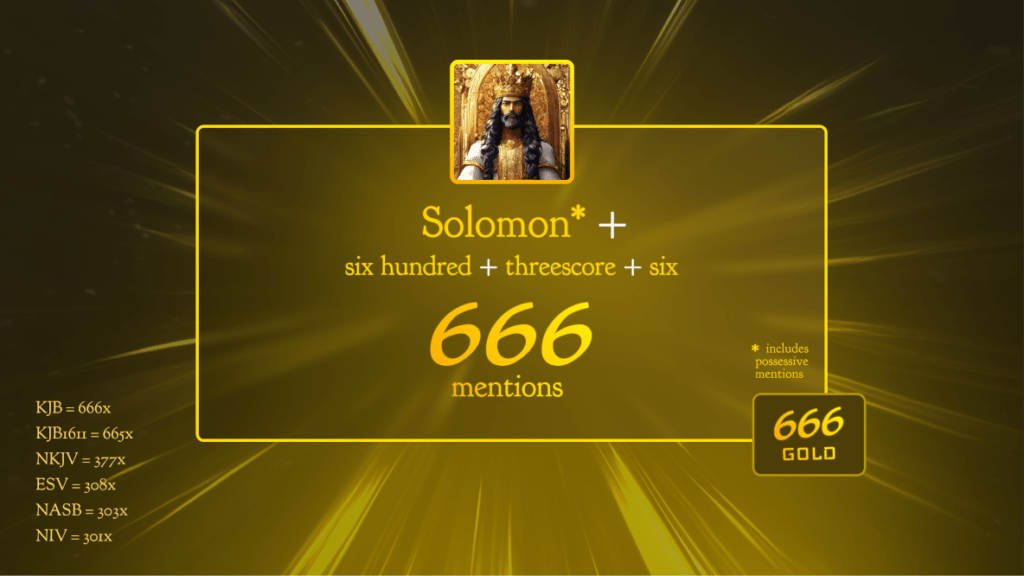
    image from KJV Code, whose research on the interwoven connections in the KJV is amazing

    Revelation 13

    18 Here is wisdom. Let him that hath understanding count the number of the beast: for it is the number of a man; and his number is Six hundred threescore and six.

    Almost everyone has heard of 666, and most Christians are aware of at least one or two verses including its mention. To be thorough, I’ll include each of them. It should be noted that I’m not claiming for certain that the beast is Solomon, but there are a lot of connections to him that are hard to ignore. First let’s see what Strong’s says.

    H5516: χξϛ chx stigma six hundred and sixty six, the meaning of which is the basis of much vain speculation

    Vain speculation… is that so? Where have I heard the word vanity before? Also it’s a bit ironic to mention vain speculation, when the Strong’s definition has done the very same speculation it’s calling out. The difference is, the 666 on the Strong’s entry is virtually permanent. Seriously though, of all words… they chose vain?

    1 Kings 10

    14 Now the weight of gold that came to Solomon in one year was six hundred threescore and six talents of gold,

    2 Chronicles 9

    13 Now the weight of gold that came to Solomon in one year was six hundred and threescore and six talents of gold;

    Ezra 2

    13 The children of Adonikam, six hundred sixty and six.

    Nehemiah 7

    18 The children of Adonikam, six hundred threescore and seven.

    To explore how these verses could connect to 666, let’s first define one of the words used in a curious way throughout Ecclesiastes.

    G4678: σοφία sophía

    • wisdom, intelligence
    • learning
    • interpreting dreams
    • knowing godly and upright living; supreme intelligence (to God, Jesus; or given by Holy Spirit)
    • imparting Christian truth
    • the intelligence evinced in discovering the meaning of some mysterious number or vision
    • the wisdom of God as evinced in forming and executing counsels in the formation and government of the world and the scriptures

    Most of these are what is to be expected for the word. However, what’s unusual are the last two, and they’re quite different from each other, yet related to what we’re trying to uncover.

    The first of these involves “discovering the meaning of some mysterious number”, the very thing this research is all about, almost as if it was meant for this! The second one “formation and government of the world” is more ominous than anything–a key feature of the beast and his system.

    G5595: ψηφίζω psēphízō

    • count, calculate
    • vote (with a pebble)

    The word “count” in Revelation 13:18 is G5595, which appears to have a strong connection to Ecclesiastes 7:27, which just so happens to be chapter 666 of the entire Bible! Is that an accident? I don’t believe in accidents or coincidences in the Bible.

    Ecclesiastes 7

    27 Behold, this have I found, saith the preacher, counting one by one, to find out the account:

    Let’s start with adding the numbers in Revelation 13:18 to the Strong’s number for sophia:

    1,318 + 4,678 = 5,996

    The number 5,996 should immediately jump out. It’s 4 short of 6000, which is obviously a massively crucial year in the biblical timeline. This may not have meant as much if I had discovered it any other year, but it’s 2026, where in four years it’ll be 2030. Now that’s interesting!

    Whether you believe the tribulation lasts 7 years and starts this year, with Jesus returning in 2033, or if it’s really only a great tribulation of 3.5 years and He returns in 2033, or if you believe it’s 3.5 years and He returns in 2030, it appears to be pointing at 2030.

    Regardless, it’s the year the “elite” parasite class of the world has set its sights on for their Great Reset, which is basically the point in time they want the AI beast system fully up and running, with all of us in digital chains. It’ll be a major year no matter when Jesus returns. Another count that has a connection, at least in one of the qualities of the beast, is one that stays true no matter the year.

    1,318 + 666 = 1984

    That might almost be funny if we weren’t already becoming enclosed in a rapidly-increasing open air prison!

    Assembling

    There’s another aspect or quality that connects all these pieces, which is “to summon an assembly for war, judgment, or religious purposes” H6950 qahal, the word related to G6953 qoheleth that we looked at earlier. The Greek equivalent is synágō, where we get synagogue (G4864 συναγωγή synagōgḗ and in Hebrew כְּנֶסֶת Knesset). It has several definitions, but these two will suffice.

    G4863: συνάγω synágō

    • to gather together
    • to bring together, assemble, collect

    Revelation 16

    14 For they are the spirits of devils, working miracles, which go forth unto the kings of the earth and of the whole world, to gather them to the battle of that great day of God Almighty.

    16 And he gathered them together into a place called in the Hebrew tongue Armageddon.

    Revelation 20

    And shall go out to deceive the nations which are in the four quarters of the earth, Gog, and Magog, to gather them together to battle: the number of whom is as the sand of the sea.

    His dark materials

    Lord Asriel fighting “evil” God and His army of angels in the sky for freedom, the same lie since Eden – extremely early sneak peak at our future

    One of the more ominous verses related to the end times and the beast is Daniel 8:23.

    Daniel 8

    23 And in the latter time of their kingdom, when the transgressors are come to the full, a king of fierce countenance, and understanding dark sentences, shall stand up.

    H2330: חִידָה chîydâh

    • a puzzle, trick, conundrum
    • a sententious maxim
    • dark saying (sentence, speech)
    • hard question, riddle
    • proverb

    So not only is this word an exact fit for “dark sentences”, but also for one of the things Solomon is well-known for, proverbs. The book of Proverbs seems to be Solomon’s early years, and Ecclesiastes was written after he had been fully-immersed in the occult, practically surrounded by demons.

    Also, sententious maxim sounds like an excellent fit as well. I would certainly qualify opening with and ending Ecclesiastes on “Vanity of vanities, saith the Preacher, vanity of vanities; all is vanity.” as literally the textbook example of “given to moralizing in a pompous or affected manner”, where a 12-word verse consists of “vanity” four times, and of course for what he–the self-titled Preacher–saith.

    Ecclesiastes 3

    19 For that which befalleth the sons of men befalleth beasts; even one thing befalleth them: as the one dieth, so dieth the other; yea, they have all one breath; so that a man hath no preeminence above a beast: for all is vanity.

    This is a good example of a dark sentence. This is in direct opposition to Solomon’s father David, and more importantly, to God! I can see the adversary accusing us in heaven, slinging venomous blasphemies such as this, and then continuing to do so on earth in the future.

    Psalm 8

    O Lord, our Lord, how excellent is thy name in all the earth! who hast set thy glory above the heavens.

    What is man, that thou art mindful of him? and the son of man, that thou visitest him?

    For thou hast made him a little lower than the angels, and hast crowned him with glory and honour.

    Thou madest him to have dominion over the works of thy hands; thou hast put all things under his feet:

    O Lord our Lord, how excellent is thy name in all the earth!

    David prophesied Jesus many times… meanwhile Qoheleth calls us beasts, but I suppose that’s to be expected.

    Apollyon, or Abaddon

    The original vanity I planned on adding, until the Rolling Stone cover with Apollonia and the artist formerly known as living (too soon?) completely side-tracked me in the best way

    Revelation 9

    11 And they had a king over them, which is the angel of the bottomless pit, whose name in the Hebrew tongue is Abaddon, but in the Greek tongue hath his name Apollyon.

    Back to Prince for a moment. Looking further, he became a Jehovah’s Witness in the early 2000s, and in an article on Ultimate Prince, there’s a quote of him sentencing dark on stage, attempting in a subtle way to negate Jesus reversing our sin curse by hanging on the tree, as it were. Given his past with Apollo, I can be fairly confident Prince knew what was he doing, regardless if it had been his idea or not. A true Christian does not typically make it a point to repeatedly say the gospels lied about such a key detail:

    Prince – then going by “the Artist” – performed “The Christ” with Graham and Chaka Khan on the Essence Awards in 1998, introducing the song by preaching to the crowd. “Stauros: By definition, a wooden stake driven in the ground, used to cause torture or death,” Prince said. “Stauros — perhaps someone lied about the way someone died.”

    Now there’s a good example of a preacher with a chiydah, or dark trick, saying Jesus was impaled on a stake! Of all denominations to join, it was Jehovah’s Witnesses? Then the main thing to do on stage was to make sure he pointed out this falsehood?

    “…where Prince displayed a slide with the definition of stauros, and, as a preamble to his performance, noted the word was ‘by definition, a wooden stake driven in the ground, used to cause torture or death.’”

    Apollo, Helios, and Solomon

    Ecclesiastes 4:7 Then I returned, and I saw vanity under the sun.

    The Vanity 6 track “3 × 2 = 6” now has an even stronger meaning and connection. I wasn’t aware the Strong’s entry for Apollyon was G623!

    G623: Ἀπολλύων Apollýōn, from G3

    • Apollyon the “Destroyer”
    • angel of the bottomless pit
    • Satan

    G3: Ἀβαδδών Abaddṓn, from H11

    • Abaddon
    • ruin, destruction

    H11: אֲבַדּוֹן ʼăbaddôwn

    • Abaddon
    • place of destruction, ruin
    My turn, Prince:
    G623: 6 + 2 + 3 = 11
    H11:             x 2 = 22
    G3:                    x3 = 66
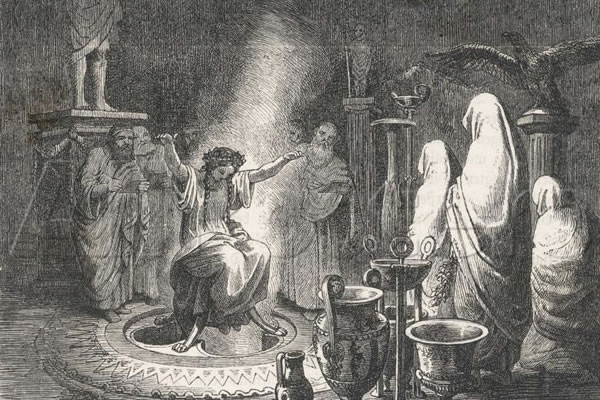
    Oracle of Delphi at the Temple of Apollo, or Apollonion – prophesying while possessed by Apollo

    Apollo is the son of Zeus, which is basically the adversary’s perversion of the Father and His son Jesus. Notably he is considered the god of music and oracular, proving insight, wise counsel, and prophecy. He is also considered to be the most beautiful god. Sound familiar? No wonder it’s vanity, vanity, vanity!

    He’s also a representation of the sun, while Helios is considered either the sun itself, or the charioteer who pulls it.

    At this point, it’s generally known that the beast and satan is Apollo, Apollyon, Abaddon, Lucifer, Nimrod, Gilgamesh, or another handful of names, but I think some connections and qualities that have been discovered will help paint a fuller picture, and at the very least will help identify him sooner when he makes his appearance–if it’s not made abundantly clear to begin with. It can’t be known yet if and when his actual spirit will inhabit a body, but it’s almost guaranteed, I would submit.

    Genesis 10:9 He was a mighty hunter before the Lord: wherefore it is said, Even as Nimrod the mighty hunter before the Lord.

    The mark of the beast

    Since 2021, many of us figured the covAIDS jab was the mark. It had many qualities that made it more than compelling, and some of the timeframes lined up. It still very well could be a part of it, but it’s clear now that it isn’t THE mark.

    The antichrist has to be publicly present, we have to be forced completely out of the mainstream market and probably relegated to barter only, and the worship aspect needs to be present, which includes losing your head if you don’t renounce Jesus and worship the “golden age” or aeon of Horus god. The digital prison ID and wallet, coupled with AI, certainly makes more sense, and appears to be the only real way to truly enforce it all. The jab was likely just a massive trial run for the Jab Mk VI.

    Sophia, the whore of Babylon

    The harlot by which they commit adultery against God goes by many names. A few of the important and prominent ones are Semiramis, Isis, Inanna, Ishtar, Ashtaroth, and Aphrodite, known as the skekhinah.

    שכינה: shekhinah

    • to dwell within
    • “The Divine Presence” or “Divine Feminine”

    Basically, in their twisted kabbalistic view, God is neither or both male and female, and His initial creation was a planned obsolescence, or “the fallen sparks of Tohu”. The initial explosion (big bang after the reset-explosion point) shattered the shekhinah.

    Which is why the Shechinah descends within this world: to seek out those most precious sparks, to rescue them from their shells of darkness, to reconnect them to their source above so that they become once again meaningful and divine—all through us, Her agents, so that this world and this life of ours plays out as not just another zero-sum game, but as an investment with incomparable returns.

    “virgin Mary” aka Semiramis, sitting on the crescent moon of Molech

    Yes, they just make up whatever they want, write it in their Talmud which they consider more important, then pretend it’s true. Generally, in any instance where the Holy Spirit comes into someone, or if an angel or messenger (when it’s Jesus) visits someone, they replace it with shekhinah, like during the exodus in Egypt.

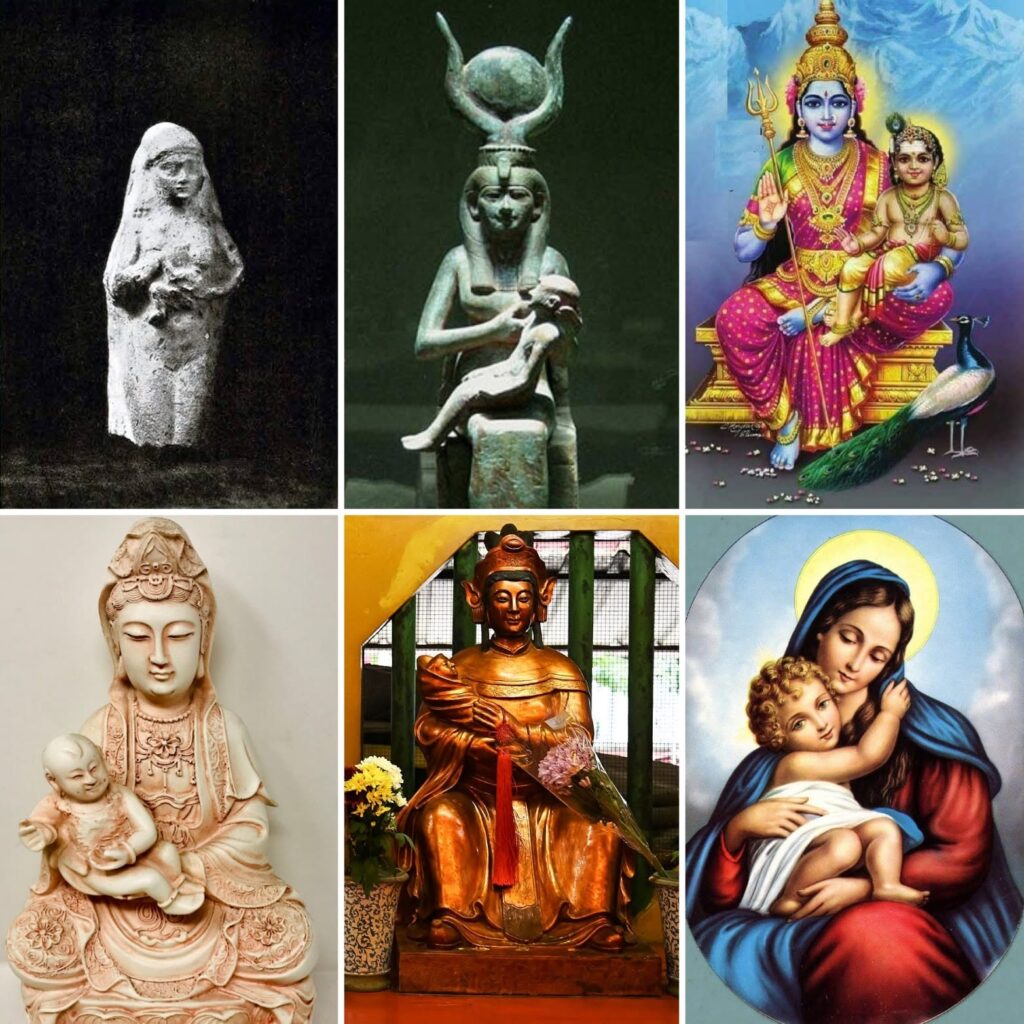
    It’s not too different from the gnostic Sophia. It’s really all the same whore of Babylon–Semiramis–whose husband-son was their hero Nimrod, the builder of the tower of Babel and first freemason. Their son is baby Tammuz, seen in the idols and imagery of the Catholic church.

    The vast majority of Catholics have no idea that their church is pagan Babylonian false god worship with a thin coat of Jesus paint, and a heavy emphasis on the “mother Mary”, or the divine feminine, the queen of heaven.

    Jeremiah 44

    19 And when we burned incense to the queen of heaven, and poured out drink offerings unto her, did we make her cakes to worship her, and pour out drink offerings unto her, without our men?

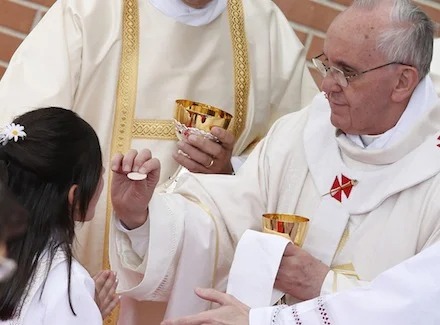
    Cake and drink offering to the queen of heaven, as they claim to summon Jesus to earth to sacrifice Him over and over. Blasphemy!

    Drink offerings and cakes… hmm sounds familiar.. Almost everything about the church is pagan: the holidays, Sunday worship changed from the sabbath on Saturday, and tons of its symbolism, like the crescent moon. In fact, this is what every religion boils down to, once you start to peel back the layers.

    The only exception is Christianity–or more specifically and importantly, the belief in Jesus Christ, His perfect sacrifice that we may be saved through His grace, and His resurrection and ascension, that we may have the Holy Spirit as a helper. Everything else is a poor counterfeit crafted to deceive.

    Chabad

    “Birur can be performed only when wisdom is the master; as the Zohar says, ‘With wisdom they will be purified.’”

    There is wisdom here, he thought, but wisdom gone mad. There is beauty, magnificent beauty, but she is shattered.

    Ecclesiastes 1

    17 And I gave my heart to know wisdom, and to know madness and folly: I perceived that this also is vexation of spirit.

    Ah yes, there’s the wavelength match! I guess 70 years in Babylon was plenty of time to solidify the many volumes of their Talmud, among myriad occult practices. They also have a kabbalistic sex ritual they perform to gain energy. When they’re rocking back and forth, especially at the wailing wall, they’re literally humping their goddess.

    The symbolism of the oldest religion known to man is everywhere, including the names for the months and days. In fact, it’s currently the Jewish month of Tammuz, as the US had its 250th anniversary July 4–the sick joke formerly known as “Independence Day”.

    Acts 7

    43 Yea, ye took up the tabernacle of Moloch, and the star of your god Remphan, figures which ye made to worship them: and I will carry you away beyond Babylon.

    Revelation 17

    And upon her forehead was a name written, Mystery, Babylon The Great, The Mother Of Harlots And Abominations Of The Earth.