The letter yogh (uppercase: Ȝ; lowercase: ȝ) has a fascinating history, and it seems to be everywhere and in many languages, yet today it’s almost as if it doesn’t exist. Maybe it’s best to start from today and go backward in history.
The letter yogh was used in Middle English and Older Scots to represent several phonemes, such as y, j, and g. It is from Insular G (ᵹ), the form of g in the medieval Insular script.
It started to become confused with Ezh (Ʒ, ʒ), or “tailed z” when early to middle Scots began to use z in place of yogh, since it wasn’t in their fonts. Now some Scots names have a z, which is still pronounced as a y.
It still represents a wide range of pronunciation, such as the o in body or in code, the voiceless velar fricative (x) range of k in kind, or the ch in loch, as well as the previously mentioned voiced velar fricative (ɣ) consonantal range of y, j, and g.
A rough-coated, dough-faced, thoughtful ploughman strode through the streets of Scarborough, after falling into a slough, he coughed and hiccoughed.
This absurd sentence shows just how many different ways there are to pronounce the word cluster ough, which used to be represented by just one letter. Here are the nine ways it is pronounced today, which is equally absurd.
- /ʌf/“uff” (rhymes with stuff) rough, tough, enough
- /oʊ/ or /əʊ/“oh” (rhymes with no) though, although, dough
- /ɔː/“aw” (rhymes with saw) thought, bought, brought, fought
- /uː/“oo” (rhymes with too) through, throughout
- /aʊ/“ow” (rhymes with how) bough, plough (spelled plow in US), drought
- /ɒf/“off” (rhymes with cough) cough, trough
- /ə/“uh” (a weak schwa sound) thorough, borough (Note: mainly in UK English)
- /ʌp/“up” (rhymes with cup) hiccough (traditionally pronounced like “hiccup”)
- /ɒk/“ock” (rhymes with lock) lough (an Irish/Scottish word for lake)
The official history of yogh leads back through g, c, Greek gamma (γ), and then Hebrew gimel (ג), but we’re going a different route–the nebulous path of voiceless velar fricative (x), voiced pharyngeal fricative (ʕ), and the voiced palatal approximant (y/j). It’s a path where the letters of the Greek alphabet became uncoupled from their Hebrew source equivalents.
Omicron
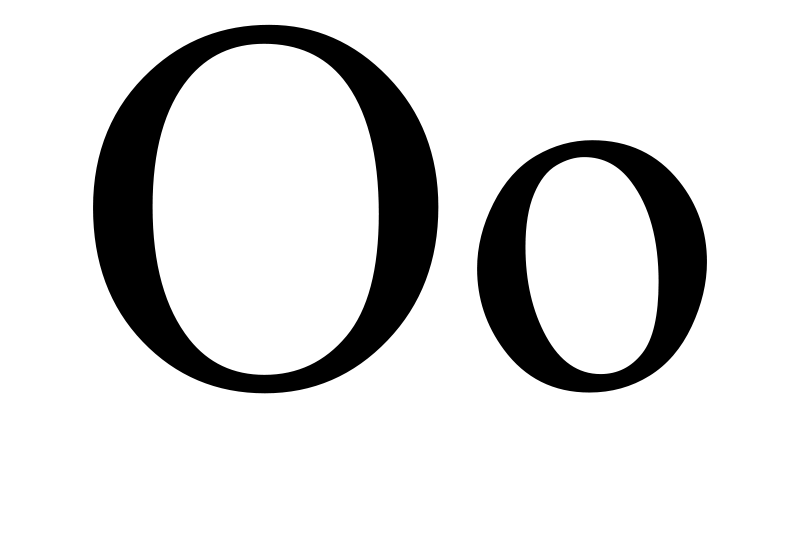
Omicron is the 15th letter of the Greek alphabet and has the short o sound. The name means ὂ μικρόν (ò mikrón), literally ‘small o’. Its parent letter is Hebrew ayin, and its Greek numeral value is 70.
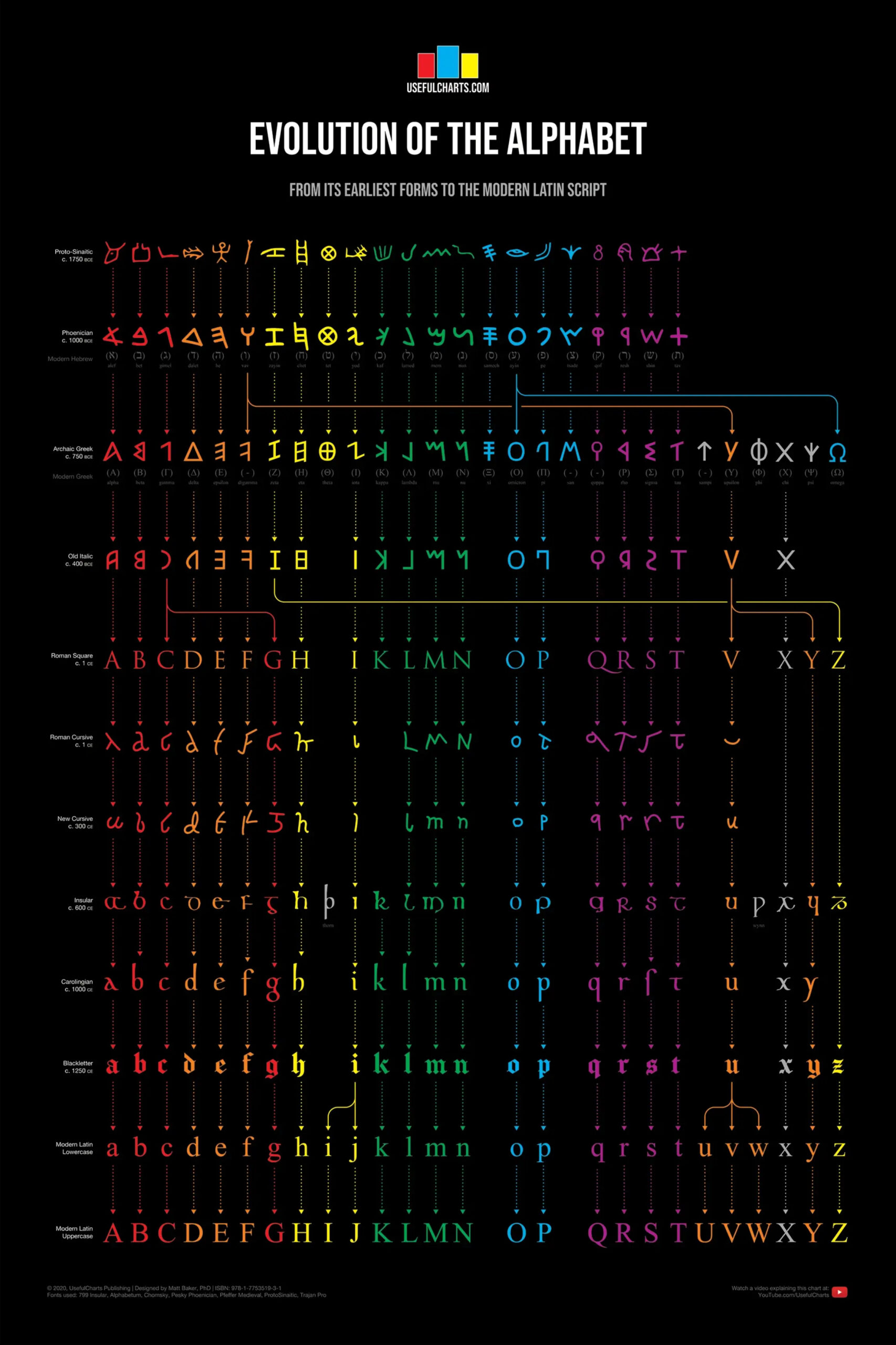
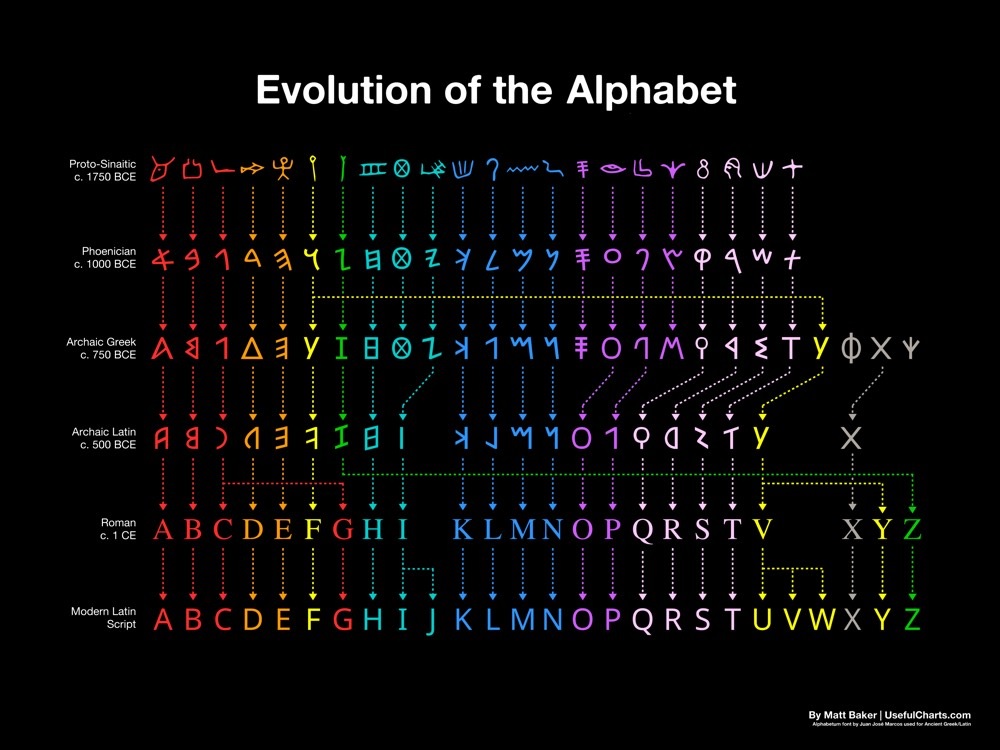
Its position relative to the Hebrew alphabet hasn’t changed as much as some letters have, but regardless, now would be a good time to have an alphabet evolution chart for reference. Even this letter’s shape has stayed relatively stable throughout the millennia, with its beginnings as the hieroglyph for eye (𓁹), which is what ayin means. If I were to speculate, once a letter attains a shape of a basic circle, there’s really no improving or shortening it.
Notably, omega (Ω, ω), meaning ‘great o’ and having the long o sound, resembles a clockwise-turned yogh–in lowercase anyway, while the opposite is true in early Cyrillic (Ѡ), where instead its uppercase omega more resembles the turned yogh. Curiously, also lowercase epsilon (ε) and xi (ξ) both look quite like a flipped yogh.
This chart is a simple and easy way to see how each letter has changed position over time as it evolved through each language’s subsequent adoption of it. Most letters have had an easy and straight-forward evolution, but the sound cluster involving yogh and its wide range of phonemes is a real cluster, indeed.
Ayin
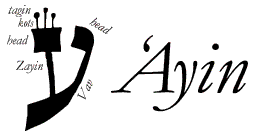
Going further back in time, we have the 16th letter of the Hebrew alephbet, ayin, which as mentioned above means ‘eye’. Like omicron, it also has a numeral value of 70, and is one of seven letters to receive tagin (crowns) when written in a sefer Torah. In Strong’s:
H5869 עַיִן ʻayin:
- eye
- of physical eye
- as showing mental qualities
- of mental and spiritual faculties (fig.)
- spring, fountain
Absurdly-long full Gesenius’ Hebrew-Chaldee Lexicon entry

It represents a voiced pharyngeal fricative (/ʕ/), which sounds like augh, but more rounded and with the throat somewhat constricted, making an almost guttural kh sound as in Hebrew or German. The wiki link has an audio clip to give its precise sound.
Curiously, the modern Hebrew script, called Ktav Ashuri or Square script, taken from Aramaic during the Babylonian exile of the Israelites, is the only one to deviate from the standard o shape of ayin into its evolution as today’s o.
It has also lost its nuance of pronunciation, becoming simpler, reduced to a glottal stop (ʔ) if not silent like aleph (א), both of which are among the few explicit vowels.
This is where yogh starts to pierce through the veil and show its spectral face. You can see how ayin ע and yogh ȝ at this point are fairly similar: they each have three lines coming from their curved bases on the right side.
The only real difference is that ayin’s two upper lines are vertical, and the entire letter has less curvature, which makes sense with the square design of Ktav Ashuri. Ironically, ayin in Hebrew cursive looks just like Greek gamma (γ), the voiced velar fricative symbol (ɣ), and the close/high-mid back unrounded vowel (ɤ).

Other languages and scripts
One language and accompanying script to fully embrace the yogh shape is Arabic. Its ayin (or ayn, or ain) in isolated form (ع) looks like a fully-formed yogh, just in reverse. It has retained its voiced pharyngeal or epiglottal sound, and it is also the 16th letter, though only in abjadi order, otherwise it’s the 18th. Other languages and scripts with a similar letter and shape are as follows:
- Arabic ain (initial form): عـ
- Arabic ghayn initial: غـ — isolated: غ
- Armenian hi/yi: Յ
- Armenian t’so/c’o: Ց
- Syriac: ܥ
- Nabataean: 𐢗
- Mandaic: ࡘ
- Manichaean: 𐫙
- Palmyrene: 𐡰
- Southeast Asian nga initial: ڠـ — isolated: ڠ
- Wolof ngōn initial: ݝـ — isolated: ݝ
- Tamil nga initial: ࢳـ — isolated: ࢳ
- Sogdian: 𐼘
- Elymaic: 𐿯
- Chorasmian: 𐿀
Another anomaly is in the Samaritan script. The Samaritans never left their home via capture nor were they scattered for any other reason, thus their alephbet largely preserved the paleo-Hebrew script’s letter shapes, much more than modern Hebrew Ktav Ashuri script anyway.
The anomaly is that, despite retaining much of the paleo-Hebrew alphabet, their ayin equivalent ʿīn (ࠏ) looks more like Greek omicron, while their yūt (ࠉ), having no Hebrew equivalent, and their ṣå̄ʾdīy (ࠑ), the equivalent to Hebrew tsadi (צ), both look more like yogh than anything else in their script, just turned 90° counter-clockwise. I would have to assume they had contact with the Greeks while Judah, Benjamin, and the Levites and small assortment of other tribes were in their 70 year Babylonian exile.
The friendly ghost
That is all fairly interesting–and then there’s the Indian Brahmi script and its variants. Many of its letters are from the same Phoenician alephbet, albeit many of them have changed rather drastically, relative to the others we’ve looked at already.

You can see many of the Brahmi consonants resemble paleo-Hebrew, and notably, the j and jh, both of which have that yogh approximant range, look like a flipped yogh and square ayin, respectively.
One example each from the Brahmi vowel a variation, ja (𑀚), jha (𑀛), and gha (𑀖) clearly have the classic yogh (or ayin) shape plus their evolution through Brahmi.
It continues to get even more interesting. Early, or Ashokan Brahmi had more rigid geometric shapes. Its independent vowel o (𑀑), when paired with a dot above it representing m, begets an interesting shape that’s sure to trigger some.
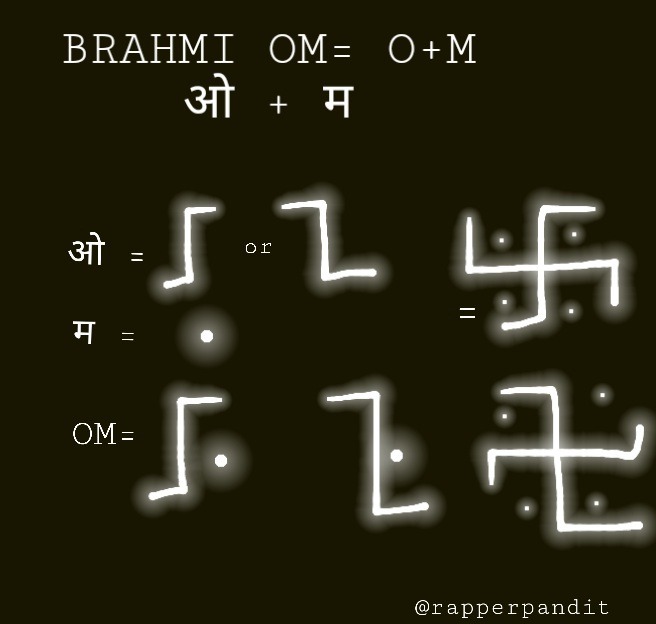
Swasti-kwhat??
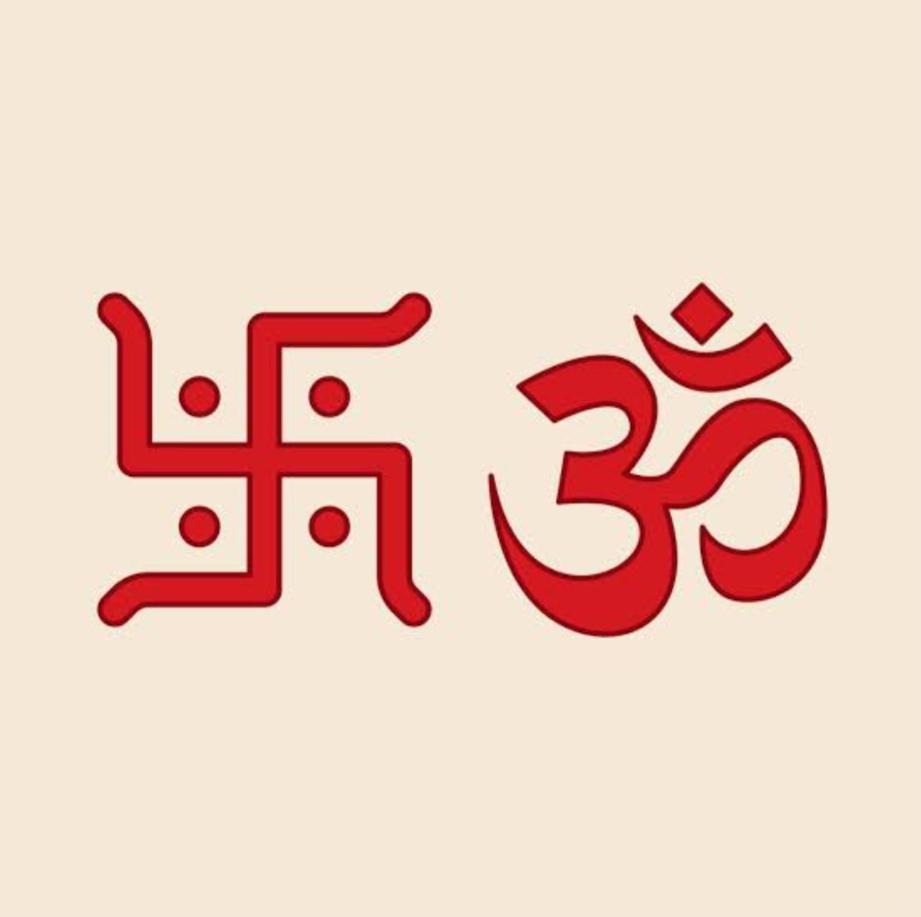
The two following symbols, the swastika (one form of it anyway) and the aum, are arguably two of the most recognized symbols in the world, other than the cross, of course (and probably Mario… mamma mia!). The word swastika is from Sanskrit, derived from root swasti, composed of su, meaning ‘good, well’ and asti, meaning ‘is; it is; there is’. Swasti means ‘health, luck, success, prosperity’. The common suffix ka has multiple meanings.
The symbol is technically a gammádion, meaning ‘little gamma’, an ancient Greek cross or swastika symbol, which is formed by combining four uppercase gammas (Γ). It’s also known as a fylfot or gammata.
Aum
The other symbol aum (ॐ) is a cursive ligature of Devanagari ओम् and is composed of four parts:
- Vowel: अ (a)
- Vowel diacritic: ो (o)
- Consonant: म (m)
- Virama stroke: ् (indicates absence of an implied final vowel)
By now, it should be clear the ghost of yogh is peeking through the veil again here, seen in the vowel अ portion of aum. Interestingly, they also have a similar vowel range with the au-, yogh, and augh sounds.
Brahmi’s letter for mem or m (𑀫) leaves no doubt as to be attached to the ȝ from the back, retaining the aforementioned dot for m. The m (ܡ) in the Syriac script looks the same, just turned counter-clockwise and having sharp, square corners. Then of course there’s modern Hebrew with its similar mem (מ ,ם) shapes sans top curve.
Yogh-related words
Runes
The Eihwaz (also Eiwaz or Eihaz) rune (ᛇ) looks familiar, doesn’t it? The name is reconstructed Proto-Germanic, from a word for the yew tree, the evergreen Taxus baccata. Needless to say, yew sounds practically the same as yogh. The proto reconstruction:
- *īhaz (*ē²haz, from Proto-Indo-European *eikos)
- ēoh (also īh) in Old English
- *īwaz (*ē²waz, from PIE *eiwos)
- īw
- yew
The Elder Futhark e rune Ehwaz (ᛖ), means ‘horse’; in Old Irish ech. In Anglo-Saxon futhorc it became eh, which was technically eoh, but the o was removed to avoid confusion between it and the above ēoh (ᛇ).
Many words spring forth from the PIE root *yeug-, meaning ‘to join’. At least one word that likely came to mind within minutes of starting this article is yoga, the ubiquitous Sanskrit word meaning ‘union, yoking’ (with a spirit or entity).

Sidenote about yoga and yoking
The etymology says it’s about yoking with “the Supreme Spirit”, but that’s false. The only thing you’ll be yoking with while doing yoga are demons.
I’m fully aware that may sound weird, but I say it from experience–in fact two separate experiences with a demon, both after having done yoga for a few days in a row. I simply cannot overstate that the only times I have EVER had an encounter with a demon were these two times… only after practicing yoga.
The first one was immediately after the yoga session while resting. My eyes were closed, then suddenly a demonic face rushed right at me, instantly freaking me out. The other encounter was years later, which came in a dream the night I had done yoga for the third day in a row. I’ll preface this by saying I have some bizarre dreams, and no matter what crazy things happen in them, they never scare me, not even slightly.
But this simple and short dream, which was just a quiet and still scene of the decorated fireplace during Christmas of a house I previously lived, immediately vanished to black. Then I heard and felt the insectoid growling or buzzing of the demon right next to me, though I couldn’t see it–or anything else. It was literally pumping fear into me, getting more and more intense until I could finally wake up. I’ve never had anything inject fear into me.
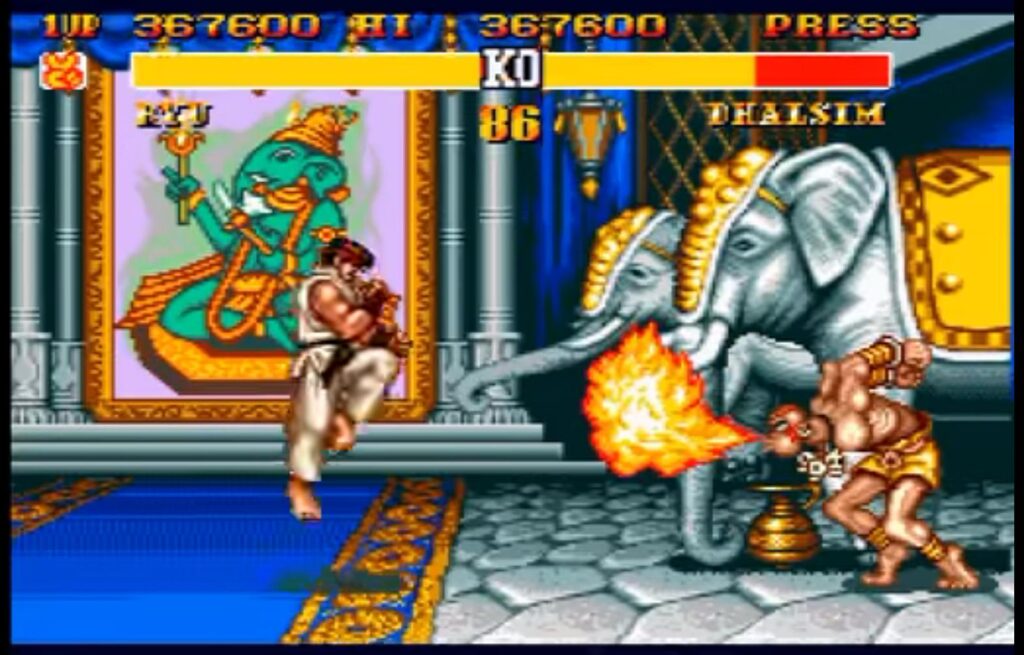
Like a Ouija Board, or a sin like lust, it opens a door to that realm. Stretching alone is obviously perfectly fine. The difference is the specific poses, likely derived in a scientific manner over millennia (or given by some demon), done basically in a ritualistic manner, while repeating mantras.
If you wanna have a relationship and conversation with God, get to know Jesus!
A few other words that come from *yeug- are join, conjugal, junction, juxtapose, syzygy, zeugma, and zygote. Yolk does not, however. It comes from Middle English yelwe, from Old English geolu and geolwe, meaning ‘yellow’, ultimately from PIE root *ghel- ‘to shine’, the same source for ‘gold’.
Back to Greek
Before getting into some of the oddities surrounding Greek and its relationship to yogh, we should look at the strange letter switching between Greek and Hebrew throughout history. A shorter alphabet evolutionary chart will help save your scroll wheel a few miles worth of tread.
Behold the nail
The first letter to be scrambled is waw, or as some like to call it, vav, has the w sound and means nail or hook. Its name invites another variable into the equation: when did it shift from waw to vav, and why? Also, did the sound shift precede the letter shift, or vice versa? For now we’ll just focus on the 6th letter position:
- Hieroglyph: 𓏲
- Phoenecian: 𐤅
- Modern Hebrew: ו
- Ancient Greek: digamma or wau/waw (Ϝ, ϝ)
- Greek: zeta z (Ζ, ζ)
Wait, what happened? Certainly the w sound hadn’t become obsolete. So how did the 6th letter with a w sound soften right past vav into the f shape? The only letter even close to an F at that point in history would’ve been yod/yodh (𐤉), meaning hand.
Even more bizarre is the Arabic equivalent to yod is (𐩺), and in Ge’ez it’s (የ). Arabic yod is the exact same shape as Proto-Sinaitic, and Ge’ez is just barely different.
Even its Unicode character doesn’t look how it should (see below).

A doublet of waw was also borrowed as a consonant for [w] (Ϝ, digamma).
It makes sense on one level: stack two gammas (Γ) to get digamma, but when they borrowed the Phoenician alephbet, yod already existed as the letter above. Would that not be confusing, while they were still writing right to left?
Just for fun, let’s compare two wiki pages, Waw and F:
Waw
Waw (wāw “hook”) is the sixth letter of the Semitic abjads…
F
The origin of ⟨F⟩ is the Semitic letter waw, which represented the sound /w/. It probably originally depicted either a hook or a club. It may have been based on a comparable Egyptian hieroglyph such as that which represented the word mace…
Oh I see, it probably depicted a hook, probably, since it’s too difficult as a wiki editor to check a nearby wiki page or do a quick search, but a club? Now that’s a new one. And sorry but no, the well-established hieroglyph for waw (𓏲) certainly does not look like a mace.
Digamma dilemma
Apparently digamma went through many changes, more than any other Greek letter as far as I’ve seen so far:


What I would like to know, is why are there 100-200 Unicode characters reserved for the long-extinct and as yet undeciphered Minoan Linear A hieroglyphic script and the Mycenaean Greek Linear B script–the earliest Greek scripts–while the apparent development of the much more recent Byzantine digamma with its seven mutations has not a single Unicode character?
For example, is the Unicode character for the utterly useless wheelless chariot (𐃍) really necessary, while digamma has none for those intermediate phases? It’s a chariot, and it doesn’t even have wheels. The only difference between it and wheeled chariot (𐃌) is the tiny wheel near the front. Meanwhile, the letter that got pushed around and tortured is just completely ignored. Something doesn’t smell right.
Anyway, looking further on the F wiki page:
In the Etruscan alphabet, ⟨F⟩ probably represented /w/, as in Greek, and the Etruscans formed the digraph ⟨FH⟩ to represent /f/. (At the time these letters were borrowed, there was no Greek letter that represented /f/: the Greek letter phi ⟨Φ⟩ then represented an aspirated voiceless bilabial plosive /ph/, although in Modern Greek it has come to represent /f/.)
So it was apparently easier and more logical to shift the w sound of waw, not just to a closed /v/ sound of vav, but beyond it and into the area just on the edge of plosive to form the /f/ sound, rather than just take phi with its plosive /ph/ and force a bit of air out to get the /f/ sound?
Not only that, but the Etruscans had to form the FH digraph just to represent /f/ of the waw, which had the /w/ sound. It’s just not adding up for me. It doesn’t sound logical or natural. It sounds unnecessarily convoluted–or necessarily, depending on the perspective.
Beholed the hand
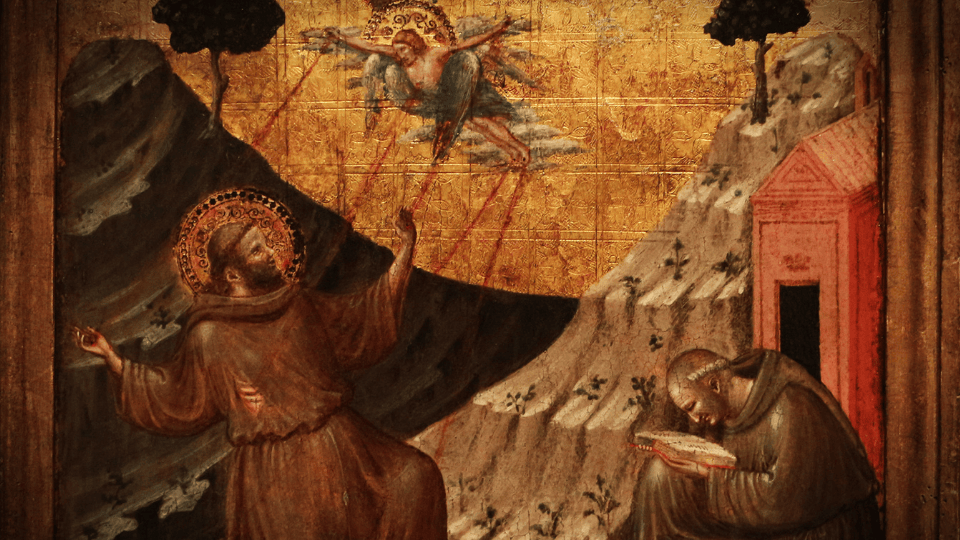
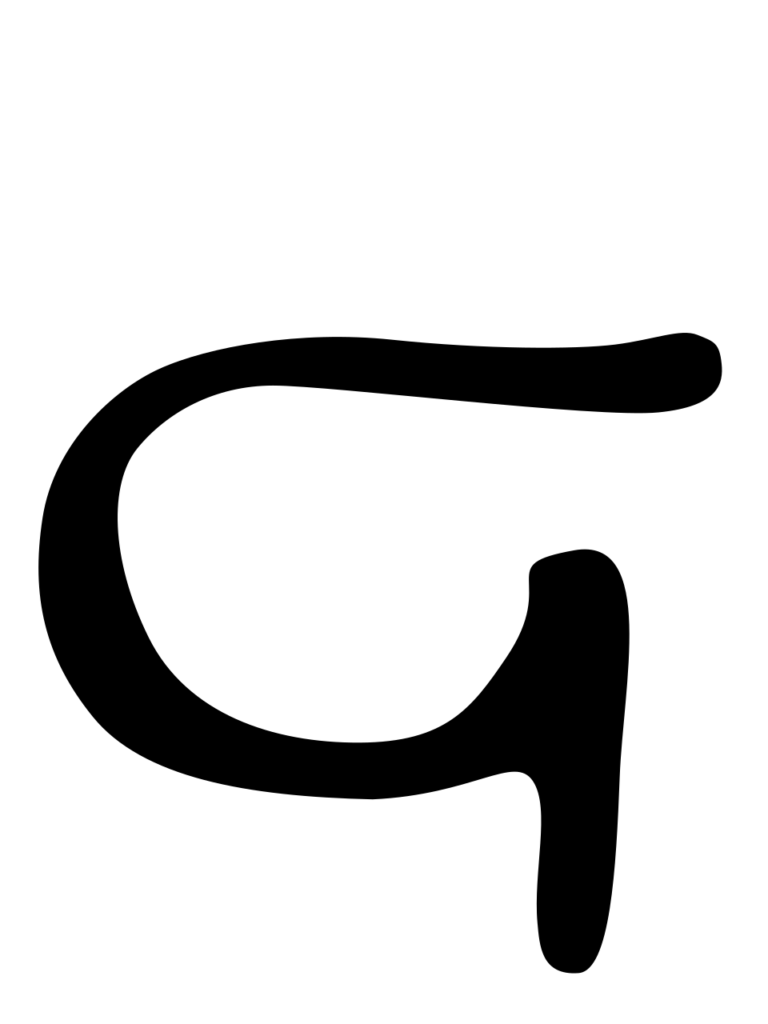
The letter formerly known as vav, formerly known as waw, digamma has retained its numeral value of 6, though the letter for its numeral use underwent another change and became (ϛ). Then it acquired yet another name change during the Byzantine era: episēmon, from epi- ‘on’ plus sēma ‘sign’, meaning mark or symbol. At some subsequent time its name changed yet again, to stigma, a ligature of sigma (στ). Lowercase sigma in word-final position is (ς).
stigma (n.)
1590s (earlier stigme, c. 1400), “mark made on skin by burning with a hot iron,” from Latin stigma (plural stigmata), from Greek stigma (genitive stigmatos) “mark of a pointed instrument, puncture, tattoo-mark, brand,” which is related to stizein “to mark, tattoo” (from PIE root *steig- “to stick; pointed”
The figurative meaning “mark of disgrace or infamy which attaches to a person on account of evil conduct” is in English is from 1610s. Stigmas “marks resembling the wounds on the body of Christ, appearing supernaturally on the bodies of the devout” is from 1630s; earlier stigmate (late 14c.), from Latin stigmata, itself used in English in this sense by 1630s.
Confused yet?
So how in the world did digamma with the /f/, which of course was originally waw with /w/, turn into a ligature for sigma and tau? What a silly question… as if it’s not obvious! It’s easy!
Once digamma evolved into its final form,
it was conflated with the στ ligature[citation needed]
So now a distinction has to be made between the letter (Ϝ, ϝ) and its numeric symbol (ϛ), so it gets replaced by the ligature for sigma and tau. Easy peasy!
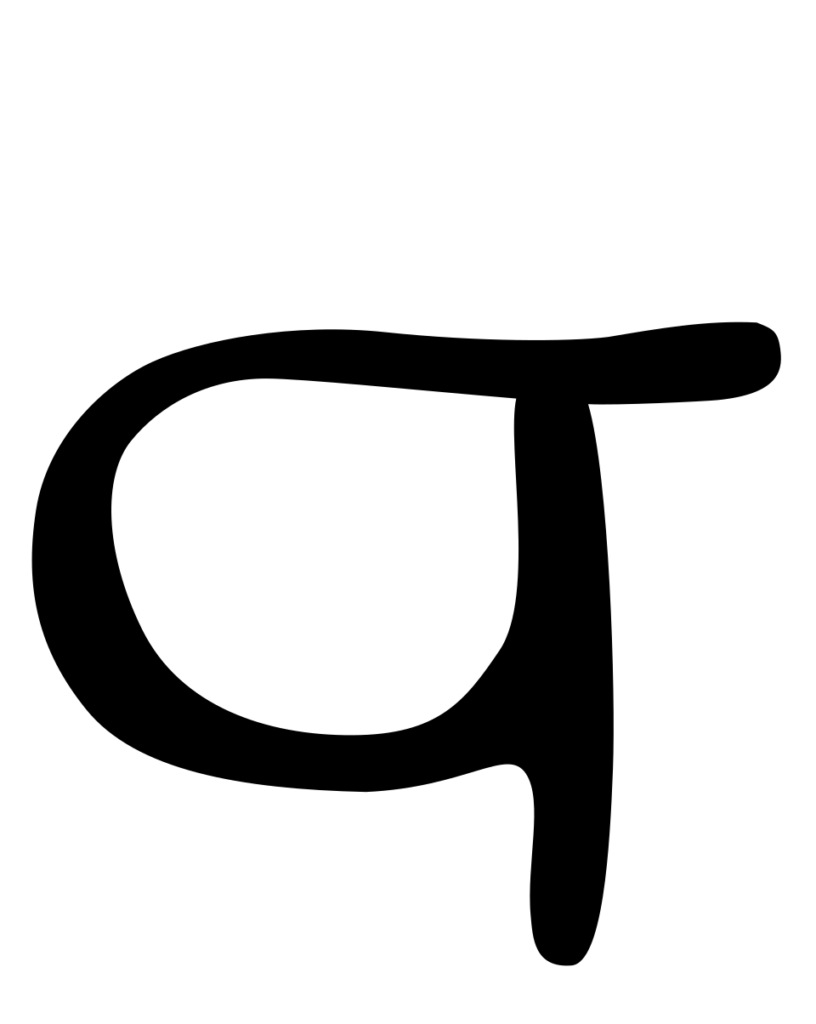
στ
I mean if wikipedia says so, it must be true! Don’t worry about the pesky details like this:
…owing to the accidental similarities of their shapes[citation needed].
Let’s read on, so we can see the next part of the explanation, shall we? No pretense of having a citation on this part, cuz citations are for losers!
The association between the numeral 6 and the letter sequence στ became so strong that today, in Greece, the letter sequence ΣΤʹ or στʹ is often used in lieu of ϛ itself to write the number 6.
That’s just the darndest thing. Through this entire utter nightmare whirlwind of phoneme shifting, name changing, and shape changing, clocking in at well over a dozen combined, the only thing to remain stable and unchanged has been the 6.
That’s just so fascinating, isn’t it? It’s almost like the 6 is nailed onto the pile of sand now known as stigma, rather than the letter being the nail–er excuse me–the hook, or maybe it’s a club, probably?[citation needed]
Well, it’s a good thing we don’t need that useless (ϛ) anymore and have stigma (στ) to replace it with. Wait, what’s this? Oh…
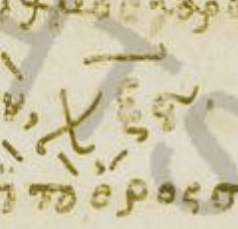
χ̅ξ̅ϛ
Revelation 13
18 Here is wisdom. Let him that hath understanding count the number of the beast: for it is the number of a man; and his number is Six hundred threescore and six.
Quick detour
It may just be my browser (I doubt it), but whenever I click on the only thing in this entire section of Diacritics and other symbols, the most peculiar thing happens–not nothing!
Let me clarify. When I click on this incredibly specific unlinked part of the text, rather than absolutely nothing happening, as is the normal thing one would expect from any other unlinked text anywhere else, but instead the page just immediately reloads.
It kind of spooked me the first time, since I had no idea what had just happened, as I was obviously not expecting it to happen. Try it to confirm for yourself. It’s likely no big deal, and could just be a buggy way that unlinked items that should be linked behave, but it’s the first time I’ve come across it.
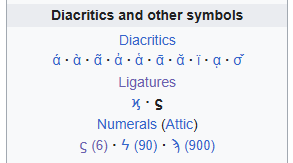
The full Greek alphabet box
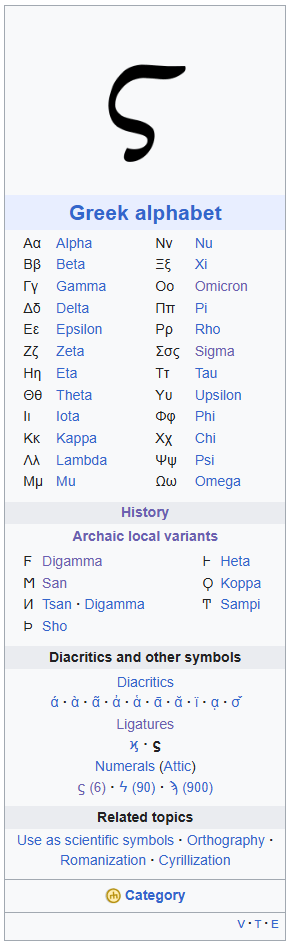
Regardless, you’ve got my attention
Also note that the Sigma and Greek ligatures pages both link the (ς), so it’s not incredibly weird, but weird enough that I’ve been led to intensely focus on this, as well as the number in Rev 13:18.
So I can’t tell if someone is playing games, or if these pages were written by different people and this one just happens to have a “glitch” only one that one single letter and nowhere else on the page. I’ve only checked a handful of other random spots, but that’s not even a priority now.
After really scrutinizing the actual Greek numeral in Revelation, I’m starting to wonder if it’s even a 6 at all. Some may think that suggestion is impossible. Is it?
Greek numerals
Below is the Greek numerals chart. The first image is only 1-9 for slightly easier and larger viewing here, and the second one is the full chart, though it’s a bit of an eye strain.
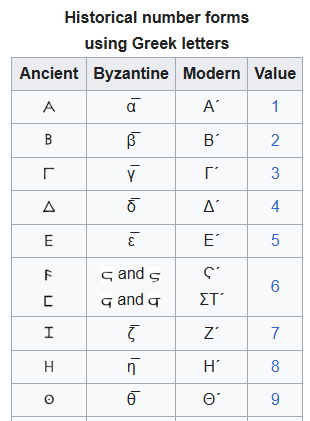
Greek numerals full chart
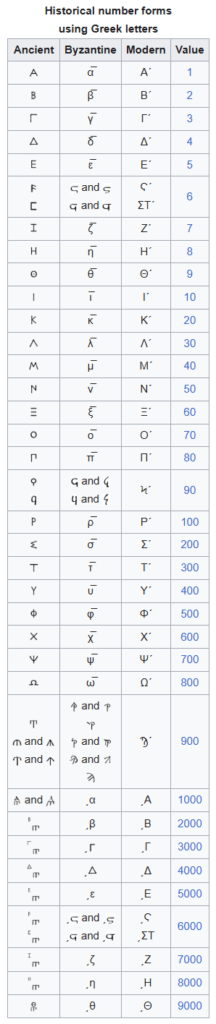
The first numeral, regardless which chi (χ̅ or Χʹ) is used, must be 600. There’s no other option. Likewise with the second numeral xi (ξ̅), there’s only one option. After comparing the final numeral with every possibility, I’m starting to think the stigma/sigma/digamma (ϛ, ς, Ϛ) fiasco may be a red herring, and that the last digit may be a 7! Why? It seems to be hiding in plain sight.
Neither of those three letters have a reversed hook on the end of its rounded top, only zeta (ζ) does. Keep in mind that waw got switched around, zeta took its place in the alphabet order, but waw/digamma kept its numeral, and now this?
In modern typefaces, lowercase stigma is similar in appearance to final sigma (ς), but the top loop tends to be larger, and extends further to the right.
There’s no mention of the line reversal of the top loop, just the size of the loop. If you look at it honestly and without bias, the loop reversal is almost half the size of the entire numeral. The only other visual possibilities are a couple of the cursive koppas, but their numeral is 90, and the cursive digammas, which are also 6 like their regular counterpart.
Six hundred threescore and…?
Let’s just start with a list of every possible verse.
1 Kings 10
14 Now the weight of gold that came to Solomon in one year was six hundred threescore and six talents of gold,
2 Chronicles 9
13 Now the weight of gold that came to Solomon in one year was six hundred and threescore and six talents of gold;
Ezra 2
13 The children of Adonikam, six hundred sixty and six.
Nehemiah 7
18 The children of Adonikam, six hundred threescore and seven.
G706: ἀριθμός arithmós
- a fixed and definite number
- an indefinite number, a multitude
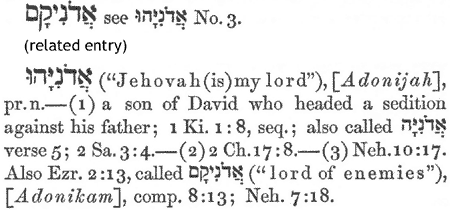
Every verse that uses the word for count in Revelation 13:18, excluding itself, points to the context that it’s counting a specific group of people. If I’m wrong and it is indeed 666, it points to Solomon or Adonikam (or the spirit of the man in whatever form it ends up taking) as far as I’ve been able to discern so far. If I’m right, it appears to be pointing at Adonikam. See my post on The Beast for detailed info on the number and its connections to Solomon.
H140: אֲדֹנִיקָם ʼĂdônîyqâm
- Adonikam = “my lord arose”
- the head of an Israelite clan who returned from exile