
Intergalactating cosmilk river, or literally riven?
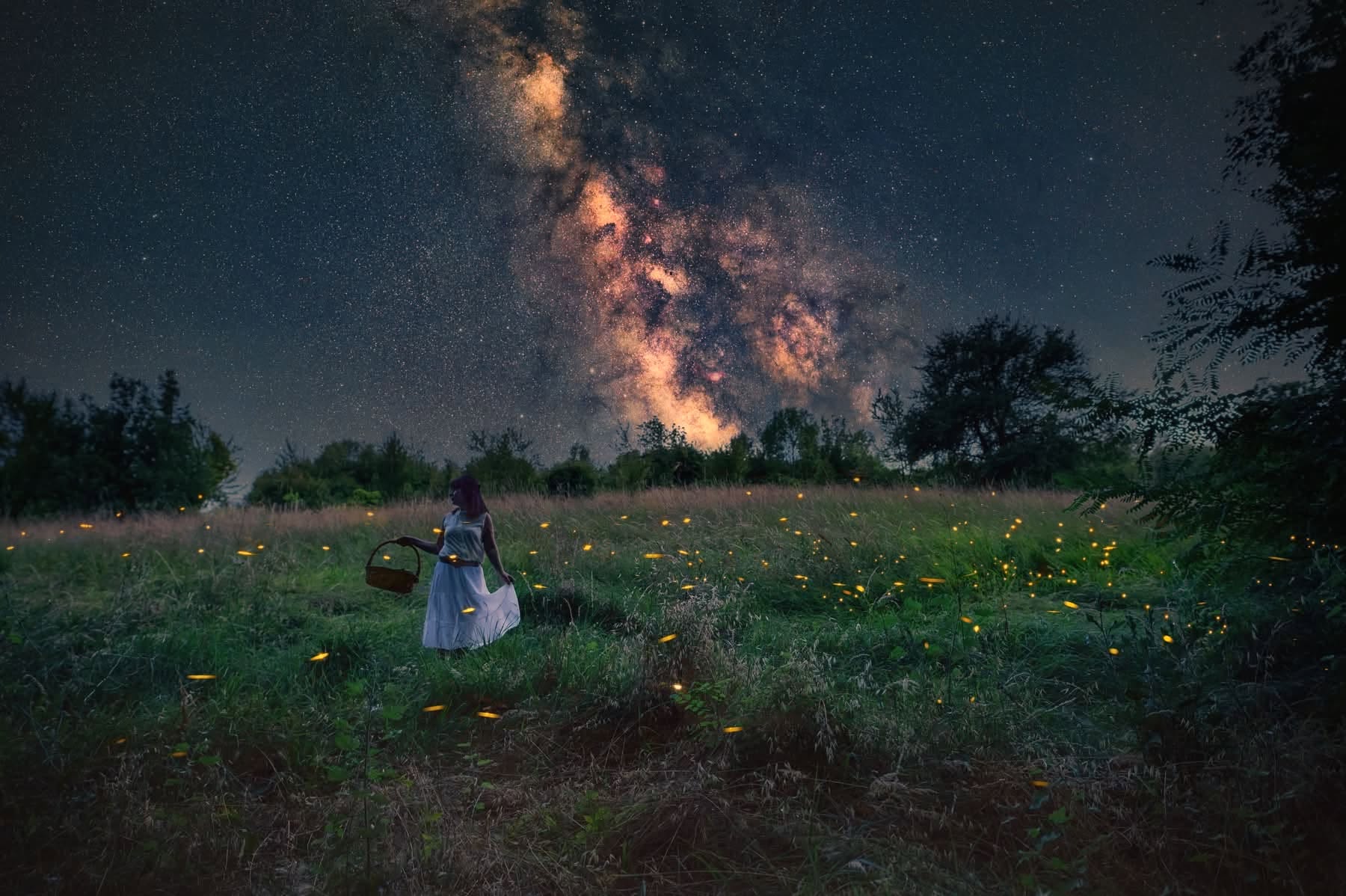
It would first be prudent to rigorously explore with much vigor the mainstream narrative on what the Great Rift, or Dark River, is, so we can get to the bottom of this thing, or beyond the event horizon, as it were. Is it the Milky Way galaxy spiraling off into oblivion at the speed of dark?
Nope! Whew.. that was an exhausting quest on the bleeding edge of astrophysics–truly the frontier. Time really is speeding up lately, isn’t it? That entire investigation felt like it only took a few minutes. Oh well, moving on. I’ll be expecting the lab results any day now.
Bow in the cloud
Genesis 9
13 I do set my bow in the cloud, and it shall be for a token of a covenant between me and the earth.
It’s safe to say that the “bow in the cloud” is universally accepted as the rainbow. It makes sense. It didn’t rain before the flood, but it did mist, however that worked. The atmosphere seems to have had some regular cycle of atmospheric mist to water all the flora and fauna. Wouldn’t people have been able to see a rainbow at least some of the time, if not always?
I suppose that depends what elevation the mist reached. What has never changed is the firmament, which is the necessary piece to cause the light refraction to make a rainbow visible. Regardless of the potential visibility of a rainbow during antediluvian times, what if the covenant God made with the earth was something else?

Bowmen and archery
Let’s see what the word for bow is in Genesis. Now it’s time for that rigorous linguistic archaeology that I mentioned earlier–well more or less mentioned.
H7198: קֶשֶׁת qesheth
- bow
- bow (for hunting, battle)
- bowmen, archers
- bow (fig. of might)
- rainbow
It is overwhelmingly translated as “bow”, and never specifically as “rainbow”. Ever notice that? Everyone just says rainbow as if it’s just an obvious, accepted fact, because what else could it be, right? It makes sense, yet it’s not technically even in the Bible.
Dictionary uses of H7198 bow
- bow (68x)
- archers (with H3384) (3x)
- archers (2x)
- archers (with H1869) (1x)
- miscellaneous (3x)
Let’s go as far back in history as possible for an origin of this word.
H7185: קָשָׁה qâshâh
- (Qal) to be hard, be severe, be fierce, be harsh
- (Niphal) to be ill-treated
- (Piel) to have severe labour (of women)
- (Hiphil) to make difficult, make difficulty
There are several more definitions, but they’re all similar. Well that explains the punishment aspect of flooding the entire earth, but it says nothing about the visual aspect. Let’s check the other word it grew from and any related words in an etymological dictionary.
- H6983: קוֹשׁ qôwsh – (Qal) to lay bait or lure, lay a snare, lure
- H7199: קַשָּׁת qashshâth – bowman, archer
Iris, water flow, light, and color
Everything else has to do with either archers, bowmen, Sagittarius, one mention of rainbow, convexity, and then cornea, which is קַרְנִית (qarnit). So in every case, there’s a sense of bending. What about Greek? There are two verses that translate to rainbow in English. Then there’s a verse in Ezekiel that makes it difficult to say that it might not be a rainbow, but who really knows until we see God with our own eyes?
Ezekiel 1
28 As the appearance of the bow that is in the cloud in the day of rain, so was the appearance of the brightness round about. This was the appearance of the likeness of the glory of the Lord. And when I saw it, I fell upon my face, and I heard a voice of one that spake.
Revelation 4
3 And he that sat was to look upon like a jasper and a sardine stone: and there was a rainbow round about the throne, in sight like unto an emerald.
Revelation 10
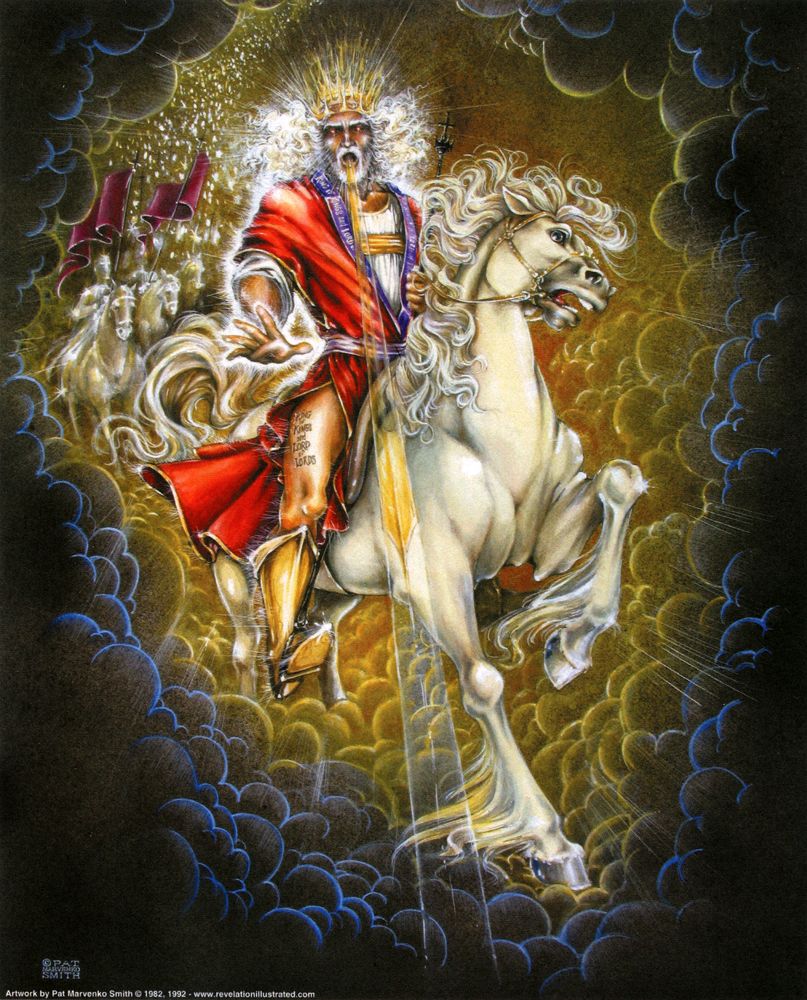
10 And I saw another mighty angel come down from heaven, clothed with a cloud: and a rainbow was upon his head, and his face was as it were the sun, and his feet as pillars of fire:
I wouldn’t think of an emerald when seeing a rainbow. A rainbow is the full spectrum of color, not overwhelmingly green. However, the aurora better fits that description. Let’s check the Greek word that gets translated as rainbow and its related words.
G2463: ἶρις îris – from G2046
- rainbow
- iris
G2046: ἐρέω eréō – to utter, speak, say, from:
- G2036: ἔπω épō, ep’-o – to speak, say
- G5316: φαίνω phaínō – bring into light, cause to shine, shed light
- G5346: φημί phēmí – make known one’s thoughts, declare, say
- G5457: φῶς phōs – light, star, fire, lamp
- G4482: ῥέω rhéō – to flow; ῥεύω; rheúō – flow, run as water
- G4483:ῥέω rhĕō – to pour forth, to utter
That’s basically where the trail ends in Strong’s, but it’s interesting, and we may be getting somewhere with the words related to flowing water. There was already a well-established word for star in Genesis 1, so we can safely rule that out. It’s time to switch to the standard etymology.
rainbow
“arc of prismatic colors formed by the refraction of light rays by drops of rain or vapor,” Middle English rein-bowe, from Old English renboga; (rain + bow)
That’s basically a dead end.
iris
late 14c. as the name of a flowering plant (Iris germanica); early 15c. in reference to the eye membrane, from Latin iris (plural irides) “iris of the eye; iris plant; rainbow,” from Greek iris (genitive iridos) “a rainbow;” also “iris plant” and “iris of the eye,” a word of uncertain origin, traditionally derived from PIE root *wei- “to bend, turn, twist.”
Unsurprisingly, it’s a word of uncertain origin, which is typical when it comes to these things.
Iris was the name of the minister and messenger of the Olympian gods (especially of Hera), visibly represented by the rainbow (which was regarded as the descent of a celestial messenger). From the oldest parts of the Iliad the word is used of both the messenger and the rainbow.
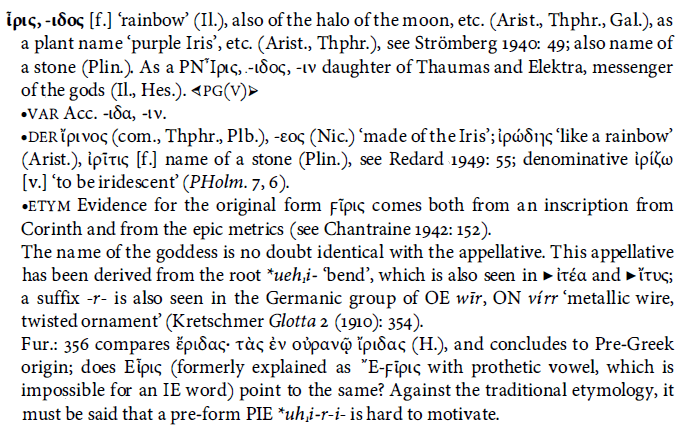
We’ve hit another dead end. Coming back to iris in the etymological dictionary, we get a couple new options, and since I can’t really type Greek beyond the basic alphabet, a screenshot will suffice.
G2463: ἶρις, -ιδος
Wait, isn’t this about the Great Rift?
It may seem like I’m really trying to find something other than “rainbow”, but I feel like rainbows existed before the flood. I could definitely be wrong though. There are a few interesting things about the Great Rift that are too hard to just ignore though, so let’s get into it.
If I’ve learned something over the years, it’s that we’ve been lied to about absolutely everything. When it comes to the God, Jesus, creation, and the Bible, the lie factor is triple that. So when there’s an anomaly in the sky that is called the Great Rift, and it indeed looks like a massive tear in the sky, on top of knowing the flood happened, while also knowing that the biblical view of the earth is the truth, rather than the spinning ball they’ve rammed down our throats since we could barely walk, I tend to not believe the narrative. Also, just look at it, and then think about the iris connotations and definitions of this word group.
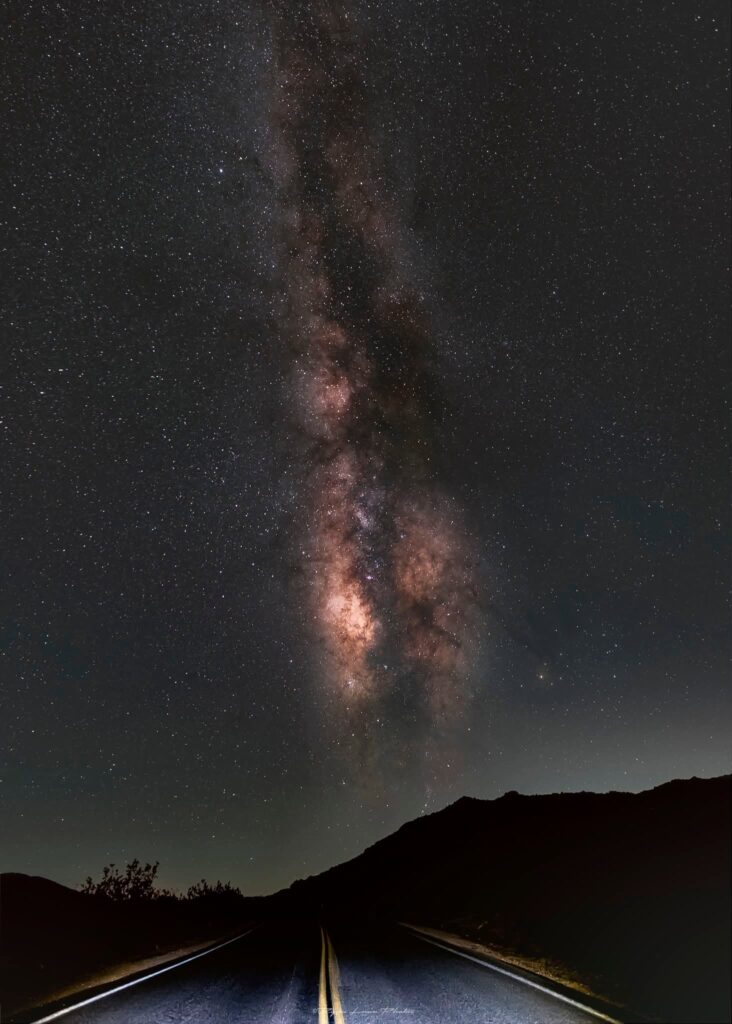
The bow and bend words make sense, but does that not look like an eye? And why was there a related word for water flowing?
Genesis 7
11 In the six hundredth year of Noah’s life, in the second month, the seventeenth day of the month, the same day were all the fountains of the great deep broken up, and the windows of heaven were opened.
And that is why I don’t buy the lactating black hole in space story. The windows of heaven must’ve opened from somewhere, and what better place than where there’s a literal giant rift in the sky?
Something else that’s interesting, something I hadn’t noticed til recently, is that the Dark River isn’t just a tear stretching across a portion of the sky. It goes all the way around the firmament 360°.
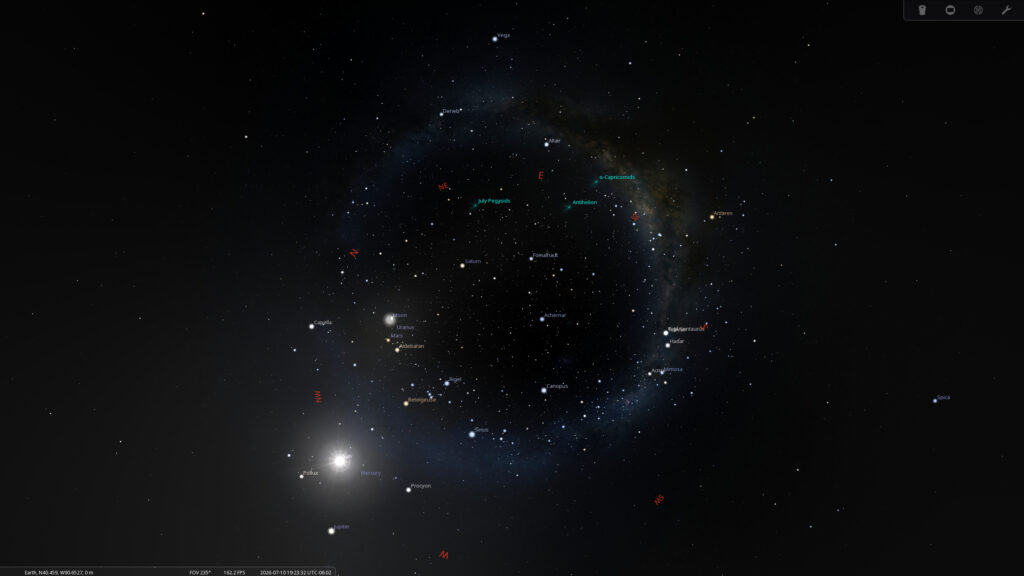
A timelapse video can’t capture the entire thing, but between them and this view, the iris and cornea words are starting to take on multiple meanings.
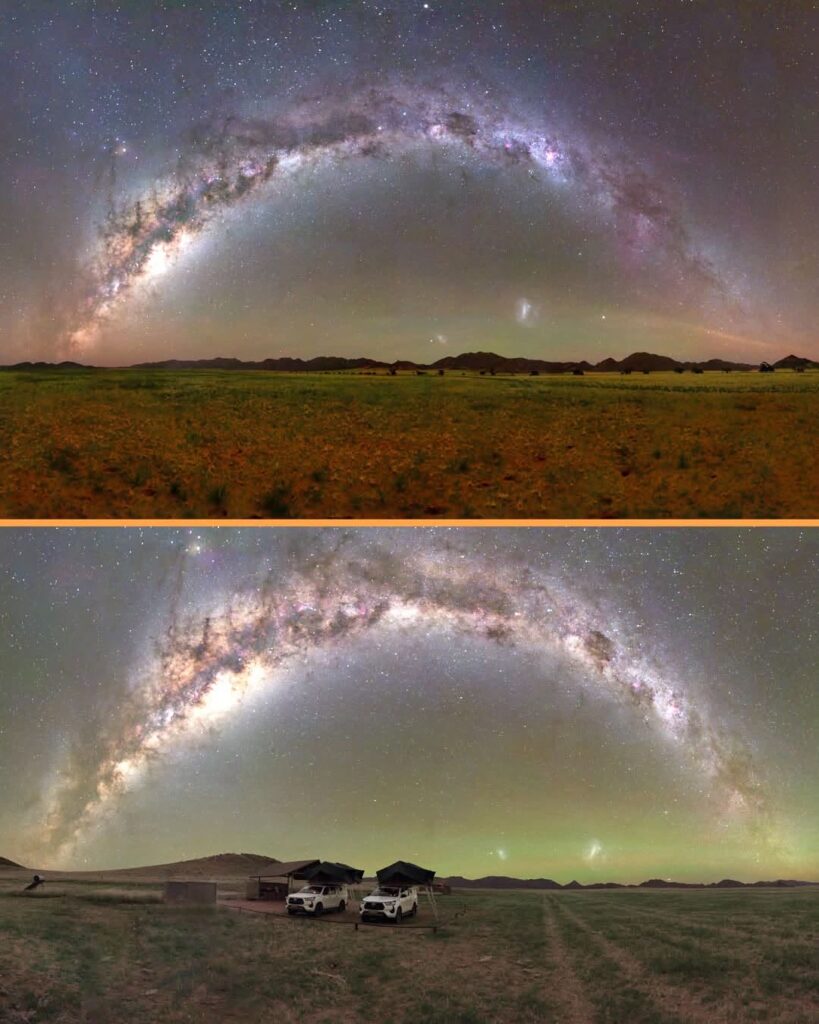
That’s extremely colorful, certainly more iridescent than a normal rainbow. Even without the timelapse, imagine seeing that before cities saturated the sky with light, drowning out a large portion of the visible stars. it’s already beautiful, but pair it with the aurora and it’s breathtaking.
Leave a Reply